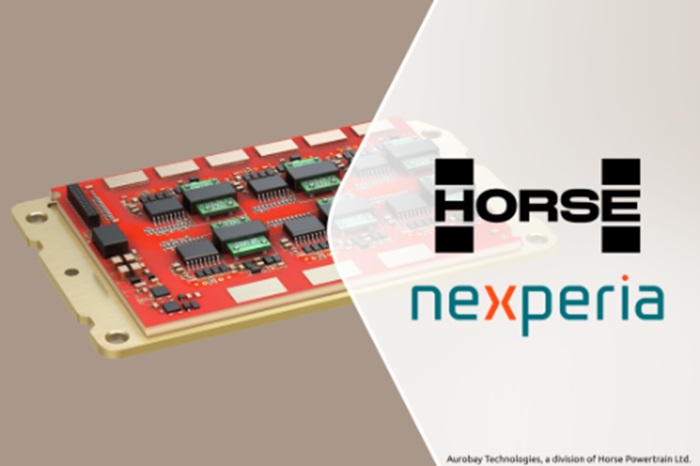
- Nexperia Aurobay Technologies collaboration advances automotive power semiconductors.
- GaN and SiC technologies target scalable propulsion systems.
Nexperia and Aurobay Technologies Explore Strategic Semiconductor Collaboration
On September 1, Nexperia announced plans to explore a strategic collaboration with Aurobay Technologies, a division of Horse Powertrain Ltd., focused on advanced power semiconductor solutions for automotive applications. The Nexperia Aurobay Technologies collaboration is intended to bring together complementary capabilities in semiconductor technology and powertrain engineering. Nexperia contributes expertise in gallium nitride (GaN) and silicon carbide (SiC) technologies, while Aurobay Technologies brings experience in powertrain design and integration. The initiative is positioned around developing advanced power electronics that can support future automotive propulsion and power-generation requirements.
Collaboration Builds on Earlier GaN Technology Deployment
The planned collaboration follows the successful use of Nexperia’s GaN devices in Aurobay Technologies’ power generation system for range extender applications. That earlier deployment provides a technical foundation for the companies to investigate additional opportunities involving advanced semiconductor technologies and powertrain systems. Aurobay Technologies has experience in integrating powertrain technologies, while Nexperia specializes in semiconductor solutions designed for power-management applications. Building on the existing use of GaN devices allows the companies to explore how wide-bandgap semiconductor technologies can be applied more broadly across automotive power electronics, including systems where efficiency, performance, and scalable integration are important considerations.
Focus Expands to Traction Inverters and Power Generation
Nexperia and Aurobay Technologies will explore ways to further improve power electronics for applications including traction inverters and power generation systems. The companies plan to combine Nexperia’s wide-bandgap (WBG) technology with Aurobay Technologies’ powertrain capabilities to develop and optimize these systems. GaN and SiC technologies can serve as key semiconductor technologies for advanced power electronics, while powertrain integration determines how these components are incorporated into vehicle propulsion systems. The collaboration therefore focuses on combining semiconductor expertise with system-level engineering to address automotive applications that require advanced power conversion and high-performance operation.
Supporting Scalable Propulsion Systems for Future Mobility
Through the collaboration, both companies aim to accelerate adoption of advanced power semiconductor technologies and support development of scalable, high-performance propulsion systems for future mobility. The initiative reflects a broader effort to connect wide-bandgap semiconductor capabilities with automotive powertrain development, potentially enabling more advanced architectures for propulsion and power generation. By combining semiconductor technology with powertrain design and integration expertise, the companies intend to investigate solutions that can be developed and optimized for different automotive applications. The collaboration remains focused on exploring opportunities, with the stated objective of supporting future mobility systems through advanced power electronics and scalable propulsion technologies.
Frequently Asked Questions
What is the Nexperia Aurobay Technologies collaboration focused on?
The collaboration is focused on exploring advanced power semiconductor solutions for automotive applications, combining Nexperia’s GaN and SiC technology expertise with Aurobay Technologies’ powertrain design and integration capabilities. The companies will investigate improvements to power electronics used in traction inverters and power generation systems. Their work builds on the successful use of Nexperia’s GaN devices in Aurobay Technologies’ power generation system for range extender applications. The broader objective is to accelerate adoption of advanced semiconductor technologies and support scalable, high-performance propulsion systems for future mobility.
Click above to visit the official source.
Discussion
Join the conversation.