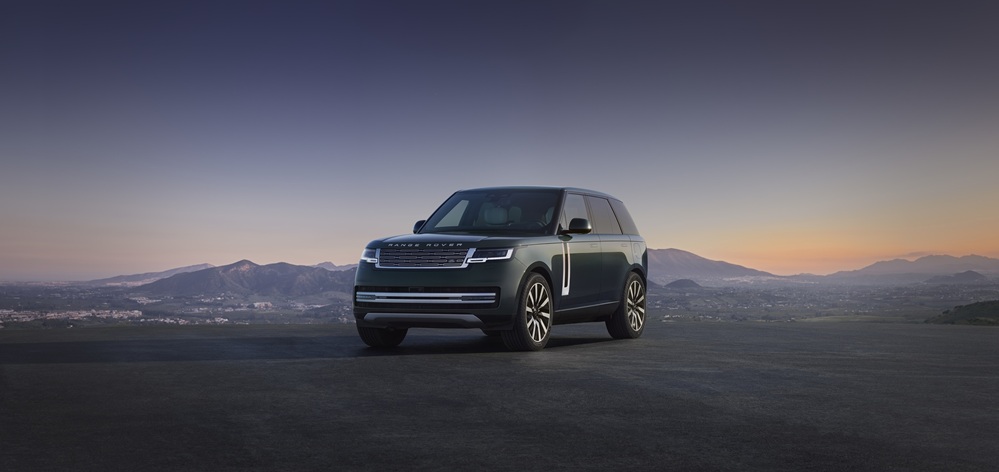
- Range Rover Electric opens global orders in India.
- Its 800-volt battery supports rapid charging.
Jaguar Land Rover Opens Orders for Its First Electric Range Rover
On September 2, Jaguar Land Rover unveiled the first-ever Range Rover Electric and opened global order books, including in India. The SUV is being built at the company’s Solihull facility alongside hybrid and internal-combustion models using a flexible propulsion platform. Its electric powertrain combines twin 260 kW permanent magnet motors, producing a combined 405 kW and 850 Nm of torque. A single-speed transmission and permanent all-wheel drive support power delivery, while production of the motors and battery pack is supported by the Electric Propulsion Manufacturing Centre in Wolverhampton across 13 dedicated production lines.
800-Volt Battery Delivers Up to 600 Km WLTP Range
The Range Rover Electric uses a usable 118.5 kWh Lithium Nickel Manganese Cobalt (NMC) double-stacked battery containing 344 prismatic cells and operating on an 800-volt architecture. The vehicle offers up to 600 km of WLTP range, with 578 km for the SWB version and 574 km for the LWB version under TEL and TEH measurements, respectively. Its estimated real-world range is 535 km. On a 350 kW DC rapid charger, the battery can move from 10% to 80% in 22 minutes or gain 220 km of range in 10 minutes. A 400V, 250 kW charger can add 158 km in 10 minutes, while the 22 kW onboard AC charger provides up to 96 km of range per hour.
Thermal Management and Off-Road Capability Remain Central
The electric SUV retains a 900 mm wading depth and uses an integrated traction management system designed to regulate wheel slip within 50 milliseconds. This system works with intelligent driveline dynamics and single-pedal drive to help manage gradients of up to 45 degrees. Thermal performance is supported by the ThermAssist system, which reduces energy consumption for heating by 40%. The combination of high-voltage electrical architecture, rapid charging capability, thermal management, and traction control is designed to preserve the vehicle’s established utility characteristics while adapting them to an electric powertrain.
Chassis Hardware and Digital Systems Add to the Electric Platform
Chassis hardware includes a double-wishbone front suspension, a five-link rear axle, twin-chamber air suspension, and electric power-assisted steering. Braking hardware comprises 380 mm front discs with four-piston calipers and 355 mm rear discs with single-piston calipers. The vehicle also incorporates over-the-air software updates, allowing supported vehicle systems to receive remote software improvements. A Battery Digital Twin monitors more than 900 diagnostic points, providing detailed visibility into battery operation and condition. Together, these systems extend the technology architecture beyond the electric powertrain to cover vehicle dynamics, software management, and battery diagnostics.
Frequently Asked Questions
What are the main specifications of the Range Rover Electric?
The Range Rover Electric combines twin permanent magnet motors with 405 kW of total output, 850 Nm of torque, permanent all-wheel drive, and a 118.5 kWh usable NMC battery on an 800-volt architecture. It provides up to 600 km of WLTP range and an estimated 535 km of real-world range. The SUV can charge from 10% to 80% in 22 minutes using a 350 kW DC rapid charger, while its 22 kW onboard AC charger can add up to 96 km of range per hour.
Click above to visit the official source.
Discussion
Join the conversation.