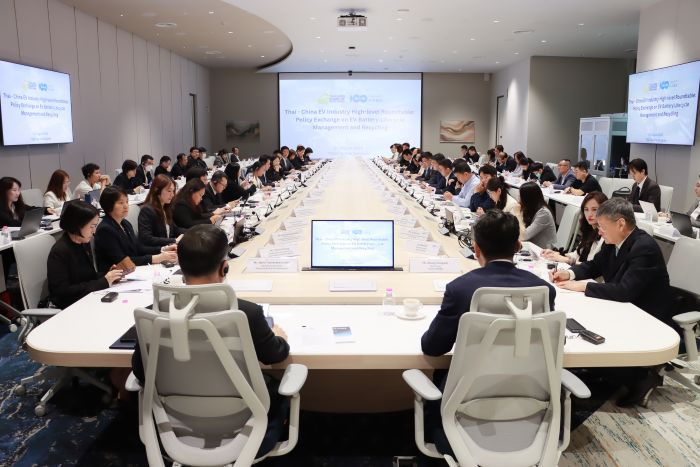
- Thailand Used EV Battery Policy addresses 2028-2030
- Thailand prepares for rising used battery volumes
Thailand Prepares for Rising Used EV Battery Volumes
On August 27, 2026, Thailand’s Board of Investment (BOI) highlighted the need for a Thailand Used EV Battery Policy to manage the large volumes of used EV batteries expected to enter the country’s system between 2028 and 2030. The warning comes as Thailand’s electric vehicle industry expands rapidly, increasing the future need for battery collection, processing, recycling, and related management systems. The BOI’s focus signals that policy planning is becoming increasingly important as the country moves from supporting EV adoption and manufacturing toward addressing the downstream requirements associated with growing numbers of batteries reaching the end of their initial vehicle use.
EV Investment and BEV Adoption Continue to Expand
The BOI said investment promotion approved for battery electric vehicle-related industries exceeded THB 150 billion from 2017 through the second quarter of 2026. This included 28 EV battery manufacturing projects with a combined value of more than THB 65 billion. Thailand had also recorded cumulative BEV registrations of 387,000 units, while BEVs accounted for 30% of total vehicle sales during the first half of 2026. These figures demonstrate the scale of the country’s expanding EV ecosystem and provide the underlying reason for stronger preparation around battery lifecycle management. As more vehicles enter operation, the volume of batteries eventually requiring appropriate treatment is expected to increase.
Industry Experts Discuss Battery Recycling Technologies
The Thai-China EV industry meeting was jointly organized by the BOI and China EV100 and brought together specialists from CATARC (China Automotive Technology and Research Center) and Thailand’s Department of Industrial Works. Chinese battery recyclers also participated, including Huayou Cobalt, Rikomay, and Qingshan Group. The companies shared recycling technologies and perspectives on battery recovery, providing technical input as Thailand considers how to manage future used EV battery volumes. The discussions highlight the importance of developing appropriate recycling capabilities alongside continued EV manufacturing and adoption, particularly ahead of the anticipated increase in used batteries during 2028–2030.
Policy Planning Becomes Critical for Thailand’s EV Ecosystem
Thailand’s expanding BEV market means battery lifecycle management will become an increasingly important part of the country’s EV industrial strategy. The investment pipeline, battery manufacturing projects, and rising registrations indicate that future battery volumes will be substantially larger than those associated with the market’s earlier development phase. The BOI’s call for policy preparation therefore focuses attention on the period when more batteries begin moving beyond their initial automotive application. Establishing appropriate systems in advance could help the country address collection and recycling requirements while supporting the broader development of its EV manufacturing ecosystem and related industrial capabilities.
Frequently Asked Questions
Why is Thailand preparing policies for used EV batteries?
Thailand is preparing for a significant increase in used EV batteries as BEV adoption and battery manufacturing expand across the country. The BOI expects large volumes of batteries to enter the system during 2028–2030, creating a need for appropriate management and recycling policies. Investment promotion for BEV-related industries has already exceeded THB 150 billion since 2017, while cumulative BEV registrations reached 387,000 units. The policy discussion is intended to prepare Thailand for the downstream battery lifecycle requirements associated with continued electric vehicle market growth.
Click above to visit the official source.
Discussion
Join the conversation.