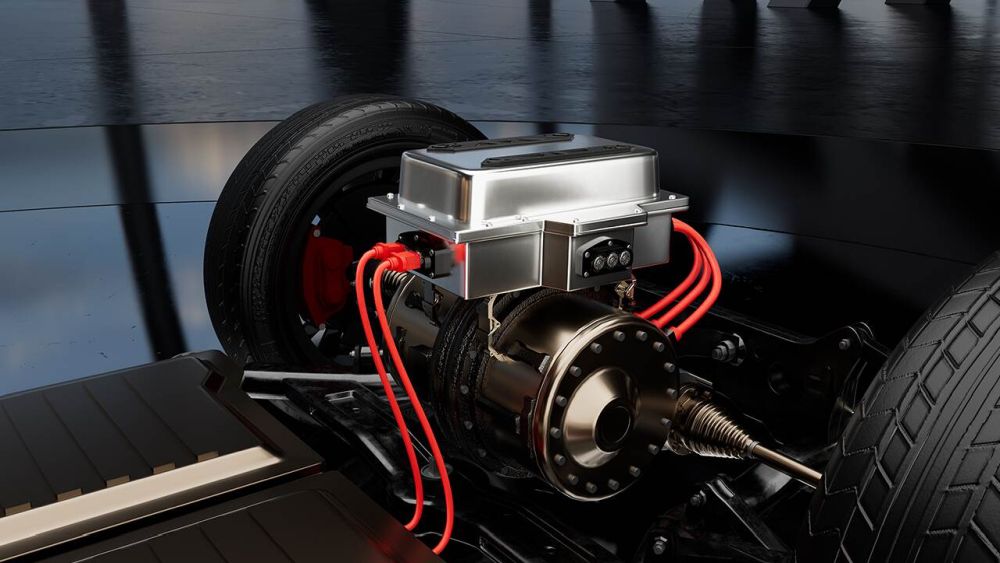
- TMCS2100-Q1 multiaxial coreless Hall-effect current sensor improves accuracy.
- Smaller traction inverters gain higher power density.
Texas Instruments Introduces Multiaxial Current Sensor
On August 25, Texas Instruments introduced the industry’s first TMCS2100-Q1 multiaxial coreless Hall-effect current sensor designed for hybrid electric vehicle (HEV) and electric vehicle (EV) traction inverter applications. The device measures magnetic fields in both horizontal and vertical directions and combines those measurements through a proprietary algorithm to improve current-sensing accuracy. By using multiaxial measurement instead of relying on a single sensing direction, the sensor is designed to address measurement challenges that can occur within traction inverter environments while maintaining a coreless architecture.
Improved Accuracy and Reduced Measurement Errors
The TMCS2100-Q1 is 20 times more accurate than single-axis coreless alternatives, with displacement error limited to less than 1% at 0.4 mm of movement and 0.25% at 0.1 mm. The multiaxial sensing approach also reduces errors caused by vibration and magnetic crosstalk, helping improve the consistency of current measurements during vehicle operation. According to Texas Instruments, these improvements can reduce torque ripple and support more precise motor torque control. Improved torque control can contribute to greater motor efficiency and increased driving range in HEV and EV applications.
Coreless Design Enables Smaller Traction Inverters
By eliminating the magnetic core without sacrificing the specified accuracy, the TMCS2100-Q1 enables smaller traction inverters with higher power density. The coreless design also eliminates the need for busbar modifications such as notches, slits or holes, giving designers greater flexibility when arranging components and optimizing available board space. This approach can simplify thermal management while supporting more compact inverter designs. For HEV and EV traction systems, the combination of accurate current measurement, reduced magnetic interference and higher power density provides a design approach aimed at improving inverter integration without requiring the additional busbar modifications associated with conventional sensing arrangements.
Impact on HEV and EV Traction Inverter Design
The TMCS2100-Q1 combines multiaxial magnetic-field measurement, a proprietary measurement algorithm and a coreless architecture to address several requirements of modern traction inverter systems. Its ability to reduce displacement-related errors, vibration-induced measurement errors, magnetic crosstalk and torque ripple can support more accurate control of electric motor torque. At the same time, eliminating the magnetic core and busbar modifications can provide additional freedom for compact inverter packaging. For Texas Instruments, the device extends current-sensing technology toward traction inverter designs where accuracy, power density, thermal management and available board space are important considerations.
Frequently Asked Questions
What is the TMCS2100-Q1 used for?
The TMCS2100-Q1 is designed for HEV and EV traction inverter applications, where accurate current measurement supports motor control, efficiency, and inverter performance. It measures magnetic fields in horizontal and vertical directions and combines those measurements with a proprietary algorithm. The sensor is designed to reduce displacement error, vibration-induced measurement errors, magnetic crosstalk, and torque ripple. Its coreless architecture also enables smaller traction inverters with higher power density while eliminating busbar modifications such as notches, slits, or holes.
Click above to visit the official source.
Discussion
Join the conversation.