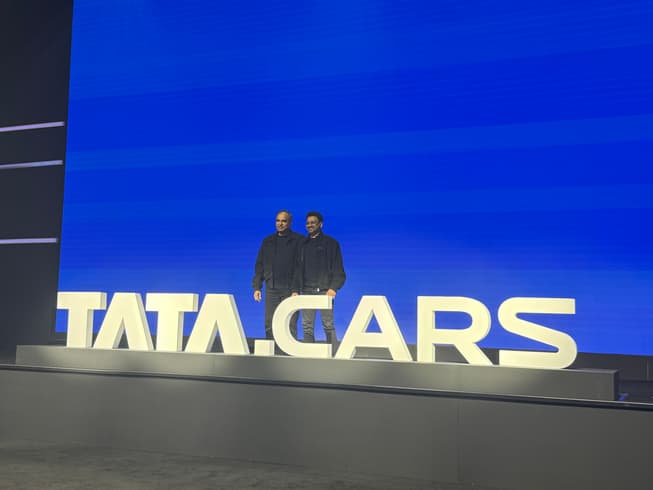
- Tata.Cars becomes Tata Motors’ new passenger identity.
- Tata.ev remains the dedicated electric vehicle sub-brand.
Tata Motors has adopted Tata.Cars as the new customer-facing identity for its passenger vehicle business, creating a unified brand presence across retail, digital, sales, service and marketing operations. The new identity will progressively appear across dealerships, showrooms, digital touchpoints, after-sales operations and marketing communication. The move is intended to formalize how Indian buyers commonly refer to the company’s passenger vehicles as “Tata.Cars,” regardless of whether they purchase a hatchback or an SUV. The change represents a brand architecture update rather than a corporate restructuring, with the company retaining its existing legal and statutory framework while establishing a more distinct customer-facing identity for its passenger vehicle operations.
Tata.Cars Identity Expands Across Customer Operations
The new identity will gradually become visible throughout the customer journey, including dealerships, showrooms, online platforms, after-sales services and marketing communications. Tata Motors Passenger Vehicles will continue to operate as the registered legal entity for statutory filings, manufacturing plants, official contracts and regulatory obligations. This separation allows the company to introduce a unified public-facing identity without changing its underlying corporate structure. Tata Motors said the approach formalizes an identity that Indian customers have already used informally, giving the passenger vehicle business a consistent expression across physical and digital channels while preserving the legal references required for business, manufacturing and regulatory activities.
Brand Strategy Builds on the Tata Name
Shailesh Chandra, Managing Director of Tata Motors Passenger Vehicles and Tata Passenger Electric Mobility, said the Tata.Cars identity reflects a name that India has already given the business. He described the Tata name as carrying the company’s heritage, values and trust earned over generations, while Tata.Cars provides the passenger vehicle business with a distinct, modern and future-facing expression. The new brand system is intended to operate across products, technologies, customer experiences and markets. By separating the customer-facing identity from the unchanged legal entity, the company can strengthen brand recognition while maintaining continuity across contracts, manufacturing operations, statutory filings and other formal corporate requirements.
Dealerships to Receive a New Visual and Sensory System
Vivek Srivatsa, Chief Commercial Officer of Tata Passenger Electric Mobility, said the transition will introduce a new visual and sensory system based on a design philosophy called “Parallel Pathways.” The system includes Ambition Blue as the principal color, a bespoke typeface called Parallel Display and a new sonic identity. Tata Passenger Electric Mobility will therefore contribute to a broader customer experience that extends beyond vehicle design and into retail environments and brand communications. Tata Motors plans to begin updating dealerships over the next few months, including redesigned interiors and a new stainless-steel façade featuring louvred panels intended to give retail locations a more consistent physical expression.
Tata.ev Remains the Dedicated Electric Vehicle Sub-Brand
The adoption of Tata.Cars does not eliminate or replace Tata.ev, which will continue to serve as the company’s dedicated electric vehicle sub-brand. Instead, Tata.ev will sit within the broader Tata.Cars brand architecture, allowing the company to maintain a distinct identity for its electric vehicle portfolio while presenting passenger vehicles under a unified customer-facing structure. Tata Motors can therefore retain separate positioning for electric vehicles without fragmenting the wider passenger vehicle brand. The architecture is designed to work across different products and technologies, giving the company flexibility to communicate its conventional and electric passenger vehicle offerings within a common customer-facing framework.
What the Brand Architecture Change Means
The Tata.Cars transition primarily changes how customers encounter and recognize the passenger vehicle business rather than altering its legal or operational foundation. Customers are expected to see the new identity across sales and service channels as the rollout progresses, while formal corporate and regulatory references will remain under Tata Motors Passenger Vehicles. The approach also creates a clearer relationship between the overarching passenger vehicle identity and Tata.ev, preserving a dedicated electric vehicle expression within the wider architecture. For Tata Motors, the change provides a consistent platform for products, technologies, customer experiences and markets while keeping the established Tata name, corporate structure and statutory responsibilities intact.
Frequently Asked Questions
What is Tata.Cars?
Tata.Cars is the new customer-facing identity adopted by Tata Motors for its passenger vehicle business, covering retail, digital, sales, service and marketing operations. It formalizes the way many Indian buyers already refer to the company’s passenger vehicles. The change does not create a new legal entity or alter the company’s corporate structure. Tata Motors Passenger Vehicles will continue to be used for statutory filings, manufacturing plants, contracts and regulatory obligations, while Tata.Cars becomes the broader public-facing identity across customer touchpoints and passenger vehicle experiences.
Click above to visit the official source.
Discussion
Join the conversation.