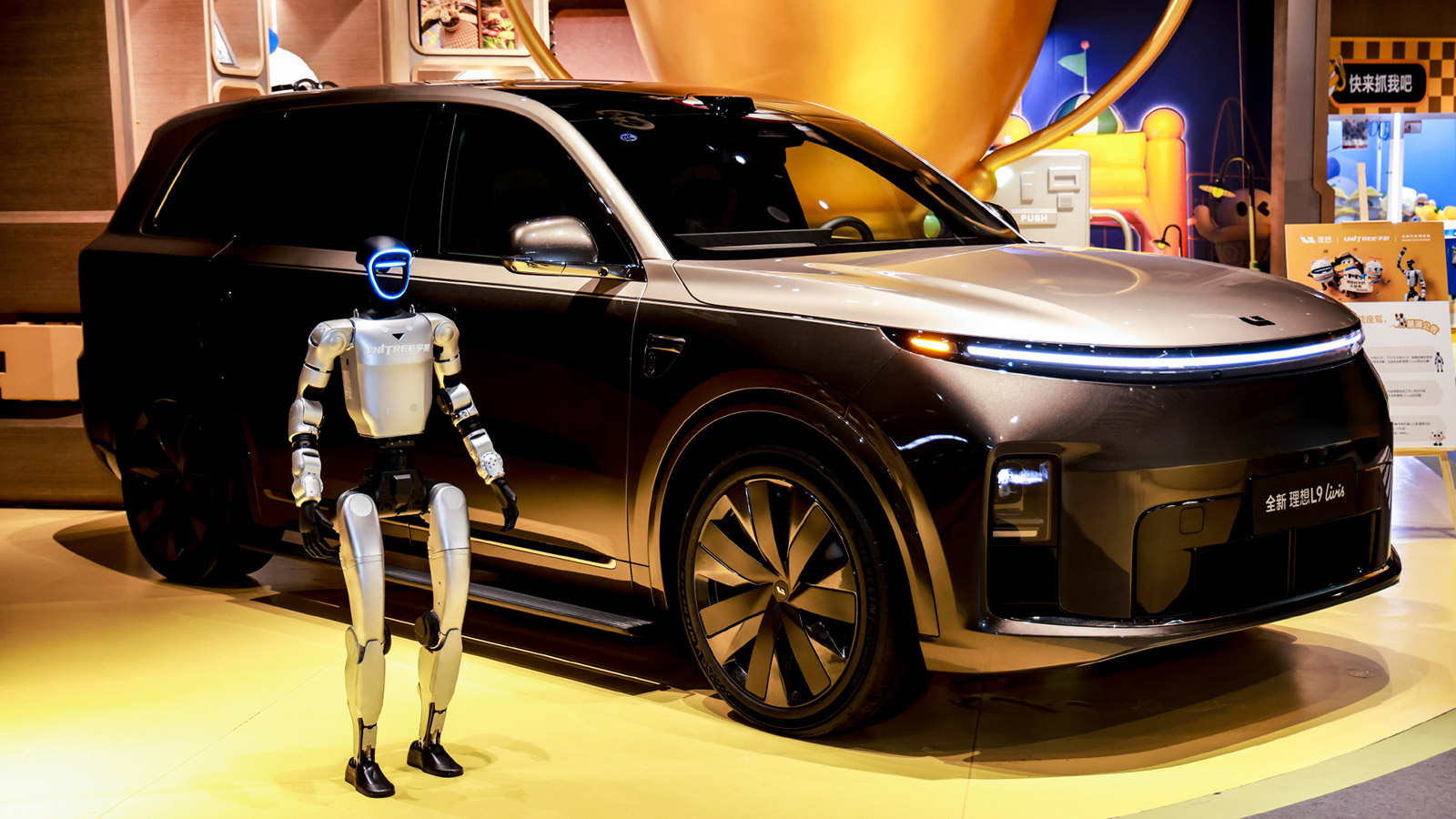
- Li Auto robotics gains veteran world-model expertise.
- New foundation model work targets robots and generalization.
Li Auto Adds World-Model Expertise to Robotics Push
Li Auto has reportedly hired veteran world-model expert Liu Yu to strengthen development of the artificial intelligence systems powering its robotics efforts. The expert, identified by the pseudonym Liu Yu, has been appointed head of the embodied behavior unit within the company's foundation-model team, according to local media outlet 21jingji. Liu will report to Zhan Kun, head of the foundation-model team, and oversee foundation-model development for robots. The report did not disclose Liu's real name or previous employers. The appointment gives Li Auto additional expertise as it builds dedicated AI models for robotics rather than relying solely on technology developed for autonomous driving.
Expert Brings World-Model Research Experience
Liu had considered starting a robotics company focused on household applications with the ambition of building "China's Physical Intelligence." According to the report, he ultimately chose to join Li Auto after recognizing the company's early research into VLA (Vision-Language-Action Model) technology and its deployment in production vehicles. Liu was among the earlier experts in China to conduct world-model research and led a team that began exploring the technology in 2023. His background includes using world models to generate synthetic data for long-tail scenarios and enabling end-to-end autonomous-driving models to undergo simulation training in virtual environments.
World Models Could Support Robot Development
The experience gained from world-model research could help Li Auto accelerate its development of robot models, although the company does not plan to directly reuse its autonomous-driving model. Liu believes the transferable value from autonomous driving is primarily in data training and AI infrastructure development rather than the underlying data or models themselves. His team's planned approach is to first train a robot foundation model using general-purpose spatial and world datasets collected from the internet. Robot-specific data would then be added to improve the model's ability to generalize across different embodiments, tasks and scenarios.
Li Auto Is Building Separate Foundation Models
Li Auto is developing three foundation models covering intelligent cockpits, autonomous driving and robotics, 21jingji cited a company employee as saying. The intelligent-cockpit model is MindGPT 3.1, while the autonomous-driving model is MindVLA-o1. Liu is expected to develop a separate foundation model dedicated to robots. This strategy differs from the unified cross-application models pursued by some competitors. The distinction is important because Li Auto is treating robotics as a dedicated foundation-model development effort while drawing on lessons from its autonomous-driving AI infrastructure and training processes.
Automakers Are Expanding AI Across Robots and Vehicles
The move comes as automakers increasingly connect artificial intelligence development across vehicles and robotics. Tesla has said its neural world simulator can be used for both Full Self-Driving (FSD) and the Optimus robot. Xpeng also plans to use its second-generation VLA in vehicles, robots and flying cars. Li Auto's separate-model strategy therefore represents one approach within a broader industry competition over how AI systems should be developed, trained and deployed across different physical platforms. The focus is increasingly shifting toward foundation models, data pipelines and execution capabilities as robot hardware components mature.
Robotics Team to Remain Small
The embodied behavior unit currently has fewer than 50 people, including full-time employees and interns, according to 21jingji. Liu values team quality over size and plans to keep the total headcount below 50. The relatively small team reflects an emphasis on specialized AI expertise rather than rapid expansion of personnel. Its responsibilities center on developing the foundation model for robots and improving generalization across embodiments, tasks and scenarios. This gives the unit a focused role within Li Auto's broader foundation-model organization while allowing the company to maintain separate AI development tracks for intelligent cockpits, autonomous driving and robotics.
Nexus Project Expands Li Auto's Robotics Ambitions
The hiring comes as Li Auto accelerates its robotics efforts under a project code-named "Nexus," which the company launched in late 2024. In a March report, 21jingji said Li Auto planned to unveil its first two-wheeled robot in 2026, initially targeting factory manufacturing applications. The company is also developing a bipedal robot. As supply chains for components including motors and reducers mature, competition among automakers is moving beyond robot hardware toward foundation models and execution capabilities. The development of specialized AI models could therefore become an increasingly important part of Li Auto's strategy as it expands its robotics activities.
Robotics Competition Is Drawing Major Capital
The broader robotics race among automakers is also attracting substantial investment. Earlier this week, Xpeng announced about $900 million in financing commitments for its robotics subsidiary Dogotix, implying a post-money valuation of around $6.3 billion. The capital flowing into robotics highlights the growing strategic importance of AI-driven machines and the infrastructure needed to develop them. For Li Auto, the addition of a world-model specialist comes at a time when the industry is increasingly competing on the quality of foundation models, training infrastructure and execution capabilities rather than only on mechanical hardware.
New Hire Could Strengthen AI Talent Capacity
Liu's appointment could also help Li Auto replenish its AI talent ranks after the company lost 13 key executives across autonomous driving, chips and robotics over the past year, according to 21jingji. Among them was former autonomous-driving chief Lang Xianpeng, who left after a brief stint leading the humanoid robotics business and subsequently founded an embodied-AI startup. Against that backdrop, recruiting an experienced world-model researcher could strengthen Li Auto's ability to develop specialized robotics intelligence. The company is now positioning its foundation-model organization to support distinct applications while building on the AI infrastructure and training expertise developed through autonomous driving.
Frequently Asked Questions
Why did Li Auto hire world-model expert Liu Yu?
Liu Yu was hired to lead Li Auto's embodied behavior unit and develop foundation models specifically for robotics, building on his experience with world models and AI training. His previous work included generating synthetic data for long-tail scenarios and using virtual environments to train end-to-end autonomous-driving models. Li Auto believes that experience can contribute to robot development through transferable data-training methods and AI infrastructure rather than direct reuse of autonomous-driving data or models. The company plans to develop a dedicated robot foundation model capable of generalizing across embodiments, tasks and scenarios.
Click above to visit the official source.
Discussion
Join the conversation.