- Voyah accelerates growth and profitability following HKEX listing
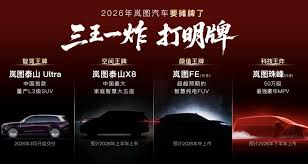
- Taishan X8 SUV marks strategic product expansion
Voyah has officially entered the public market, marking a pivotal step in its expansion journey. On March 19, the premium electric vehicle brand under Dongfeng Motor Corporation debuted on the Hong Kong Exchanges and Clearing Limited, initiating trading activities that signal stronger financial positioning. The move aligns with the Voyah HKEX listing growth strategy, aimed at improving capital efficiency, strengthening governance, and enhancing long-term competitiveness in the evolving electric mobility landscape.
Strategic Impact of the HKEX Listing
The public listing is expected to significantly enhance Voyah’s access to diversified financing channels while refining its corporate governance structure. By entering the Hong Kong capital market, Voyah positions itself to attract global investors and reinforce brand credibility. This development also supports its parent company’s broader capital optimization strategy, ensuring a more agile and scalable operational framework. The listing is anticipated to elevate Voyah’s influence in both domestic and international electric vehicle segments.
Taishan X8 Marks Product Expansion
Coinciding with the listing milestone, Voyah introduced the Taishan X8, a large five-seater SUV designed as a strategic flagship model. This launch underscores the brand’s focus on expanding its premium vehicle portfolio while catering to evolving consumer preferences. The Taishan X8 is positioned to strengthen Voyah’s presence in the competitive SUV segment, reflecting its commitment to innovation and market responsiveness.
Strong Sales and Financial Growth Trajectory
Voyah has demonstrated rapid growth over recent years, with sales volumes rising from 50,285 units in 2023 to 150,169 units in 2025. This represents a compound annual growth rate of 73%, significantly outperforming industry benchmarks. Revenue also surged from CNY 12.75 billion to CNY 34.86 billion during the same period, reflecting a CAGR of 65.4%.
Profitability Milestone Achieved
In 2025, Voyah achieved a net profit of CNY 1.02 billion, marking its transition into a profit-generating phase. The company maintained a strong gross profit margin of 21%, indicating operational stability and efficient cost management. This financial performance reinforces its upward trajectory and validates its strategic initiatives in the competitive EV market within China.
The combination of capital market entry, product innovation, and robust financial performance positions Voyah for sustained growth and increasing relevance in the global electric vehicle ecosystem.
Click above to visit the official source.
Discussion
Join the conversation.