Quick Takeaways
- FAW-Volkswagen Jetta Auto Tech operations mark a strategic expansion in China’s automotive innovation landscape.
- FAW-Volkswagen Jetta Auto Tech operations highlight a strong focus on NEVs, R&D, and intelligent mobility.
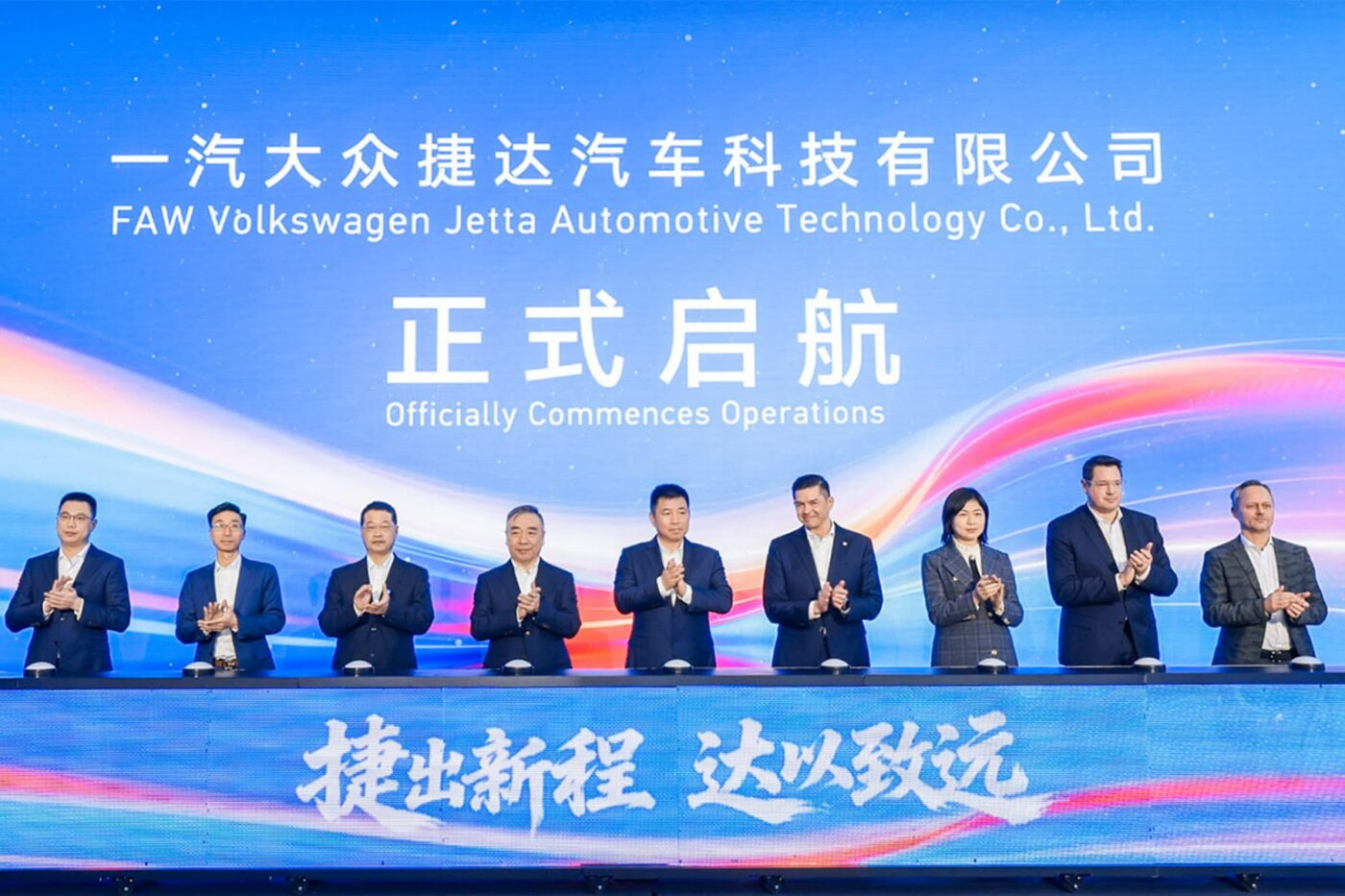
On January 14, FAW-Volkswagen Jetta Automotive Technology (Sichuan) Co. Ltd., known as Jetta Auto Tech, officially began operations in Chengdu, strengthening the FAW-Volkswagen partnership and reinforcing long-term commitments to innovation, electrification, and intelligent vehicle development in China’s rapidly evolving automotive market.
Backed by FAW Group as a major shareholder, Jetta Auto Tech will be fully empowered through FAW’s established strengths across technology research and development, intelligent manufacturing systems, supply chain management, and market expansion capabilities, creating a robust foundation for scalable and efficient growth.
As a core strategic shareholder and technical partner, Volkswagen Group will provide deep technical collaboration by opening its global R&D network to Jetta Auto Tech. This includes access to advanced electrified vehicle platforms and structured support for expanding the company’s business presence beyond China.
FAW-Volkswagen Jetta Auto Tech operations focus on advanced R&D
Jetta Auto Tech plans to continuously strengthen its local independent R&D capabilities, enabling faster technology transformation and iteration across several high-growth automotive domains, including:
This localized innovation strategy is designed to enhance development speed while aligning global technologies with regional market needs.
Product roadmap and production targets
In the medium term, Jetta Auto Tech is targeting an annual production and sales volume of 400,000 to 500,000 vehicles. From a product deployment perspective, the company plans to introduce five new vehicle models by 2028, of which four will be New Energy Vehicles, underscoring its clear emphasis on electrification and sustainable mobility.
The launch of operations in Chengdu positions Jetta Auto Tech as a key pillar in FAW-Volkswagen’s future-oriented strategy, combining global technical expertise with localized execution to accelerate intelligent and electrified vehicle development at scale.
Backed by FAW Group as a major shareholder, Jetta Auto Tech will be fully empowered through FAW’s established strengths across technology research and development, intelligent manufacturing systems, supply chain management, and market expansion capabilities, creating a robust foundation for scalable and efficient growth.
As a core strategic shareholder and technical partner, Volkswagen Group will provide deep technical collaboration by opening its global R&D network to Jetta Auto Tech. This includes access to advanced electrified vehicle platforms and structured support for expanding the company’s business presence beyond China.
FAW-Volkswagen Jetta Auto Tech operations focus on advanced R&D
Jetta Auto Tech plans to continuously strengthen its local independent R&D capabilities, enabling faster technology transformation and iteration across several high-growth automotive domains, including:
- New vehicle platforms and modular architectures
- Intelligent assisted driving technologies
- Next-generation intelligent cockpit systems
This localized innovation strategy is designed to enhance development speed while aligning global technologies with regional market needs.
Product roadmap and production targets
In the medium term, Jetta Auto Tech is targeting an annual production and sales volume of 400,000 to 500,000 vehicles. From a product deployment perspective, the company plans to introduce five new vehicle models by 2028, of which four will be New Energy Vehicles, underscoring its clear emphasis on electrification and sustainable mobility.
The launch of operations in Chengdu positions Jetta Auto Tech as a key pillar in FAW-Volkswagen’s future-oriented strategy, combining global technical expertise with localized execution to accelerate intelligent and electrified vehicle development at scale.
Company Press Release
Click above to visit the official source.
Discussion
Join the conversation.
Share: