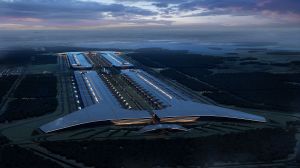
- Terafab advances Tesla and SpaceX chip production plans.
- The Texas facility targets advanced logic and memory.
Terafab Chip Factory Planned for Grimes County
On August 6, Tesla and SpaceX announced plans for Terafab, an advanced chip factory that will be jointly developed in Grimes County, Texas, outside Houston. The project carries an initial investment of USD 16.8 billion, while potential future expansion phases could increase the total investment substantially. The facility is expected to employ at least 3,000 people. The announcement represents a major expansion of semiconductor manufacturing ambitions for Tesla and SpaceX, with the planned factory intended to support the companies' growing internal demand for advanced computing hardware and specialized semiconductor technologies.
Vertically Integrated Semiconductor Manufacturing Facility
Terafab is planned as a vertically integrated manufacturing facility with more than 100 million square feet of manufacturing space. The site is expected to cover multiple stages of semiconductor production, including the manufacturing, packaging, and testing of advanced logic and memory devices. By combining these activities within one facility, the project is designed around an integrated production model rather than relying solely on external semiconductor suppliers. The scale of the planned manufacturing footprint also indicates that the facility is intended to support substantial long-term production requirements as Tesla and SpaceX expand their use of advanced computing systems.
Chips Targeted at AI, Robotics and Space Computing
Terafab will produce chips optimized for edge computing and inference for hardware including Tesla's self-driving Cybercabs and Optimus robots. The factory will also manufacture high-power chips intended for operating SpaceX's space-based data centers. Combined demand from Tesla and SpaceX is expected to exceed 1 terawatt (TW) of compute, a requirement described as significantly larger than the current global supply. The planned semiconductor output therefore spans both AI-related edge computing applications and high-power computing requirements, linking the factory directly to the companies' developing autonomous vehicle, robotics, and space-based computing programs.
Multi-Phase Investment Plan
SpaceX has suggested in recent filings that it may spend as much as USD 119 billion on the Grimes County project through a “multi-phase” construction plan. This potential investment is considerably higher than the initial USD 16.8 billion commitment announced for the project, indicating that the facility could expand substantially over multiple construction phases. Intel has also said it will contribute to the Terafab project, although the company has not disclosed the exact nature or scale of its contribution. The project therefore combines planned investment from Tesla and SpaceX with participation from Intel.
Frequently Asked Questions
What is Terafab?
Terafab is a planned advanced chip factory jointly developed by Tesla and SpaceX in Grimes County, Texas. The facility is expected to manufacture, package, and test advanced logic and memory devices for applications spanning autonomous vehicles, robotics, and space-based computing. The project has an initial investment of USD 16.8 billion and is expected to employ at least 3,000 people. It is planned as a vertically integrated manufacturing operation with more than 100 million square feet of manufacturing space, while future construction phases could substantially increase the overall investment in the project.
How much could the Terafab project ultimately cost?
The Terafab project has an announced initial investment of USD 16.8 billion, while SpaceX has suggested in recent filings that spending could reach as much as USD 119 billion across a “multi-phase” construction plan. The larger figure represents a potential cumulative investment rather than the initial announced commitment. Future expansion phases could therefore make the Grimes County facility significantly larger than its initial development scope. Intel has also confirmed that it will contribute to the project, although the company has not publicly detailed the exact nature or value of its contribution.
Click above to visit the official source.
Discussion
Join the conversation.