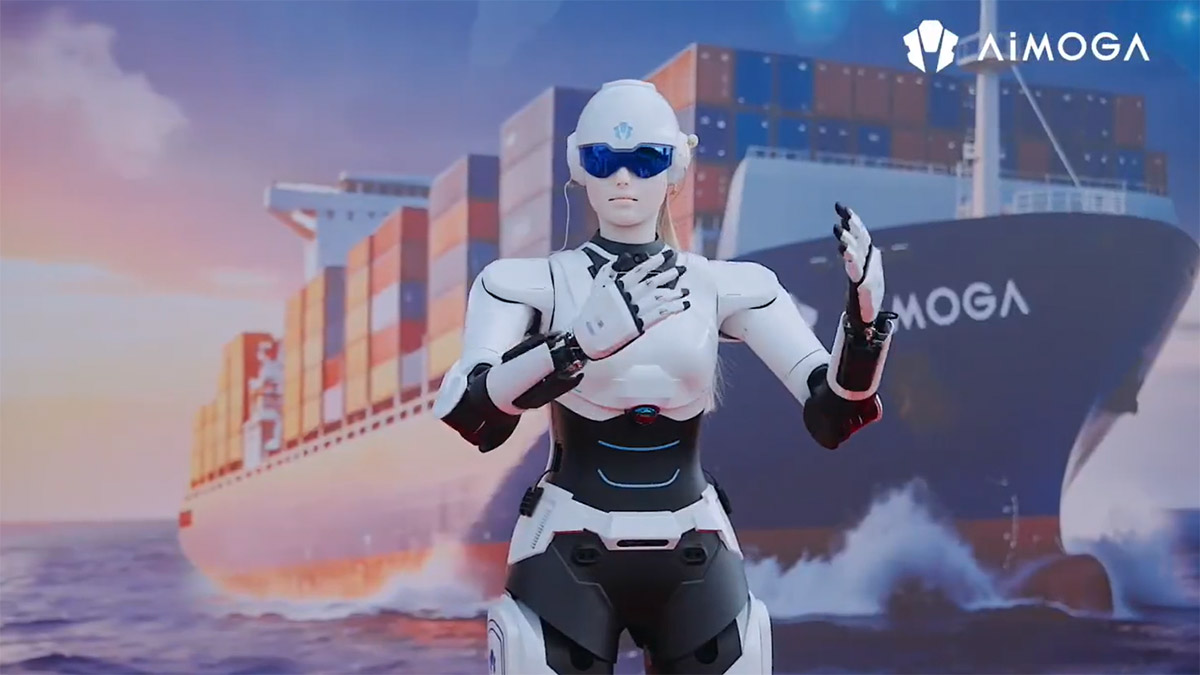
- Aimoga Robotics expands overseas with 2,000 robot deliveries globally
- Chery’s humanoid robot strategy gains international market momentum
Aimoga Robotics Expands Global Robot Deployment
Aimoga Robotics, a robot brand incubated by Chery (HKEX: 9973), has exceeded 2,000 cumulative overseas deliveries, with its products and services now available across more than 60 countries and regions. The company has expanded beyond domestic operations by introducing robots into automotive marketing and service applications while building international capabilities across manufacturing, supply chains, distribution and localized operations. This milestone highlights the growing role of intelligent robotic solutions within automotive and commercial environments.
The Chinese automaker organized a departure ceremony in Wuhu, Anhui province, where trucks carrying robots left the Chery International Industrial Park for Wuhu Port. The latest delivery milestone represents significant growth compared with the end of 2025, when the company had delivered 300 humanoid robots and 1,000 robot dogs across more than 30 countries and regions. The expansion demonstrates increasing adoption of robotic platforms in multiple professional and public-facing applications.
International Expansion Across Multiple Regions
The company began its overseas expansion journey in Malaysia, where robots were introduced into automotive marketing and service scenarios for the first time in 2025. Later, operations expanded into Southeast Asia, the Middle East, Europe, Africa and Latin America. The company also showcased products at Automation Thailand 2026 and started operations at its first AI experience center in Vietnam during July, strengthening its regional presence and customer engagement capabilities.
The robot manufacturer has achieved international certifications including the European Union CE marking and US Federal Communications Commission certification. Its robotic solutions are deployed across automotive marketing and services, public-space guidance, smart policing, medical guidance and commercial reception. These applications indicate the broader transition of robots from experimental technologies into practical service-oriented platforms supporting businesses, institutions and public environments.
Chery’s Intelligent Technology Strategy
According to Zhang Guibing, executive vice president of Chery Automobile, competing in overseas robot markets requires more than advanced products. Companies need integrated capabilities covering research and development, manufacturing, supply chains, distribution, delivery services and localized operations. He stated that only companies becoming genuinely integrated into local markets can achieve sustainable long-term growth. The strategy combines technology development with global operational experience accumulated through decades of automotive industry expansion.
As part of Chery’s intelligent technology strategy, the robotics business utilizes the automaker’s established research, manufacturing, logistics and distribution systems developed through nearly 30 years of global operations. In China, 110 police robots were deployed across several cities during the first half of the year for applications including traffic control and public-order guidance, demonstrating real-world implementation of robotic systems.
Consumer Sales and Future Automotive Robot Competition
The company started direct consumer sales in China through its flagship store on JD.com in April. Its humanoid robot is priced at 285,800 yuan, while its quadruped robot dog is priced at 15,800 yuan. The business is also expanding offline sales channels after signing agreements with more than 300 dealers during a recruitment event earlier this year, supporting broader market accessibility for robotic products.
Chery established the robotics venture in January 2025, with senior executives identifying it as a future growth engine for the group. Other Chinese automotive companies including BYD, Changan Automobile, GAC Group and Xpeng are also developing humanoid robot technologies. The increasing involvement of vehicle manufacturers indicates a growing convergence between automotive engineering, artificial intelligence and robotics industries.
Frequently Asked Questions
Why are automotive companies investing in humanoid robots?
Automotive companies are investing in humanoid robots because they can leverage manufacturing expertise, artificial intelligence capabilities and global operational networks to develop new technology-driven business opportunities. These robots can support service operations, industrial applications and customer engagement activities. The integration of robotics with automotive ecosystems may create additional revenue streams while improving automation capabilities across multiple sectors.
How many countries and regions does the company currently serve?
The company has expanded its products and services across more than 60 countries and regions worldwide through international deployment strategies. Its operations cover multiple markets including Southeast Asia, Europe, Africa, the Middle East and Latin America. The expansion reflects efforts to establish localized operations and strengthen global adoption of robotic technologies across commercial and public applications.
Click above to visit the official source.
Discussion
Join the conversation.