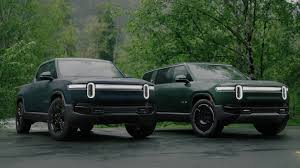
Quick Takeaways
- Rivian R2 electric SUV validation units signal readiness for customer deliveries in 2026.
- The R2 program represents Rivian’s most critical step toward higher-volume growth.
On January 15, 2026, Rivian Automotive confirmed that validation units of the Rivian R2 electric SUV have officially begun rolling off the production line at its Normal, Illinois manufacturing facility. The update was shared by CEO RJ Scaringe, reinforcing that the company remains on schedule to begin customer deliveries in the first half of 2026.
The Rivian R2 electric SUV is widely viewed as the most strategically important vehicle in the company’s portfolio. Designed as a higher-volume and more accessible model, the R2 is positioned to expand Rivian’s reach beyond its premium R1T and R1S offerings while supporting long-term scale and cost efficiency.
Rivian R2 Electric SUV Positioned as a Volume Growth Catalyst
The R2 has been developed to serve as Rivian’s transition into the mass-market electric SUV segment. Unlike the brand’s earlier premium models, the R2 is engineered to balance affordability, performance, and manufacturing efficiency, enabling Rivian to compete more directly in the high-demand mid-size electric SUV category.
To accelerate this launch, Rivian paused its previously announced Georgia factory plans and instead concentrated resources on rapidly preparing its existing Normal facility. This decision placed heightened attention on production timelines and execution at the Illinois plant.
Normal Illinois Plant Upgraded for R2 Production
The Normal, Illinois manufacturing site has undergone extensive upgrades to support the Rivian R2 electric SUV platform. The company completed a 1.1 million square-foot expansion and installed new production tooling at a notably fast pace to align with its 2026 launch objectives.
These updates allow the R2 to be produced on dedicated assembly lines optimized for higher volumes. The facility modifications mark a significant operational milestone as Rivian transitions from low-volume premium vehicles to more scalable production.
Validation Units Mark Final Step Before Saleable Production
Validation builds represent the final phase before full-scale saleable production begins. These vehicles are assembled on the actual production line using production-grade tooling rather than prototype methods.
With Rivian R2 electric SUV validation units now rolling out in January, the program has entered its last major pre-launch stage. This progress significantly reduces execution risk ahead of customer deliveries.
Delivery Timing and Competitive Positioning
Rivian has previously guided that R2 deliveries will begin in the first half of 2026. The start of validation builds suggests the company is well-positioned to meet this target, with customer handovers potentially beginning in late Q1 or early Q2.
The Rivian R2 electric SUV is widely viewed as the most strategically important vehicle in the company’s portfolio. Designed as a higher-volume and more accessible model, the R2 is positioned to expand Rivian’s reach beyond its premium R1T and R1S offerings while supporting long-term scale and cost efficiency.
Rivian R2 Electric SUV Positioned as a Volume Growth Catalyst
The R2 has been developed to serve as Rivian’s transition into the mass-market electric SUV segment. Unlike the brand’s earlier premium models, the R2 is engineered to balance affordability, performance, and manufacturing efficiency, enabling Rivian to compete more directly in the high-demand mid-size electric SUV category.
To accelerate this launch, Rivian paused its previously announced Georgia factory plans and instead concentrated resources on rapidly preparing its existing Normal facility. This decision placed heightened attention on production timelines and execution at the Illinois plant.
Normal Illinois Plant Upgraded for R2 Production
The Normal, Illinois manufacturing site has undergone extensive upgrades to support the Rivian R2 electric SUV platform. The company completed a 1.1 million square-foot expansion and installed new production tooling at a notably fast pace to align with its 2026 launch objectives.
These updates allow the R2 to be produced on dedicated assembly lines optimized for higher volumes. The facility modifications mark a significant operational milestone as Rivian transitions from low-volume premium vehicles to more scalable production.
Validation Units Mark Final Step Before Saleable Production
Validation builds represent the final phase before full-scale saleable production begins. These vehicles are assembled on the actual production line using production-grade tooling rather than prototype methods.
- They are critical for final regulatory certification, crash testing, and EPA range validation.
With Rivian R2 electric SUV validation units now rolling out in January, the program has entered its last major pre-launch stage. This progress significantly reduces execution risk ahead of customer deliveries.
Delivery Timing and Competitive Positioning
Rivian has previously guided that R2 deliveries will begin in the first half of 2026. The start of validation builds suggests the company is well-positioned to meet this target, with customer handovers potentially beginning in late Q1 or early Q2.
- The Rivian R2 electric SUV is expected to carry a starting price of around USD 45,000, placing it directly against high-volume competitors such as the :contentReference[oaicite:2]{index=2}.
Company Social Media
Click above to visit the official source.
Discussion
Join the conversation.
Share: