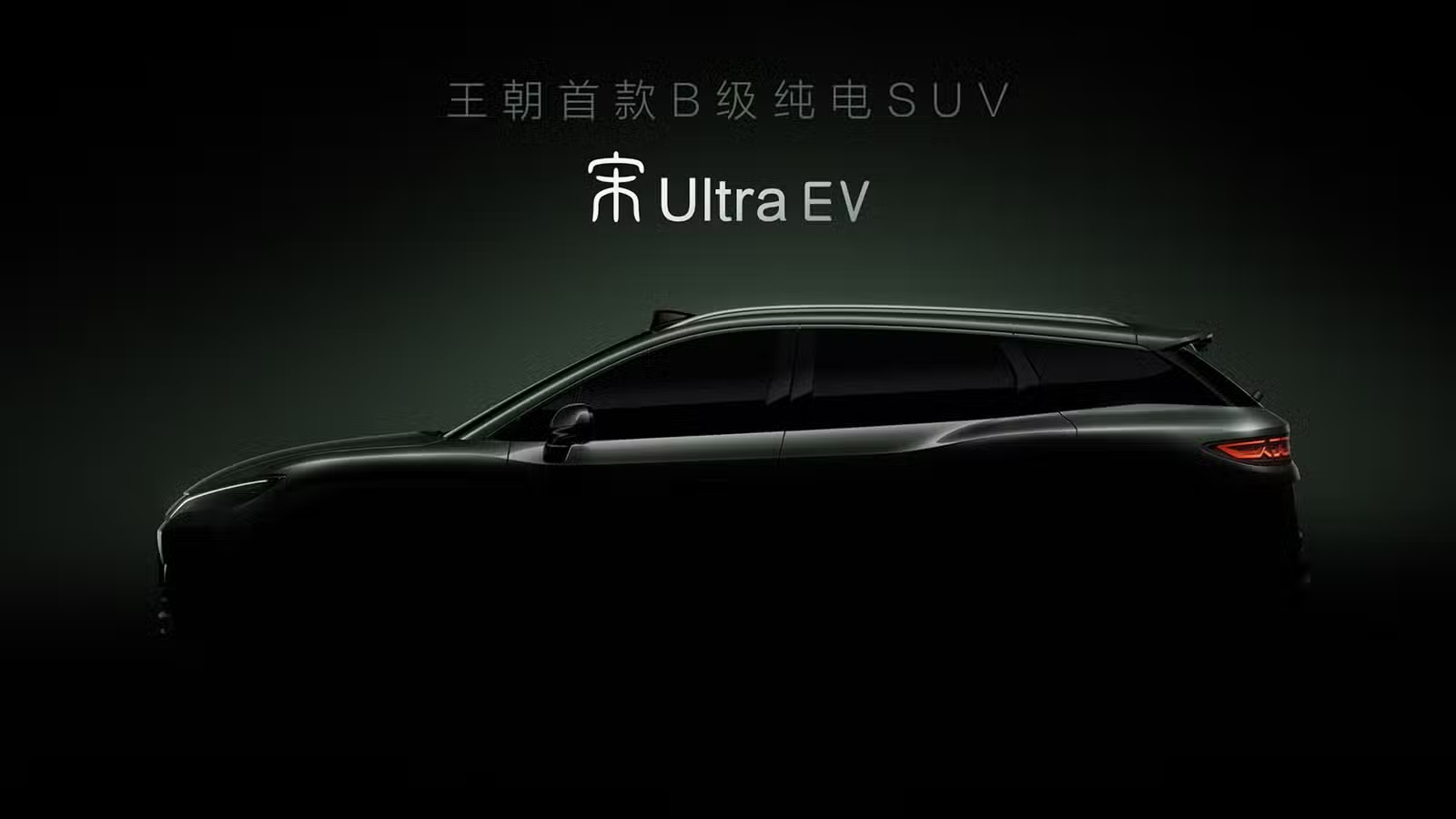
- BYD Song Ultra EV introduces ultra-fast 1500 kW flash-charging and second-generation blade battery technology.
- The electric SUV offers up to 710 km range and targets the competitive mid-size EV segment in China.
Chinese electric vehicle manufacturer BYD is preparing to officially launch the all-new BYD Song Ultra EV on March 26 following the opening of pre-sales earlier this month. The electric SUV represents one of the company’s latest efforts to strengthen its position in China’s rapidly evolving electric vehicle market. According to the company’s Dynasty lineup sales head Lu Tian, the model will introduce flash-charging technology as a standard feature across the entire vehicle range.
Flash-Charging Technology and Battery Innovation
The upcoming electric SUV will be among the first production models to integrate BYD’s newly unveiled flash-charging system and second-generation blade battery. Introduced earlier this month, the technology supports a peak charging power of up to 1500 kW, positioning it as one of the most aggressive fast-charging solutions currently announced in the global electric vehicle sector. These innovations aim to significantly reduce charging time while maintaining battery safety and durability.
Rapid Charging Performance
Official performance figures show that the vehicle can charge from 10 percent to 97 percent in approximately nine minutes under normal temperature conditions. Even in extremely cold environments around minus 30 degrees Celsius, charging time increases only slightly by roughly three minutes. This capability highlights the system’s resilience in challenging climates and underscores the company’s strategy to differentiate its vehicles through high-performance charging technology.
Vehicle Specifications and Performance
The mid-size electric SUV measures 4,850 mm in length, 1,910 mm in width, and 1,670 mm in height, supported by a wheelbase of 2,840 mm. The vehicle will be offered with two driving range options based on the CLTC testing cycle, delivering operating ranges of 620 km and 710 km respectively. Power is provided by a single-motor rear-wheel-drive system capable of producing a maximum output of 270 kW and enabling a top speed of 210 km/h.
Pricing Strategy and Market Position
Pre-sales for the model began with four variants positioned to compete aggressively within China’s mid-size electric SUV segment. Pricing reflects the manufacturer’s strategy of combining advanced technology with relatively accessible entry points to capture broader market demand. The model is expected to compete alongside several emerging electric SUVs while strengthening BYD's Dynasty lineup.
| Variant | Pre-Sale Price (Yuan) |
|---|---|
| Version 1 | 155,000 |
| Version 2 | 165,000 |
| Version 3 | 175,000 |
| Version 4 | 185,000 |
The vehicle also incorporates the DiSus-C intelligent body control system along with a high-speed tire blowout stabilization function. According to the manufacturer, this technology can maintain vehicle stability during a tire failure even at speeds reaching 140 km/h. As competition intensifies across China’s electric SUV market, the new model is expected to compete directly with other mid-size EVs while complementing the Sealion 06 in expanding the brand’s presence in the pure-electric SUV segment.
Click above to visit the official source.
Discussion
Join the conversation.