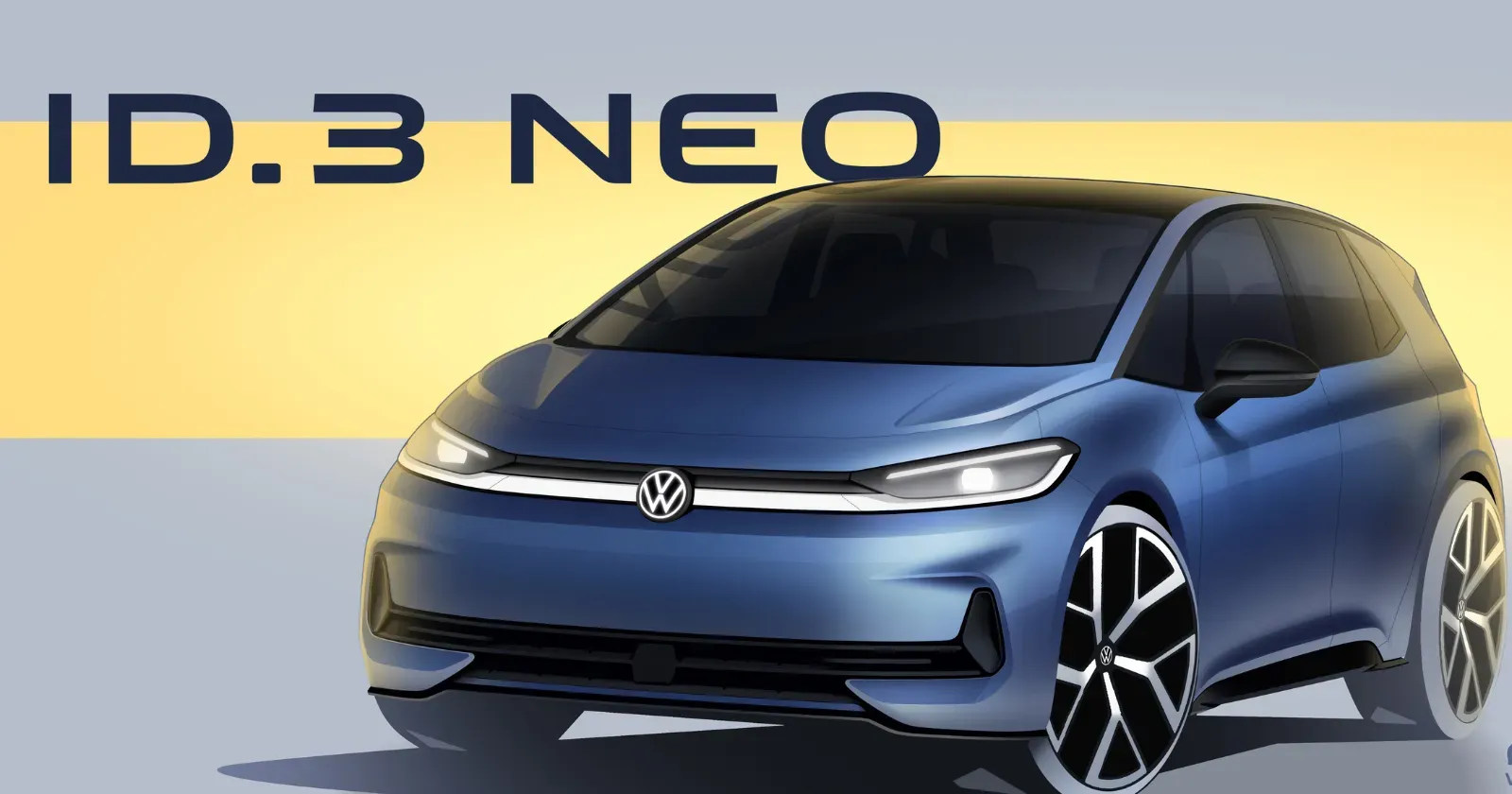
- Volkswagen will unveil the ID.3 Neo electric hatchback in April 2026 with upgraded driver assistance and software.
- New ID software platform adds Vehicle-to-Load capability and updated infotainment across multiple ID models.
The Volkswagen ID.3 Neo represents the next evolution of the company’s compact electric hatchback lineup and is scheduled for its world premiere in mid-April 2026. Designed as the successor to the original ID.3, the model introduces upgraded software architecture, enhanced driver assistance systems, and expanded digital functionality. Among the most notable additions are improved Travel Assist with traffic-light recognition and a One Pedal Driving function that simplifies urban driving while increasing overall energy efficiency.
Software and Powertrain Improvements Across ID Models
The Volkswagen ID.3 Neo arrives alongside a broader update across the ID electric family, including the ID.4, ID.5, and ID.7. These models now feature enhanced driving functions, the new Innovision infotainment system, and improvements to electric drive performance. The ID.4 and ID.5 Pure variants adopt the APP 350 drive system producing 140 kW, delivering increased torque and better efficiency. As a result, the ID.4’s driving range increases by up to 40 kilometers, highlighting the brand’s continuous refinement of its electric propulsion technology.
New Digital Features and Compliance with Global Regulations
Beyond drivetrain upgrades, the Volkswagen ID.3 Neo introduces a redesigned software ecosystem that includes an integrated app store within the Innovision infotainment platform. This allows drivers to activate or upgrade vehicle features digitally after purchase. Future ID models will also reintroduce physical steering-wheel buttons to improve usability. The updated hardware and software architecture supports upcoming global regulations such as Euro 7 emissions rules, California’s ZEV3 standard, and the EU’s GSR2 safety framework while adding Vehicle-to-Load functionality capable of delivering up to 3.6 kW of external power.
Click above to visit the official source.
Discussion
Join the conversation.