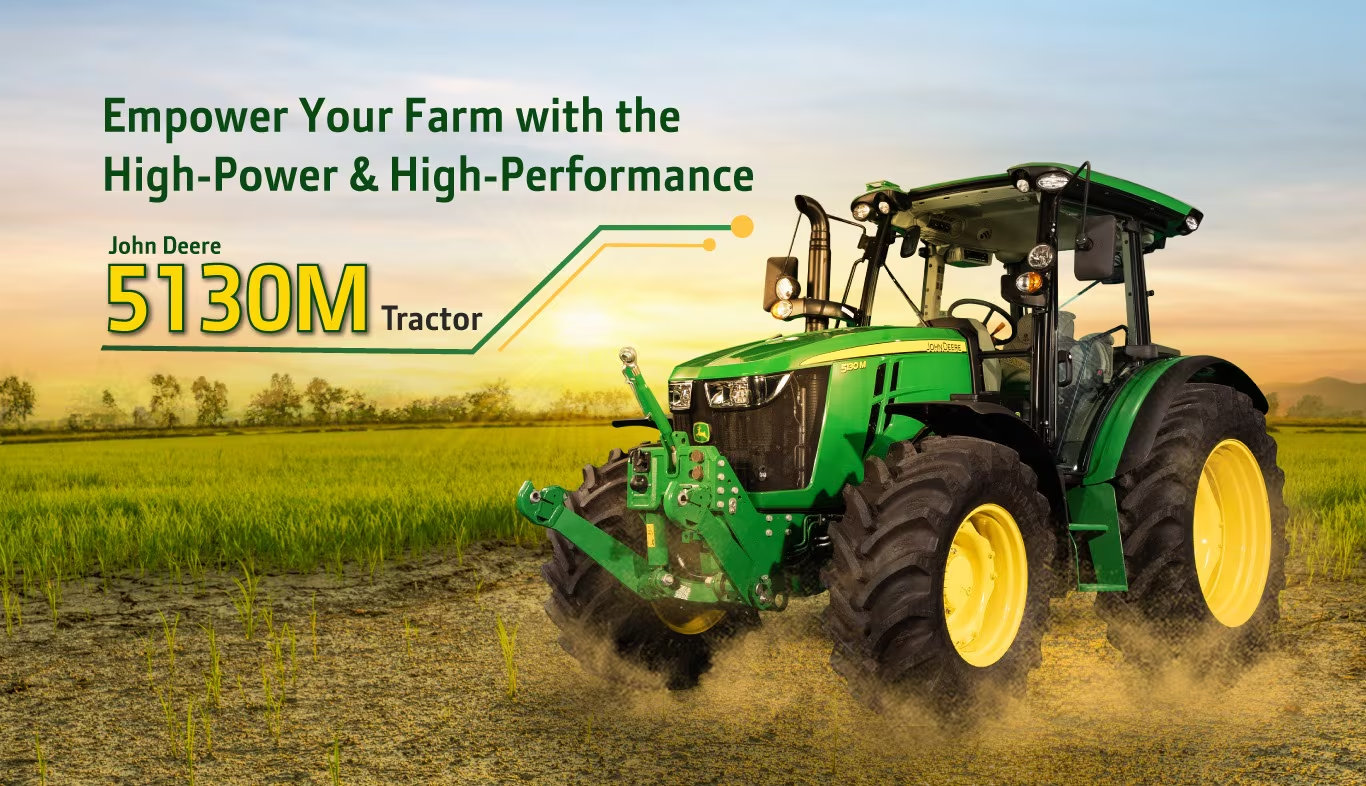
- Deere & Company introduced the 5130M tractor and multiple farm technologies at its India Power & Technology Show.
- The new solutions aim to improve productivity, connectivity, and mechanisation for Indian farmers.
The Deere & Company 5130M tractor was officially introduced during the company’s Power & Technology Show held in India, highlighting new technologies designed to support modern farming practices. The Illinois-based manufacturer used the event to showcase the 130-horsepower tractor alongside several technology upgrades intended to help farmers increase productivity while reducing operational and input costs across India’s diverse agricultural regions.
New Technologies Introduced Alongside the 5130M Tractor
The company presented four additional technology solutions during the event to complement the Deere & Company 5130M tractor launch. These included a Front Hitch and Front PTO application designed for the 5130M model, enabling improved equipment compatibility for multiple farming operations. Deere also demonstrated the 5E AutoTrac straight-row guidance system, which helps operators maintain precise vehicle alignment in the field, improving efficiency and reducing overlap during tasks such as planting or spraying.
Connectivity and Tire Upgrades for Farm Efficiency
Other upgrades included the GreenSystem Link factory-fitted connectivity kit that enables remote monitoring and digital management of farm equipment operations. In addition, the company introduced a full radial tire upgrade for its 5405 and 5075E tractor models, which aims to improve traction, fuel efficiency, and soil protection. According to company representatives, these technologies are designed to support the growing demand for mechanisation and digital tools in Indian agriculture.
Company leaders highlighted the importance of India within global operations. Rajesh Sinha, Managing Director and Country Manager for John Deere India, explained that the company’s activities in the country extend beyond manufacturing to include research and development, engineering, global IT, supply chain operations, and road construction solutions. With more than 27 years of presence in India and exports to over 110 countries, Deere & Company continues to expand its role in supporting agricultural productivity and sustainable development.
Click above to visit the official source.
Discussion
Join the conversation.