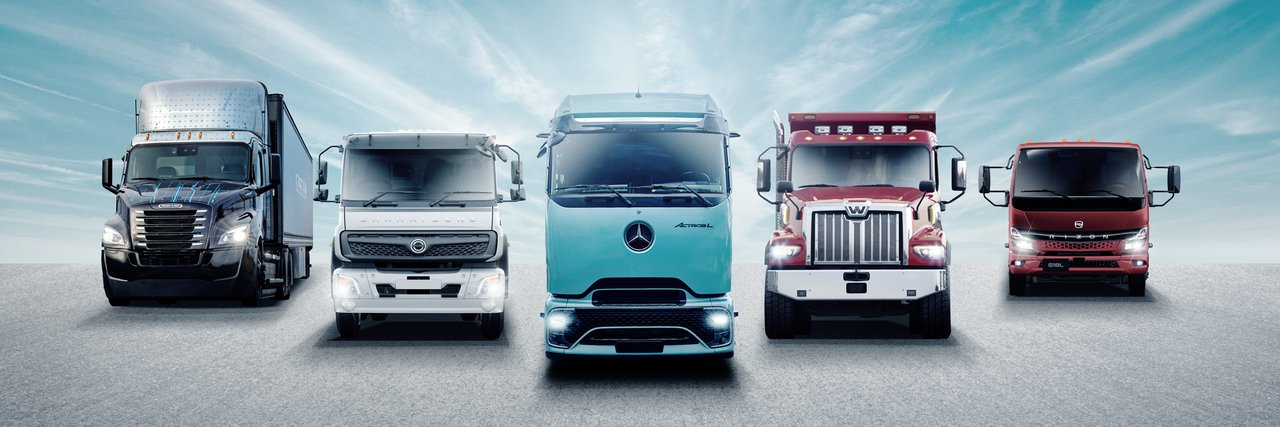
- Daimler Truck Holding AG reported lower revenue and EBIT in 2025 as global truck demand weakened.
- Electric truck sales and order intake improved, supporting expectations for recovery in 2026.
The Daimler Truck Holding AG 2025 financial results reflected a challenging year for the global commercial vehicle industry as weaker freight activity, tariff pressures, and softer fleet investment weighed on performance. The company reported declines in revenue, earnings, and unit sales compared with the previous year. Despite these pressures, improving order intake, strong segment profitability in several divisions, and accelerating electric vehicle adoption indicated operational resilience. Management highlighted improving fourth-quarter performance and continued efficiency measures as key indicators that underlying business fundamentals remain intact heading into 2026.
Financial Performance in Daimler Truck Holding AG 2025 Financial Results
The Daimler Truck Holding AG 2025 financial results showed a noticeable decline in profitability and revenue as global commercial vehicle demand cooled following strong replacement cycles seen in 2023 and early 2024. Adjusted Group EBIT declined to €3.78 billion compared with €4.67 billion in the previous year. Industrial Business revenue dropped by 10% to €45.9 billion, while earnings per share decreased to €2.56. The company also reported lower free cash flow for its industrial operations, reflecting reduced vehicle deliveries and broader market headwinds.
| Financial Metric | 2025 | 2024 |
|---|---|---|
| Adjusted Group EBIT | €3.78 Billion | €4.67 Billion |
| Industrial Business Revenue | €45.9 Billion | €50.7 Billion |
| Earnings Per Share | €2.56 | €3.64 |
| Free Cash Flow (Industrial Business) | €1.82 Billion | €3.15 Billion |
Total unit sales across trucks and buses reached 422,510 units worldwide, representing an 8% decline compared with the prior year. However, management emphasized that the fourth quarter delivered a notable recovery in cash generation, reaching €1.75 billion during that period alone. This late-year improvement was presented as evidence that operational discipline and cost control measures were beginning to deliver measurable results.
Order Recovery and Segment Performance
While earnings declined, order intake in the Daimler Truck Holding AG 2025 financial results showed early signs of recovery. Total incoming orders increased 2% year-on-year to 425,458 units, compared with 417,131 units in 2024. The fourth quarter demonstrated stronger momentum, with orders rising 13% year-on-year. This increase was driven primarily by renewed demand for Mercedes-Benz Trucks and improving conditions in the North American market. The company indicated that this order momentum could continue into the first half of 2026.
North America and Europe Truck Operations
The Trucks North America division maintained its leading position in the Class 8 heavy-duty truck segment despite subdued market demand throughout the year. Although tariffs and macroeconomic uncertainty affected fleet purchasing decisions, the segment still delivered strong profitability levels. In Europe, Mercedes-Benz Trucks recorded solid financial performance supported by stronger unit sales and accelerated implementation of the Cost Down Europe efficiency program, which exceeded initial expectations.
Global Segment Highlights
The Cost Down Europe initiative generated net savings exceeding €100 million in 2025, surpassing original targets due to faster-than-anticipated execution. Daimler Truck expects an additional €250 million in recurring annual savings from the program beginning in 2026. Meanwhile, Trucks Asia reported positive performance driven by strong demand in Indonesia and the Middle East. Daimler Buses achieved double-digit profitability for the first time in its history, supported by strong fourth-quarter demand and expanded manufacturing cooperation for the Mercedes-Benz Conecto city bus.
Electric Vehicle Growth and Technology Strategy
Electrification continued to gain traction within the Daimler Truck Holding AG 2025 financial results as battery-electric truck and bus deliveries rose significantly. Sales of electric commercial vehicles increased 67% during the year, reaching 6,726 units compared with 4,035 units in 2024. Within the EU30 region, Mercedes-Benz Trucks captured approximately 35% market share in the battery-electric medium- and heavy-duty truck category, demonstrating growing acceptance of zero-emission commercial vehicles in Europe.
Key Electric Vehicle Products
Several electric models contributed to this growth, including the Mercedes-Benz eCitaro city bus and the eActros 600 long-haul electric truck. These products represent the company’s expanding zero-emission portfolio designed for urban transit and long-distance freight operations. While electrification remains a core strategic direction, Daimler Truck continues to invest in advanced diesel technology for markets where charging infrastructure remains limited, reflecting a transitional strategy based on regional readiness.
Software-Defined Vehicle Development
The company also expanded its digital vehicle capabilities through the launch of Coretura, a joint venture with Volvo Group focused on building a software-defined vehicle platform for commercial vehicles. The platform is intended to establish a standardized digital architecture for trucks and buses, enabling advanced connectivity, software updates, and new digital services across fleets. This initiative represents a broader shift toward software-centric commercial vehicle platforms in the global transportation sector.
Shareholder Returns and Strategic Outlook for 2026
Within the Daimler Truck Holding AG 2025 financial results, the Board of Management proposed maintaining the dividend at €1.90 per share, consistent with the previous year. The proposal will be presented at the Annual General Meeting scheduled for May 2026. The company also confirmed the initiation of a previously announced share buyback program beginning in March 2026, reflecting management’s confidence in the company’s long-term financial position and balance sheet strength.
Looking ahead, Daimler Truck forecasts adjusted return on sales for its Industrial Business in the range of 6% to 8% during 2026. Free cash flow is expected to range between €2.7 billion and €3.2 billion. This projection includes an anticipated €1.5 billion inflow associated with the planned integration of Mitsubishi Fuso Truck and Bus Corporation and Hino Motors into a new joint holding structure called ARCHION Corporation. The entity will be established with Toyota Motor Corporation and is expected to be listed on the Tokyo Stock Exchange.
Product Expansion and Market Developments
Product expansion initiatives continued across multiple global markets during the year. In North America, the company began series production of the fifth-generation Freightliner Cascadia, which remains the region’s leading Class 8 truck by sales volume. In Latin America, the company launched a new version of the Mercedes-Benz Axor heavy-duty truck capable of operating at gross vehicle weights of up to 68 tonnes. Meanwhile, the BharatBenz product portfolio in India was expanded with new models designed specifically for construction and mining applications.
Defence vehicle programs also contributed to long-term growth opportunities. Daimler Truck secured an order to supply 7,000 Mercedes-Benz Zetros military trucks for the French Army. The company now expects defence-related revenue to reach €1 billion by 2028, two years earlier than its previous target of 2030. Alongside product development, the company expanded its European retail network and opened a new Global Parts Centre in Halberstadt, Germany capable of supplying approximately 300,000 parts to dealers across more than 170 countries.
The commercial vehicle sector entered a phase of adjustment in 2025 after a period of unusually strong demand driven by freight recovery and fleet replacement cycles. Slower freight activity, higher financing costs, and evolving trade policies contributed to softer market conditions. Against this backdrop, the Daimler Truck Holding AG 2025 financial results remained within the company’s initial guidance range, indicating that efficiency programs and operational discipline helped offset much of the industry slowdown.
Click above to visit the official source.
Discussion
Join the conversation.