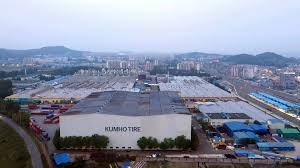
- Kumho Tire restored Gwangju Plant output to over 10,000 tires per day after the 2025 fire disruption.
- The company is also planning a major new manufacturing facility in Hampyeong-gun to expand long-term production capacity.
The Kumho Tire Gwangju Plant production recovery has reached a major milestone, with daily output surpassing 10,000 tires on February 26, 2026. This marks the first time production at the facility has crossed this threshold since a large-scale fire forced a complete shutdown on May 17, 2025.
Gradual Production Recovery After 2025 Fire
The Gwangju facility began restoring operations in phases following the disruption. In November 2025, partial production resumed with a daily output of around 4,000 tires. As restoration efforts progressed, production increased to approximately 6,000 units per day by January 2026.
The latest milestone demonstrates the company’s steady recovery strategy and operational stabilization at one of its key manufacturing locations.
Long-Term Production Capacity Targets
Looking ahead, the company aims to rebuild and strengthen production capability at the Gwangju facility with a targeted annual capacity of about 3.5 million tires.
New Manufacturing Plant in Hampyeong-gun
In parallel with restoring existing operations, Kumho Tire is preparing to expand its manufacturing footprint through a new factory in Hampyeong-gun, Jeollanam-do. The first phase of the new plant is scheduled to begin operations in the first half of 2028.
Initial output is expected to reach roughly 15,000 tires per day, equivalent to around 5.3 million units annually. In the second phase of expansion, the facility is planned to scale production capacity significantly to approximately 12 million tires per year, strengthening the company’s long-term supply capability.
Click above to visit the official source.
Discussion
Join the conversation.