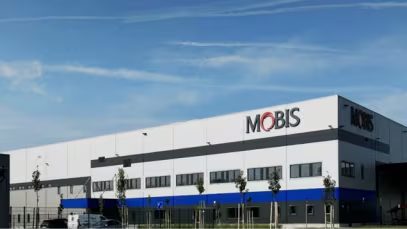
- Hyundai Mobis establishes a new production base in Hungary to supply chassis modules to Mercedes-Benz.
- The facility supports mixed production for electric, hybrid, and internal combustion vehicle platforms.
New European production base for advanced chassis systems
The Hyundai Mobis chassis module plant Hungary has been announced as a dedicated manufacturing site supporting vehicle production for Mercedes-Benz AG. Located in Kecskemet in central Hungary, the facility has been strategically positioned close to the automaker’s manufacturing operations to streamline component delivery and improve production synchronization.
The plant will supply front and rear complete axle assemblies, forming fully integrated chassis modules designed for electrified vehicle architectures. Proximity to the customer site allows efficient logistics and faster response to production scheduling requirements.
Just-In-Sequence manufacturing and flexible production lines
The facility covers approximately 50,000 square meters and operates under a Just-In-Sequence (JIS) manufacturing system. This production model ensures that chassis modules are delivered to the assembly line in the precise order required for vehicle production, improving efficiency and reducing inventory complexity.
Flexible production lines at the new site enable mixed manufacturing of components for electric, hybrid, and internal combustion vehicles. This adaptability allows the supplier to rapidly adjust output depending on the production plans of Mercedes-Benz and the evolving demand for electrified powertrains.
Supporting electrification programs in Europe
The Hyundai Mobis chassis module plant Hungary will initially focus on supplying modules for electric and hybrid models. As European automakers accelerate electrification strategies, component suppliers are increasingly establishing localized production bases to support regional vehicle assembly operations.
Expansion of Hyundai Mobis manufacturing footprint in Europe
Beyond the Hungarian operation, Hyundai Mobis is also preparing to launch full-scale production at a plant in Spain. This facility will manufacture battery systems for another major global automaker, further strengthening the company’s position in the European electrified mobility supply chain.
With the addition of the Hungarian and Spanish operations, Hyundai Mobis will operate five production bases across Europe, complementing three existing facilities that currently supply components to Hyundai Motor and Kia. The expanded footprint supports growing demand for electrified vehicle components and localized supply networks across the region.
Click above to visit the official source.
Discussion
Join the conversation.