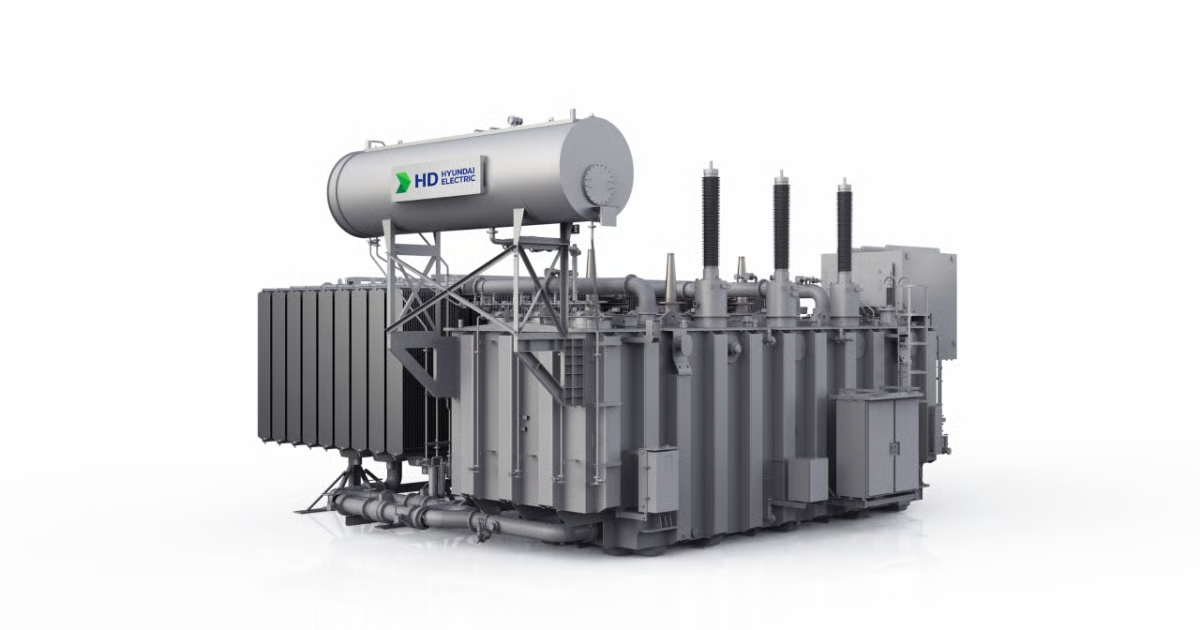
- HD Hyundai Electric is investing USD 200 million to expand transformer manufacturing capacity in Alabama.
- The new facility will support U.S. transmission network modernization with advanced 765-kilovolt transformer production.
The HD Hyundai Electric power transformer expansion marks another major infrastructure investment in the United States, reinforcing the company’s long-term commitment to strengthening power transmission capabilities. The project focuses on increasing manufacturing capacity for extra high voltage transformers while supporting the modernization of the American electricity grid.
New Transformer Facility in Alabama
On March 6, the company held a groundbreaking ceremony for a second manufacturing plant at its existing production site in Montgomery, Alabama. The expansion will significantly increase the industrial footprint of the North American operation and strengthen regional manufacturing capabilities.
The new facility will cover approximately 312,000 square feet and will be constructed within the current campus of the Montgomery manufacturing base. Completion of the plant is scheduled for April 2026, positioning the site as a key production hub for high-capacity electrical infrastructure equipment.
Investment to Strengthen Power Transmission Infrastructure
The project involves an investment of roughly USD 200 million aimed at expanding production of extra high voltage power transformers. Once operational, the new plant is expected to raise transformer manufacturing capacity by around 50 percent.
In addition to increased output, the facility will introduce advanced manufacturing and testing capabilities for 765-kilovolt-class transformers. These high-capacity units are essential for long-distance power transmission and are widely used in national grid expansion and modernization programs.
Supporting U.S. Grid Modernization
The introduction of new production lines will help utilities strengthen transmission reliability and accommodate rising electricity demand driven by electrification, renewable energy integration, and expanding digital infrastructure.
Established Presence in the U.S. Market
The Montgomery facility originally began operations in 2011, when the company established its first transformer manufacturing subsidiary in the United States. At the time, it represented the first U.S.-based transformer production site built by a Korean manufacturer.
Since then, the operation has grown into the largest power transformer manufacturing facility in the United States. The ongoing HD Hyundai Electric power transformer expansion further consolidates its position in the extra high voltage transformer market while strengthening domestic production capacity for critical grid equipment.
Click above to visit the official source.
Discussion
Join the conversation.