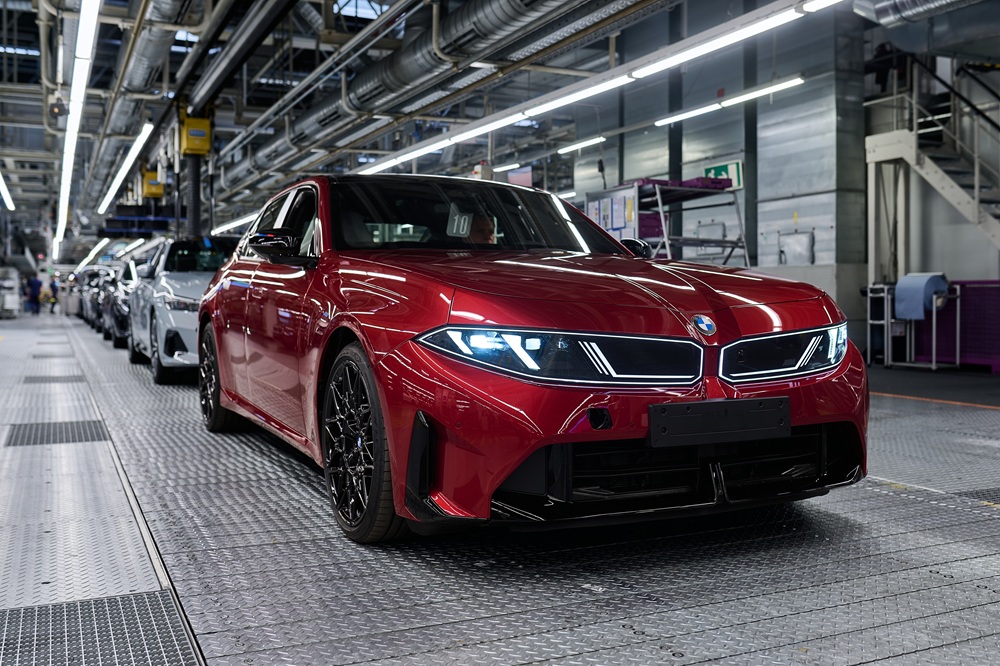
- BMW 3 Series production begins at Dingolfing, Germany
- Combustion versions launch first, with plug-in hybrids planned for 2027
- BMW invests EUR 1 billion in German production facilities
BMW Group has commenced series production of the eighth-generation 3 Series sedan at its Dingolfing plant in Germany, as announced on November 3. The latest generation incorporates the company's Neue Klasse design language and technologies, including Panoramic iDrive, a new electrical-and-electronic architecture, and updated advanced driver assistance systems (ADAS). The model will initially be offered with combustion engines, while plug-in hybrid variants are planned to join the lineup from 2027.
Production of the new 3 Series generation is divided between two German manufacturing facilities to accommodate different powertrain configurations. The Dingolfing plant is responsible for combustion-engine versions, while the Munich plant will manufacture the all-electric i3. This production arrangement allows BMW to support different customer requirements through separate manufacturing operations. The company has invested approximately EUR 1 billion in upgrading the two facilities to prepare them for the new generation of vehicles and their respective production requirements.
At Dingolfing, the eighth-generation 3 Series sedan is manufactured alongside the 4 Series and 5 Series on a flexible production line. The facility is designed to accommodate different powertrain variants within its manufacturing operations. BMW has installed a new flexible production line in the existing body shop, incorporating both newly introduced equipment and components reused from existing facilities. Approximately one-third of the plant's 750 robots have been reused, together with other equipment, as part of the production upgrade.
Manufacturing operations at Dingolfing also incorporate automated processes designed to support production quality. Automated door fitting and surface inspections are among the technologies used on the production line. These systems form part of the upgraded manufacturing setup for the new 3 Series, enabling different vehicle variants to be accommodated within the flexible production environment while maintaining the facility's established production capabilities.
BMW has also expanded automation and digitalisation across inbound logistics at the Dingolfing facility. Automated forklifts, Splitbots and approximately 250 Smart Transport Robots work together to move components and supply materials to the production line. These systems support the delivery of production materials within the plant, integrating automated transport operations with vehicle manufacturing activities.
The Landshut plant also contributes components and interior equipment for the new 3 Series. Its production responsibilities include crankcases and cylinder heads for four-cylinder and six-cylinder engines, along with propeller shafts. The facility additionally manufactures interior components such as the dashboard and glove compartment, as well as the new 3 Series' interior lighting system. This establishes Landshut as a supplier of both powertrain-related components and interior parts for the latest sedan generation.
Industry Impact & Outlook
BMW's production strategy for the eighth-generation 3 Series demonstrates how its German manufacturing network is being adapted to accommodate combustion, plug-in hybrid and all-electric vehicle programmes. Dividing production between Dingolfing and Munich allows the company to assign different powertrain configurations to dedicated facilities while maintaining flexibility across its manufacturing operations. The approximately EUR 1 billion investment in the two plants, alongside equipment reuse, robotics and automated logistics, highlights the scale of the manufacturing changes supporting the new generation. The planned introduction of plug-in hybrid versions from 2027 will further expand the model's powertrain offering.
Frequently Asked Questions
Where has BMW started production of the eighth-generation 3 Series sedan?
BMW has started series production of the eighth-generation 3 Series sedan at its Dingolfing plant in Germany. The announcement was made on November 3. The facility will manufacture the combustion-engine versions of the new generation. Production takes place alongside the 4 Series and 5 Series on a flexible production line. BMW has upgraded the existing manufacturing infrastructure, including installing a new flexible production line in the body shop, to support the latest model generation.
What new technologies are featured in the eighth-generation BMW 3 Series?
The eighth-generation BMW 3 Series incorporates the Neue Klasse design language and several updated technologies. These include Panoramic iDrive, a new electrical-and-electronic architecture, and updated advanced driver assistance systems (ADAS). These developments form part of the latest generation's technological and design updates. The model will initially be available with combustion engines, while plug-in hybrid versions are planned from 2027. The announcement does not specify additional technical specifications or detailed performance figures for these technologies.
Which BMW plants will manufacture the new 3 Series generation and the electric i3?
BMW has divided production responsibilities between its Dingolfing and Munich plants in Germany. Dingolfing will manufacture the combustion-engine versions of the eighth-generation 3 Series sedan, while Munich will produce the all-electric i3. This arrangement supports different powertrain configurations through separate manufacturing facilities. BMW has invested approximately EUR 1 billion in upgrading both plants. The production strategy allows the company to accommodate combustion-engine and all-electric vehicle programmes within its German manufacturing network.
How is BMW upgrading production operations at the Dingolfing plant?
BMW has introduced a flexible production line in the existing body shop at Dingolfing to manufacture the new 3 Series. The sedan is assembled alongside the 4 Series and 5 Series, with the facility accommodating different powertrain variants. Approximately one-third of the plant's 750 robots have been reused, together with other existing equipment. Automated door fitting and surface inspections are also incorporated into manufacturing operations to support production quality.
How is BMW automating inbound logistics at Dingolfing?
BMW has automated and digitalised inbound logistics at Dingolfing using several types of material-handling equipment. Automated forklifts, Splitbots and approximately 250 Smart Transport Robots work together to deliver components and supply materials to the production line. These systems support the movement of production materials within the facility. Their integration into inbound logistics forms part of the manufacturing upgrades accompanying the launch of the eighth-generation 3 Series sedan.
What components does BMW's Landshut plant supply for the new 3 Series?
BMW's Landshut plant supplies several powertrain and interior components for the eighth-generation 3 Series. Its powertrain-related output includes crankcases and cylinder heads for four-cylinder and six-cylinder engines, as well as propeller shafts. The facility also manufactures interior components, including the dashboard and glove compartment. In addition, Landshut produces the new 3 Series' interior lighting system. Its contribution therefore covers both engine-related components and selected interior equipment for the new sedan generation.
Click above to visit the official source.
Discussion
Join the conversation.