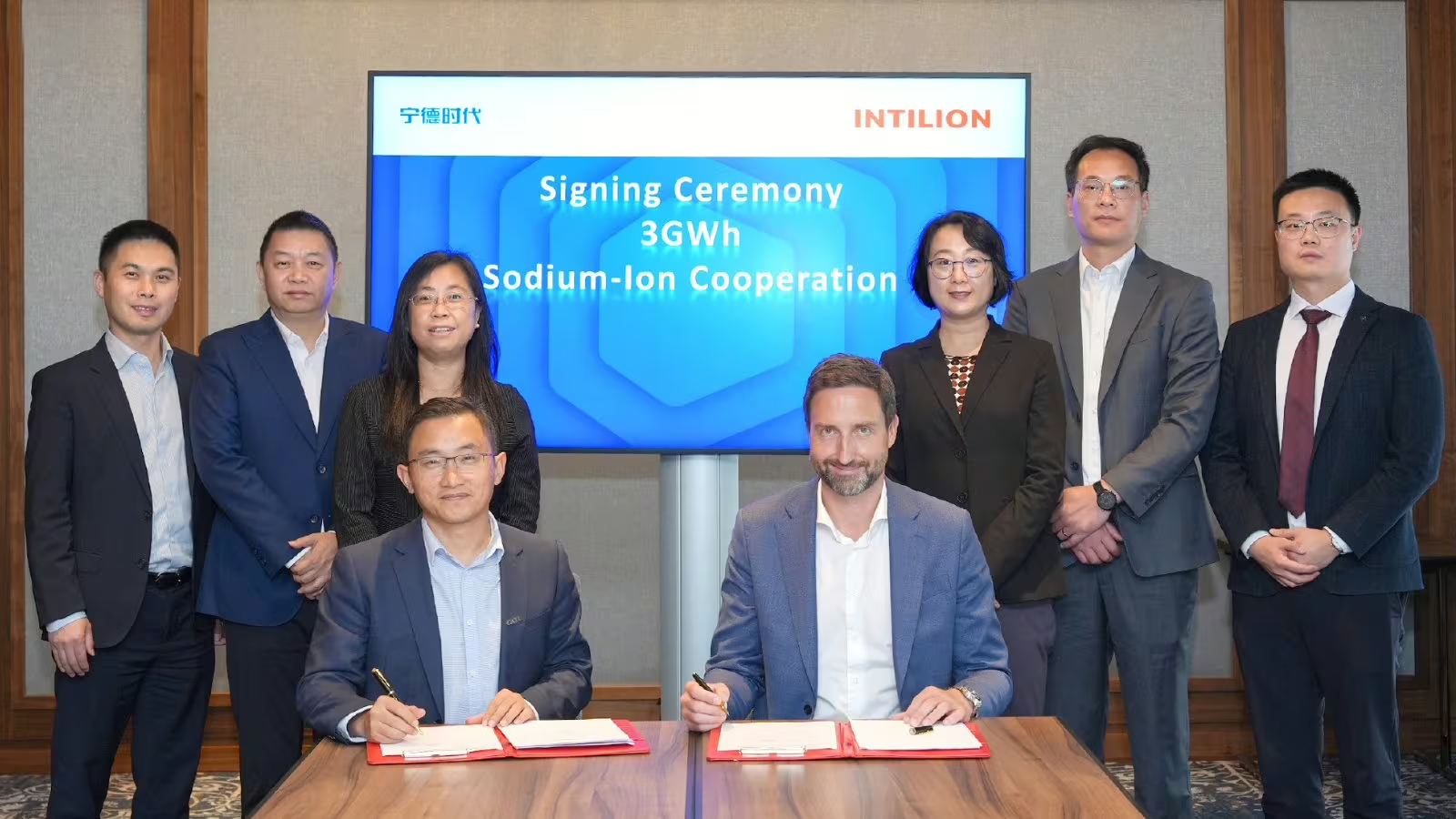
- CATL sodium-ion energy storage partnership targets 3 GWh.
- Tener Sodium supports operation at minus 20 degrees Celsius.
- CATL expands European partnerships across multiple energy storage technologies.
CATL and Intilion Plan 3 GWh Sodium-Ion Energy Storage Deployment in Europe
CATL (HKEX: 3750) has signed a memorandum of understanding with German energy storage solutions provider Intilion to deploy 3 gigawatt-hours (GWh) of sodium-ion energy storage systems across Europe over the next five years. Announced on Wednesday, the agreement covers the introduction of CATL's Tener Sodium systems in markets including Germany, Switzerland, and Austria. The planned installations will serve grid-scale, commercial, and industrial applications. The partnership extends an existing project relationship between the companies and adds sodium-ion technology to their collaborative energy storage activities, reflecting CATL's broader effort to expand this battery chemistry in European markets.
Existing Partnership Expands Into Sodium-Ion Technology
CATL and Intilion have already deployed more than 30 energy storage projects in Germany since 2022. Under their latest agreement, the companies intend to build on that experience and promote the wider adoption of multiple battery technologies across Europe, including sodium-ion and lithium-ion systems. The new arrangement therefore expands an established project partnership rather than creating an entirely new commercial relationship. Its five-year deployment target provides a defined scale for the proposed cooperation, although the memorandum of understanding does not, by itself, establish that all 3 GWh of capacity has already been installed or commissioned.
Tener Sodium Targets Cold-Weather Performance and Long Service Life
CATL says its Tener Sodium energy storage system is designed for Europe's harsh winter conditions. According to the company, the system offers a cycle life exceeding 15,000 cycles and 25 years of stable operation, while maintaining high discharge power at temperatures as low as -20°C (-4°F). These characteristics are intended to support energy storage applications exposed to cold weather and repeated charging and discharging. CATL also identifies frequency regulation on European electricity grids and the long-term stability of storage systems as potential applications for the technology. These performance figures are manufacturer-reported specifications rather than independently established results presented in the source article.
Modular Design Offers Flexible Storage Configuration
CATL unveiled Tener Sodium on June 22, describing it as the world's first field-validated sodium-ion energy storage solution. The company says its modular architecture allows storage duration to be configured according to individual project requirements. The system is also dimensionally compatible with lithium-ion batteries, a feature CATL says can give customers greater flexibility when selecting battery technologies. According to the company, this compatibility can reduce exposure to lithium price volatility by allowing customers to consider sodium-ion alternatives within an established system configuration. The announcement does not provide project-level cost comparisons or quantify potential savings from adopting sodium-ion technology.
CATL Builds a Broader European Sodium-Ion Partnership Network
The Intilion agreement follows two other sodium-ion energy storage arrangements announced by CATL in July. The company signed a memorandum of understanding with European new energy integrator Alfen N.V. to deploy 5 GWh of sodium-ion storage systems in Western European countries, including the Netherlands, starting in 2027. During the same month, CATL signed a 2 GWh Tener Sodium energy storage cooperation agreement with Eastern European renewable energy company Solarpro. Together, these arrangements demonstrate the company's effort to establish partnerships across different European markets. Their announced capacities represent planned cooperation and deployment commitments, not evidence that all the associated systems are already operational.
China Agreement Adds to CATL's Sodium-Ion Supply Commitments
CATL is also developing its sodium-ion energy storage business in China. In April, the company signed a three-year supply agreement with energy storage system provider HyperStrong covering 60 GWh of sodium-ion batteries for energy storage. The agreement adds a substantial supply commitment to CATL's European partnership activity and illustrates the geographic breadth of its commercial efforts in this segment. However, the 60 GWh figure relates to the Chinese supply agreement and should be distinguished from the separate deployment targets announced with European partners. The source article does not provide a combined delivery schedule or confirm how much of the contracted capacity has already been supplied.
European Energy Storage Market Records Strong Shipment Growth
The partnership announcements come as Europe's energy storage market experiences rapid growth. According to South Korean market research firm SNE Research, European lithium-ion energy storage battery shipments reached 72.7 GWh in the first half of 2026, representing a 74% increase year over year. Over the same period, CATL's global lithium-ion energy storage battery shipments rose 81% year over year to 125.0 GWh. The company held a leading global market share of 27.1%, according to the reported figures. These statistics provide market context for CATL's expansion into sodium-ion storage, although they describe lithium-ion shipments and do not establish the current size or market share of sodium-ion energy storage.
Industry Impact & Outlook
CATL's agreement with Intilion strengthens the commercial pathway for sodium-ion energy storage in Europe by combining an established German project relationship with a defined five-year deployment target. If the planned systems are delivered, customers in Germany, Switzerland, and Austria could gain another battery chemistry option for grid-scale, commercial, and industrial applications, particularly where cold-weather performance and reduced exposure to lithium price volatility matter. The additional agreements with Alfen and Solarpro indicate that CATL is pursuing multiple regional partnerships rather than relying on a single deployment channel. The commercial impact will depend on implementation, customer adoption, and the ability of sodium-ion systems to meet project requirements alongside established lithium-ion alternatives.
Frequently Asked Questions
What is CATL's agreement with Intilion about?
CATL and Intilion have signed a memorandum of understanding to deploy 3 GWh of sodium-ion energy storage systems across Europe over five years. The proposed deployment includes Germany, Switzerland, and Austria, with applications spanning grid-scale, commercial, and industrial energy storage. The agreement expands an existing relationship between the companies, which have deployed more than 30 energy storage projects in Germany since 2022. The memorandum outlines their intended cooperation and should not be interpreted as confirmation that the entire 3 GWh deployment has already been completed.
What are the main performance specifications of CATL's Tener Sodium system?
CATL says its Tener Sodium energy storage system offers a cycle life of more than 15,000 cycles and 25 years of stable operation. The company also reports that the system maintains high discharge power at temperatures as low as -20°C (-4°F). These characteristics are intended to support storage applications in Europe's harsh winter conditions and help provide services such as electricity-grid frequency regulation. The specifications are based on CATL's statements, and the source article does not provide independent test results or detailed operating conditions for the reported figures.
How does Tener Sodium differ from lithium-ion energy storage systems?
Tener Sodium uses sodium-ion battery technology, while conventional lithium-ion storage systems rely on lithium-based battery chemistry. CATL says Tener Sodium has a modular design that allows storage duration to be configured for different project requirements. Its dimensions are also compatible with lithium-ion batteries, which the company says can give customers more flexibility when choosing a battery technology and reduce exposure to lithium price volatility. The source article does not provide a direct comparison of purchase prices, energy density, efficiency, or total lifecycle costs between the two technologies.
What other sodium-ion energy storage agreements has CATL announced?
CATL has announced additional sodium-ion energy storage arrangements with partners in Europe and China. In July, it signed an agreement with Alfen N.V. targeting 5 GWh of deployment in Western European countries, including the Netherlands, starting in 2027. It also signed a 2 GWh cooperation agreement with Eastern European renewable energy company Solarpro. In China, CATL agreed in April to supply 60 GWh of sodium-ion batteries to energy storage system provider HyperStrong over three years. These commitments cover different markets and should be distinguished by their individual scope and delivery arrangements.
How quickly is Europe's energy storage market growing?
European lithium-ion energy storage battery shipments reached 72.7 GWh in the first half of 2026, up 74% from the same period a year earlier, according to SNE Research. CATL's global lithium-ion energy storage battery shipments increased 81% year over year to 125.0 GWh during the same period, giving the company a reported global market share of 27.1%. These figures indicate strong growth in lithium-ion energy storage shipments and CATL's significant position in that segment. They do not directly measure European sodium-ion shipments or establish the technology's current share of the storage market.
Click above to visit the official source.
Discussion
Join the conversation.