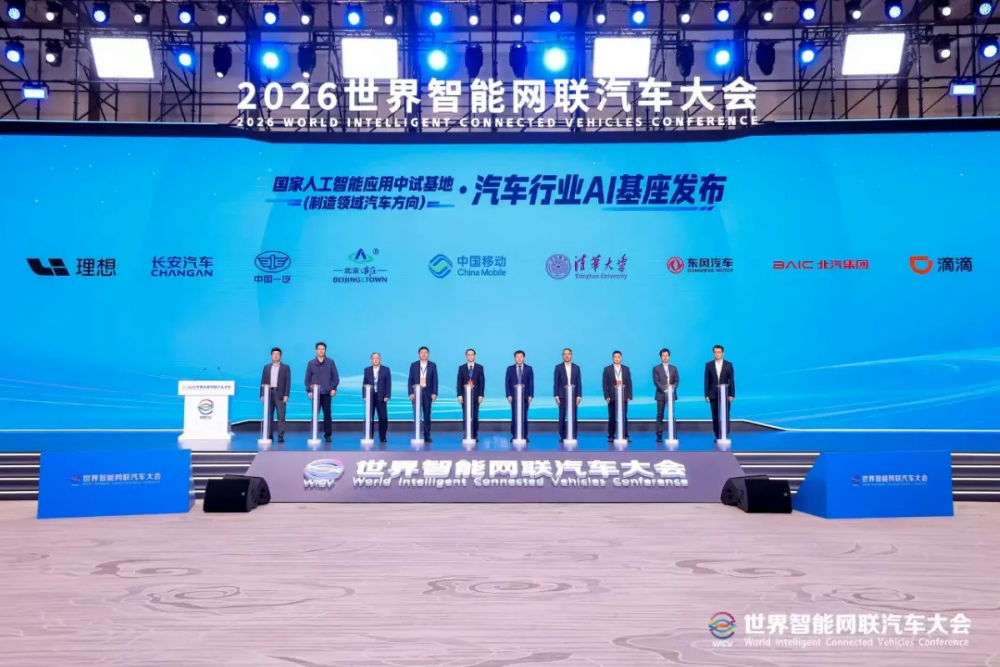
- China Mobile automotive AI platform integrates computing, data, and models.
- Platform manages 112.7 EFLOPS of computing power.
- Six AI agents support automotive development, manufacturing, and intelligent driving.
China Mobile Unveils Automotive AI Foundation Platform
On October 23, China Mobile Communications Group Co Ltd (China Mobile) announced the official unveiling of the National AI Application Pilot Base (Automotive Sector of Manufacturing), referred to as the Automotive Pilot Base, at the 2026 World Intelligent Connected Vehicles Conference. Led by China Mobile, the initiative presented the automotive industry's first AI foundation platform and an update on its development. The platform combines computing power, data, and artificial intelligence models to provide shared services for the automotive industry. Its stated purpose is to help automakers reduce redundant investment in underlying infrastructure while directing more resources toward product development and core technology research and development.
Automotive AI Platform Integrates Computing, Data, and Models
The Automotive Pilot Base integrates three core capabilities: computing power, data, and AI models. According to China Mobile's announcement, the platform manages 112.7 EFLOPS of computing power and supports four major automotive application areas: research and development, manufacturing, intelligent driving, and testing and evaluation. By bringing these capabilities together through shared infrastructure, the platform is designed to give automakers access to computing resources and AI development tools without requiring every company to build equivalent underlying systems independently. This shared-service approach is intended to reduce duplicated infrastructure investment and help automotive businesses concentrate on developing products and advancing core technologies.
Six AI Agents Target Automotive Industry Applications
The Automotive Pilot Base has developed six AI agents designed for specific automotive workflows. Their applications cover automotive styling design, process planning, visual quality inspection, intelligent operation and maintenance, intelligent driving data generation, and intelligent driving model training. These use cases span vehicle development, factory processes, quality control, operational support, and intelligent driving technology development. Together, they illustrate the platform's intended role in applying AI across several stages of automotive work rather than restricting its capabilities to a single function. The announcement identifies these six agents as part of the platform's current development progress, without providing individual performance figures or quantified productivity improvements for each application.
Shared Computing Resources Reduce Infrastructure Requirements
In computing, the Automotive Pilot Base allows automakers to access shared computing resources according to their business needs. Companies therefore do not need to invest as heavily in building their own computing centers to obtain the computing capacity required for supported workloads. The platform's reported 112.7 EFLOPS capacity provides the underlying computing resource base for its automotive applications. Flexible access to shared infrastructure can help companies align computing use with project requirements rather than relying exclusively on individually constructed facilities. The announcement does not specify pricing, access conditions, allocation mechanisms, or the amount individual automakers are expected to save, so the financial benefits cannot be quantified from the information provided.
Automotive Data Ownership and Regulatory Compliance
The platform's data approach distinguishes shared infrastructure from ownership of automakers' core data. According to China Mobile, automakers retain ownership of their core data and participate in data sharing and exchange with ecosystem partners only in compliance with applicable regulations. This arrangement is intended to support collaboration while maintaining the stated ownership principle and regulatory conditions. The announcement does not identify particular regulations, describe detailed technical safeguards, or specify how data access and permissions are administered. Accordingly, the stated framework establishes the platform's approach to data ownership and compliant exchange, but further implementation details would be needed to assess its operational controls and how individual data-sharing arrangements are governed.
AI Development, Validation, and Deployment Toolchain
For AI models, the Automotive Pilot Base provides a toolchain covering development, validation, and deployment. These capabilities are intended to lower barriers to AI adoption in the automotive industry by supporting multiple stages of the model lifecycle. Automakers can use the platform's shared capabilities alongside its computing and data services, creating an integrated foundation for supported automotive AI applications. The announcement connects this toolchain with use cases including intelligent driving data generation and intelligent driving model training, as well as applications in design, manufacturing, inspection, and maintenance. It does not specify individual model architectures, validation benchmarks, deployment environments, or comparative performance results.
Automotive Applications Across Four Major Areas
The Automotive Pilot Base identifies research and development, manufacturing, intelligent driving, and testing and evaluation as its four principal application areas. Its six AI agents correspond to practical tasks across several of these areas, including styling design, process planning, visual inspection, intelligent operation and maintenance, and intelligent driving data and model development. The platform's combined computing, data, and model capabilities are designed to support these activities through shared services. Although the announcement establishes the scope of the initiative and reports its computing capacity, it does not provide a breakdown of resource allocation among the four areas or disclose adoption figures, participating automakers, and measured results from production deployments.
Platform Capabilities and Reported Development
The following table summarizes the platform capabilities and application details explicitly identified in China Mobile's announcement. The figures and descriptions reflect the information provided in the source article; no additional performance metrics or implementation claims are inferred.
China Mobile Automotive AI Platform: Key Facts
| Platform Element | Reported Details |
|---|---|
| Computing power | 112.7 EFLOPS |
| Core capabilities | Computing power, data, and AI models |
| Application areas | R&D, manufacturing, intelligent driving, and testing and evaluation |
| AI agents | Six agents covering design, planning, inspection, maintenance, data generation, and model training |
| Data ownership | Automakers retain ownership of their core data |
| AI model toolchain | Development, validation, and deployment |
Significance for Automotive AI Adoption
The platform brings together shared computing resources, data-related arrangements, AI model tools, and specialized agents in one automotive-focused initiative. Its stated objective is to reduce redundant infrastructure investment and lower barriers to AI adoption, allowing automakers to focus on product development and core technology research. The range of identified applications also indicates that the initiative addresses both manufacturing-related activities and intelligent driving development. However, the announcement does not establish how many automakers currently use the platform, whether its services are commercially available across the industry, or what measurable results participating companies have achieved. These details would be necessary to evaluate its actual adoption and operational impact.
Industry Impact & Outlook
China Mobile's Automotive Pilot Base introduces a shared infrastructure approach that could influence how automakers in China access computing resources and develop AI applications across vehicle engineering, manufacturing, quality inspection, and intelligent driving. If the platform delivers accessible services at the scale described, participating companies could reduce duplicated infrastructure requirements and direct more resources toward product development and core technology research. Its data ownership approach and regulation-compliant exchange requirements are also relevant to collaboration among automotive ecosystem partners. The next indicators of practical impact will be adoption by automakers, demonstrated application performance, and evidence of cost or development benefits. The announcement does not yet establish those outcomes, so the platform's broader industry effects remain dependent on implementation and measured results.
Frequently Asked Questions
What is China Mobile's Automotive AI Foundation Platform?
China Mobile's Automotive AI Foundation Platform is a shared-service initiative designed to support artificial intelligence applications across automotive research, manufacturing, intelligent driving, and testing and evaluation. Led by China Mobile, the National AI Application Pilot Base (Automotive Sector of Manufacturing) unveiled the platform at the 2026 World Intelligent Connected Vehicles Conference. It integrates computing power, data, and AI models to help automakers access underlying capabilities without duplicating infrastructure investments. The initiative also includes six specialized AI agents and a toolchain supporting AI model development, validation, and deployment.
How much computing power does the Automotive Pilot Base manage?
The Automotive Pilot Base manages 112.7 EFLOPS of computing power, according to China Mobile's announcement on October 23. This capacity supports the platform's shared computing services for automotive applications, including research and development, manufacturing, intelligent driving, and testing and evaluation. Automakers can access shared computing resources according to their business needs instead of investing as heavily in their own computing centers. The announcement does not provide details about individual customer allocations, utilization rates, access pricing, or computing performance for particular automotive workloads.
What are the six AI agents developed for the platform?
The Automotive Pilot Base has developed six AI agents for automotive styling design, process planning, visual quality inspection, intelligent operation and maintenance, intelligent driving data generation, and intelligent driving model training. These applications address activities across vehicle development, manufacturing processes, quality control, operational support, and intelligent driving technology development. Their inclusion demonstrates the platform's intended coverage of multiple automotive workflows. However, the announcement does not disclose separate performance benchmarks, deployment figures, or productivity improvements for the six agents, so their individual operational benefits cannot yet be quantified from the reported information.
How does the platform handle automakers' core data?
The platform's stated data approach allows automakers to retain ownership of their core data while participating in data sharing and exchange with ecosystem partners in compliance with applicable regulations. This distinction is intended to support collaboration without changing the announced ownership principle. The source article does not identify specific regulations or detail the technical and organizational safeguards used to govern data access. It also does not describe individual data-sharing agreements. Consequently, the announcement explains the intended framework for data ownership and compliant exchange but does not provide enough information to assess the platform's detailed data governance implementation.
How could the platform benefit automotive manufacturers?
The platform is designed to help automotive manufacturers reduce redundant investment in computing infrastructure and access shared AI capabilities according to their business needs. Its services combine computing resources, data capabilities, AI models, and a toolchain covering model development, validation, and deployment. The six AI agents address applications such as process planning, visual quality inspection, and intelligent driving model training. Together, these capabilities are intended to lower barriers to automotive AI adoption and allow manufacturers to focus on product development and core technology research. Actual cost savings and productivity improvements have not been quantified in the announcement.
When and where was the platform unveiled?
China Mobile announced the official unveiling of the Automotive Pilot Base and the progress of its development on October 23 at the 2026 World Intelligent Connected Vehicles Conference. The initiative is led by China Mobile Communications Group Co Ltd and focuses on AI applications in the automotive manufacturing sector. The announcement identified the platform's computing capacity, core capabilities, application areas, and six AI agents. It did not provide additional details in the source article about a separate commercial launch date, a deployment schedule, or the number of automakers already using the platform.
Click above to visit the official source.
Discussion
Join the conversation.