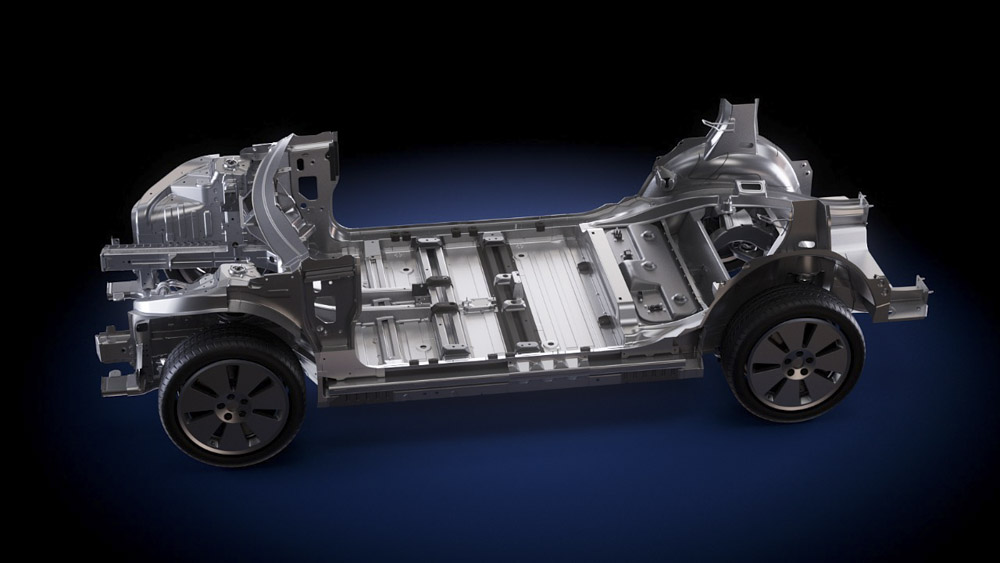
- GM fourth-generation EV platform integrates new engineering and manufacturing systems. LMR batteries and simplified motors target lower production costs. New architecture delivers 40 times more processing power.
GM Advances Its Fourth-Generation EV Platform With New Engineering Systems
On October 21, General Motors (GM) announced details of its fourth-generation electric vehicle platform development program, outlining changes to engineering, battery chemistry, propulsion systems, computing architecture, and manufacturing. The program combines a new engineering operating system with lithium manganese-rich (LMR) battery chemistry, simplified electric drive units, a revised electrical and computing architecture, and digital manufacturing tools. Together, these developments are intended to help teams explore vehicle designs more quickly, reduce component complexity, improve processing capabilities, and streamline production. GM is also incorporating vehicle-level electrical testing into the assembly process, allowing vehicles to check electrical connections as they move down the production line.
New Engineering Operating System Targets Faster Vehicle Development
GM is developing its fourth-generation EV platform alongside a new engineering operating system designed to help designers, engineers, and manufacturing teams explore more possibilities in less time. The approach supports concurrent development, allowing different teams and activities to progress together rather than relying exclusively on a traditional sequential process. GM expects this method to cut the conventional five-year vehicle development timeline in half. The announcement describes the expected improvement as a development objective, rather than confirming that every vehicle program will achieve the same schedule. By bringing engineering and manufacturing considerations together earlier, GM aims to make it easier for teams to evaluate alternatives and coordinate decisions throughout development.
LMR Battery Chemistry Advances Toward High-Volume EV Applications
GM plans to use lithium manganese-rich battery chemistry in prismatic cells for its highest-volume electric vehicle segments. The cells are expected to be produced at Spring Hill, Tennessee, by Ultium Cells, the battery manufacturing joint venture between GM and LG Energy Solution. The company also reported a rapid development milestone for the fourth-generation platform: the team progressed from its initial LMR battery pack concept to formal program approval in just one month. This timeline illustrates the pace of the battery program's early development, although the announcement does not provide a broader production schedule, battery capacity figures, or vehicle-specific range estimates for the planned application.
Electric Motors and Power Electronics Become Simpler
GM is developing a new family of electric motors and power electronics to simplify its propulsion systems. The company says the revised design reduces the number of parts inside each drive unit by 40%. According to GM, this reduction enables a smaller and lighter system while lowering production costs. The change is part of the fourth-generation platform's broader effort to reduce complexity across vehicle hardware rather than focusing on a single component. The announcement does not specify the motors' power output, torque, efficiency ratings, or the exact cost reduction expected. Those details would be needed to quantify how the new drive units compare with individual existing GM electric vehicle systems.
Revised Electrical Architecture Increases Computing Capacity
The fourth-generation EV platform introduces a new computing and electrical architecture with fewer control modules and 30% less wiring than GM's current electric vehicles. GM also says the architecture provides 40 times more processing power for AI-enabled features. The planned capabilities include software updates, improved energy management, more responsive displays and voice controls, and enhancements to Super Cruise and OnStar. Reducing wiring and control-module counts may also simplify vehicle architecture, while greater computing capacity creates room for more capable software functions. However, the announcement does not specify the computing hardware, processing benchmarks, feature availability by model, or whether every planned capability will be included across all vehicles using the platform.
Digital Manufacturing Tools Improve Production Planning
GM plans to use digital models to help manufacturing teams test production steps and identify safety or ergonomic concerns before physical hardware is installed. Once manufacturing begins, PlantBrAIn, GM's factory intelligence platform, will combine plant-floor data with computer models to help improve how fourth-generation EVs and battery packs are built. GM reports that this approach has already helped battery packs move through its battery-pack assembly process 30% faster. Similar digital tools are used across stamping, casting, welding, painting, and final assembly. The reported battery-pack improvement provides a concrete example of the approach's potential, but the announcement does not establish that every manufacturing process will achieve the same reduction in processing time.
Vehicles Will Check Electrical Connections During Assembly
The fourth-generation platform is also designed to support electrical validation during the vehicle build process. Using the new computing and electrical architecture, a vehicle can test its electrical connections while moving down the assembly line. GM says this capability eliminates the final validation check that would otherwise take place after the vehicle has been built. Integrating these checks into production changes when electrical verification occurs, making it part of the ongoing assembly process rather than a separate end-of-line step. The announcement does not detail the specific diagnostic methods, the range of connections tested, or the quality metrics that will be used to evaluate the system once fourth-generation EV production is underway.
How GM's Fourth-Generation Platform Connects Its Key Developments
The announced program combines several changes that address different stages of electric vehicle development and production. The engineering operating system is intended to accelerate collaboration, while LMR prismatic cells support GM's plans for high-volume EV segments. Simplified drive units target lower component counts and production costs, and the updated computing and electrical architecture reduces wiring while increasing processing capacity. Digital models and PlantBrAIn are intended to improve factory preparation and execution, while vehicle-based electrical checks bring validation into the assembly line. These are connected elements of one platform strategy, but GM's announcement does not provide a consolidated financial estimate, a complete model rollout plan, or a quantified overall reduction in vehicle development and manufacturing costs.
Industry Impact & Outlook
GM's fourth-generation EV platform illustrates how automakers are working to improve electric vehicle competitiveness through coordinated changes in batteries, propulsion hardware, software architecture, and factory operations. If the stated targets translate into production results, shorter development cycles and simpler drive units could help GM control costs, while faster battery-pack processing and in-line electrical checks could improve manufacturing efficiency. The expanded computing capacity may also support more capable connected and driver-assistance features, including developments to Super Cruise and OnStar. Important milestones will include the implementation of LMR cells, confirmation of production performance, and evidence that the reported efficiency gains extend across vehicle programs. The announcement establishes development goals and selected existing results, but does not yet quantify the platform's total commercial impact.
Frequently Asked Questions
What did GM announce about its fourth-generation EV platform?
GM announced a development program combining a new engineering operating system, LMR battery chemistry, simplified electric motors, revised computing architecture, and digital manufacturing tools. The platform is intended to improve vehicle development speed, reduce drive-unit complexity, increase processing power, and streamline production. It also introduces vehicle-based electrical connection testing during assembly. The announcement describes a coordinated engineering and manufacturing approach, but does not provide a complete list of future vehicle models, launch dates, or platform-wide cost savings.
What is GM's new engineering operating system expected to achieve?
GM expects its new engineering operating system and concurrent development process to cut the traditional five-year vehicle development timeline in half. The system is designed to help designers, engineers, and manufacturing teams explore more possibilities faster and coordinate their work during development. The target reflects GM's stated expectation for the approach, not a guarantee that every vehicle program will meet the same timeline. The announcement does not provide comparative results from completed fourth-generation vehicle programs to confirm the projected reduction.
Where will the LMR battery cells for GM's platform be produced?
GM plans to use lithium manganese-rich battery chemistry in prismatic cells produced by Ultium Cells in Spring Hill, Tennessee. Ultium Cells is the joint venture between General Motors and LG Energy Solution responsible for the planned cell production. GM intends to apply this chemistry to its highest-volume electric vehicle segments. The company also reported that its fourth-generation battery team moved from the first LMR battery pack concept to formal program approval in one month. The announcement does not specify cell capacity, vehicle range, or a production start date.
How will GM simplify its electric vehicle propulsion systems?
GM is developing a new family of electric motors and power electronics that reduces the number of parts inside each drive unit by 40%. The company says the design produces a smaller, lighter system while lowering production costs. This change forms part of the fourth-generation platform's broader effort to simplify vehicle hardware. GM did not disclose specific motor power outputs, torque figures, efficiency measurements, or the exact cost savings expected. Those details would be needed to assess performance differences across individual vehicles and compare the new systems with existing drive units.
What improvements does the new computing and electrical architecture provide?
GM says its fourth-generation EV architecture has fewer control modules, 30% less wiring than its current EVs, and 40 times more processing power for AI-enabled features. Planned applications include software updates, smarter energy management, more responsive displays and voice controls, and improvements to Super Cruise and OnStar. These capabilities could support more advanced software functions while reducing electrical-system complexity. However, GM has not specified the computing benchmarks, the models that will receive each feature, or whether all announced capabilities will be available on every vehicle built using the platform.
How will PlantBrAIn and digital models improve GM manufacturing?
GM plans to use digital models to test manufacturing steps and identify safety or ergonomic concerns before installing physical hardware. During production, PlantBrAIn will combine factory-floor data with computer models to improve how fourth-generation EVs and battery packs are built. GM reports that the approach has helped battery packs move through its battery-pack assembly process 30% faster. Similar tools are used in stamping, casting, welding, painting, and final assembly. The company has not stated that every process will achieve the same improvement or provided a single quantified productivity gain across all factories.
How will fourth-generation EVs validate electrical connections during production?
GM says vehicles using the fourth-generation computing and electrical architecture will be able to test their electrical connections as they move down the assembly line. This capability is intended to eliminate the final validation check performed after a vehicle has been built. Integrating electrical testing into assembly may help move verification earlier in the production process. The announcement does not explain which connections will be tested, how the diagnostic system will identify faults, or what validation procedures will remain necessary for overall vehicle quality and safety.
Click above to visit the official source.
Discussion
Join the conversation.