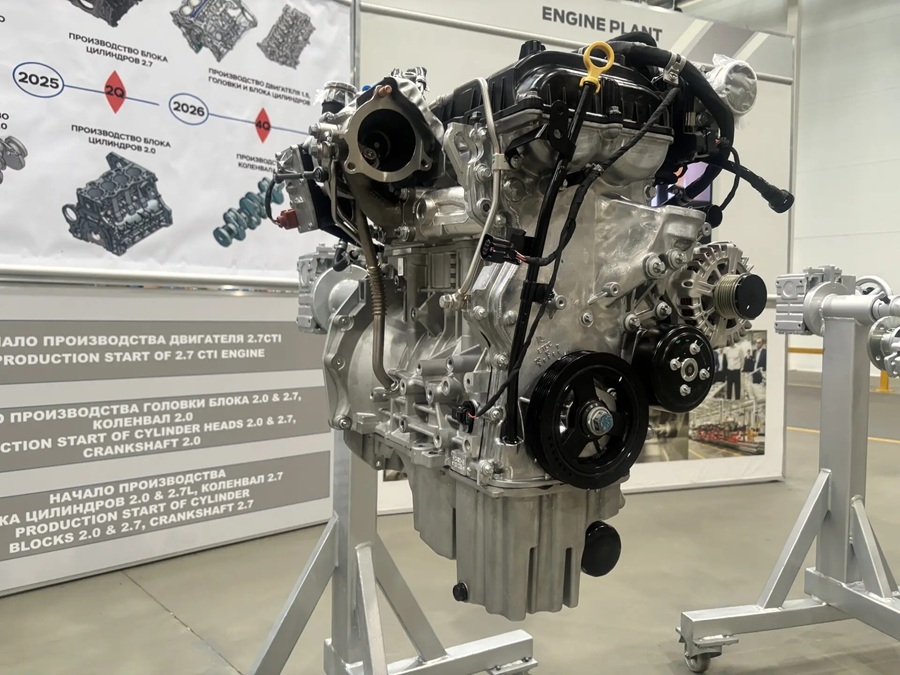
- Sollers Group begins serial production of its 1.5-liter turbo engine.
- The four-cylinder engine produces 136 hp and 175 Nm torque.
- Sollers plans further localization through component casting and machining.
Sollers Starts Serial Production of a 1.5-Liter Turbocharged Gasoline Engine
On October 21, Sollers Group began serial production of a 1.5-liter turbocharged gasoline engine at its engine plant in the Alabuga Special Economic Zone in Russia. The new engine is designed for the Sollers SF1, marking a production milestone for the company's vehicle and powertrain operations. The project was completed in six months, with manufacturing taking place on the plant's advanced assembly lines. Sollers also plans to expand local manufacturing by introducing casting and machining processes for key engine components, indicating that the current production launch is part of a broader localization effort.
Technical Specifications of the 1.5-Liter Turbo Engine
The new gasoline engine has four cylinders and a displacement of 1,499 cubic centimeters. Its technical configuration includes turbocharging, distributed fuel injection, and a timing chain drive. The engine produces 136 horsepower and 175 newton-meters of torque. It meets Euro 5 emission standards and operates on AI-92 gasoline. These specifications define the engine's stated output, fuel requirements, and emissions compliance. The unit is intended for the Sollers SF1, connecting the newly launched engine production line directly to that vehicle program. The company has not provided additional performance figures or further technical specifications in the supplied announcement.
Production at the Alabuga Engine Plant
The engine is being manufactured on advanced assembly lines at the plant in the Alabuga Special Economic Zone. According to the supplied announcement, the project reached serial production after six months of work. Sollers intends to deepen localization by adding casting and machining for key engine components. These planned processes would expand the range of manufacturing operations carried out locally, although the announcement does not identify the specific components involved or provide a timetable for introducing the additional capabilities. The production launch therefore establishes the current manufacturing milestone, while the proposed casting and machining operations represent the next stated stage of the localization plan.
Sollers' Existing Diesel Engine Production
The plant's engine portfolio also includes 2.0-liter and 2.7-liter diesel engines, both of which entered production in 2023. Their existing production provides context for the launch of the new 1.5-liter turbocharged gasoline unit: the facility is already manufacturing engines in two diesel displacements and has now added a gasoline engine intended for the Sollers SF1. The supplied information does not specify the models that use the diesel engines, their output figures, or whether their production volumes will change following the gasoline engine launch. It confirms only their displacements and the year in which production began.
Engine Localization and Manufacturing Plans
Sollers' plan to introduce casting and machining for key engine components is an important element of the production announcement because it points beyond assembly-line manufacturing toward additional local processing. The company has not yet disclosed which components will be cast or machined, when those operations will begin, or what share of the engine's parts will ultimately be produced locally. The six-month project timeline and the use of advanced assembly lines describe the current production achievement, while the planned processes remain future steps. Further details would be needed to assess the eventual extent of localization and its effect on the plant's manufacturing scope.
Industry Impact & Outlook
The launch expands Sollers' engine manufacturing activity in Russia and adds a turbocharged gasoline powertrain intended for the Sollers SF1 alongside diesel engines already produced at the Alabuga facility. The planned introduction of casting and machining could deepen local manufacturing capabilities if implemented, although the company has not disclosed a schedule or localization targets. For the automotive supply chain, the key development to watch is whether these additional processes move forward and which components they cover. Production volumes, future engine applications, and any broader commercial effects remain unspecified, so the announcement establishes a manufacturing milestone rather than confirming wider market outcomes.
Frequently Asked Questions
When did Sollers begin serial production of the new gasoline engine?
Sollers Group began serial production of its 1.5-liter turbocharged gasoline engine on October 21 at its engine plant in the Alabuga Special Economic Zone in Russia. The project was completed in six months, and the engine is being manufactured on the facility's advanced assembly lines. The supplied announcement does not specify the production volume or provide a detailed schedule for subsequent manufacturing stages. It confirms that serial production has started and that further localization through casting and machining of key engine components is planned.
Which vehicle is the new Sollers engine designed for?
The new 1.5-liter turbocharged gasoline engine is designed for the Sollers SF1, according to the supplied announcement. The engine's production launch therefore supports that specific vehicle program. The announcement does not provide additional information about other vehicle applications, future model plans, or whether the engine will be offered in other vehicles. Its confirmed application in the available source is the Sollers SF1, and no further compatibility claims can be established from the information provided.
What are the main technical specifications of the 1.5-liter engine?
The engine is a four-cylinder, 1,499-cc turbocharged gasoline unit that produces 136 horsepower and 175 newton-meters of torque. Its stated features include distributed fuel injection and a timing chain drive. It meets Euro 5 emission standards and runs on AI-92 gasoline. These are the specifications provided in the announcement. The source does not include additional details such as fuel economy, acceleration, engine weight, or maintenance intervals, so those figures cannot be confirmed from the supplied information.
What localization plans has Sollers announced?
Sollers plans to further localize production by introducing casting and machining for key engine components at its manufacturing operation in the Alabuga Special Economic Zone. These processes would add to the plant's local manufacturing activities if implemented. However, the announcement does not identify the components concerned, state when the operations will begin, or quantify a target for local content. The confirmed development is the start of serial engine production; the additional casting and machining capabilities remain part of the company's stated future plans.
Which other engines does the Alabuga plant produce?
The Alabuga engine plant also produces 2.0-liter and 2.7-liter diesel engines, which entered production in 2023. The newly launched 1.5-liter turbocharged gasoline engine adds another engine type to the facility's stated production portfolio. The supplied announcement does not provide output figures, production volumes, or detailed vehicle applications for the two diesel engines. It confirms their displacements and their 2023 production start, alongside the current launch of the gasoline engine intended for the Sollers SF1.
Which fuel and emission standard apply to the new engine?
The new 1.5-liter turbocharged gasoline engine is designed to run on AI-92 gasoline and meets Euro 5 emission standards, according to the supplied announcement. These details identify the specified fuel grade and the emissions standard the engine satisfies. The source does not provide further emissions-test results, fuel-consumption figures, or information about compliance with other regional requirements. Any assessment of suitability for a particular market would require additional verified technical and regulatory information beyond the specifications stated in the announcement.
Click above to visit the official source.
Discussion
Join the conversation.