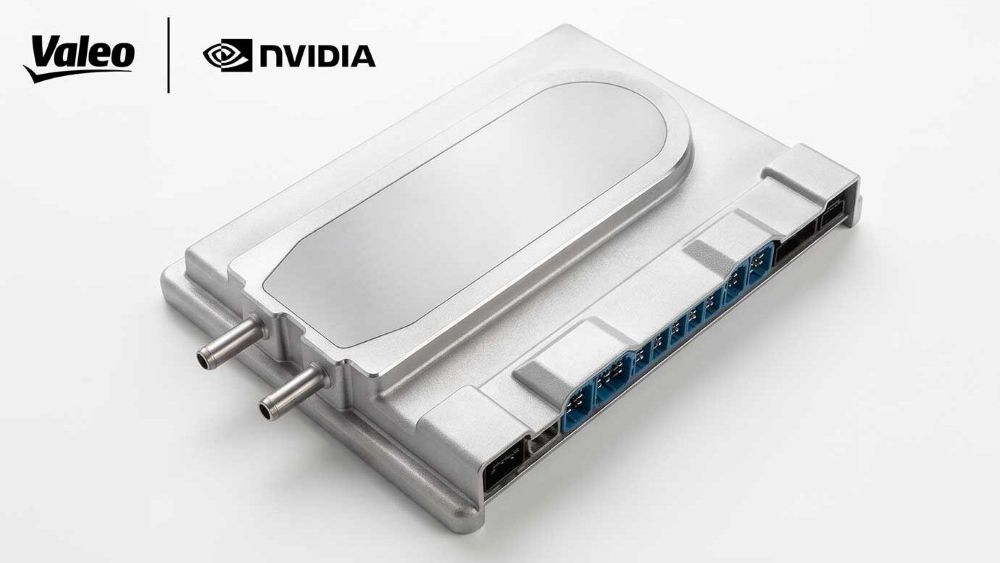
- Valeo develops NVIDIA-based platforms for Level 4 autonomy.
- Platforms combine dual NVIDIA DRIVE AGX Thor architecture.
- Solutions target passenger vehicles, autonomous trucks, and robotaxis.
Valeo Develops NVIDIA-Based Platforms for Level 4 Autonomous Driving
Valeo Group announced plans to develop and industrialize automotive-grade, high-performance computing platforms based on the NVIDIA Hyperion reference architecture and the NVIDIA Halos safety system. The initiative combines centralized computing architecture with automotive integration, functional safety, and industrialization expertise. The resulting platforms are intended to help accelerate the deployment of safe, scalable software-defined vehicle systems. By bringing these capabilities together, the collaboration focuses on the computing infrastructure needed for increasingly advanced vehicle automation, while addressing the engineering and production requirements associated with automotive-grade systems.
Combining NVIDIA Architecture With Automotive Integration
The planned platforms bring together NVIDIA’s centralized computing architecture and Valeo’s experience in automotive integration, functional safety, and industrialization. This combination is intended to support the development of scalable vehicle systems while helping automakers manage the complexity of integrating advanced computing into vehicles. The platforms are designed to accelerate the deployment of software-defined vehicles, in which vehicle functions increasingly depend on software and computing capabilities. The announcement emphasizes safe, scalable implementation rather than computing performance alone, positioning integration and industrialization as important parts of moving advanced vehicle technology toward deployment.
Dual NVIDIA DRIVE AGX Thor Architecture for Level 4 Autonomy
The platforms will be built on NVIDIA Hyperion’s dual NVIDIA DRIVE AGX Thor architecture. According to the announcement, this configuration will provide the advanced artificial intelligence performance and redundancy required for Level 4 autonomous driving. The architecture is intended to support demanding automated-driving applications while incorporating redundancy into the computing platform. These capabilities are central to the proposed solution, although the announcement does not provide detailed performance figures, hardware specifications, validation results, or a production schedule. The stated objective is to develop automotive-grade computing systems capable of supporting advanced autonomous-driving functions across several transportation applications.
Applications Across Passenger Vehicles, Trucking, and Robotaxis
The planned platforms are intended for Level 4 autonomous-driving applications across passenger vehicles, autonomous trucking, and robotaxis. These application areas place different operational demands on vehicle systems, but the announced platform approach is designed to provide a shared computing foundation for advanced automation. The companies expect the platforms to help automakers improve operational efficiency, reduce system complexity, and accelerate time-to-market for the next generation of intelligent transportation. The announcement does not identify specific vehicle manufacturers, deployment locations, commercial launch dates, or individual vehicle programs that will use the platforms.
Expected Benefits for Software-Defined Vehicles
The initiative is designed to support the wider deployment of safe and scalable software-defined vehicle systems. Centralized computing can provide a common foundation for vehicle software and advanced automated-driving functions, while automotive integration and functional-safety expertise address the requirements of adapting these technologies to vehicle applications. Valeo’s industrialization capabilities are also part of the announced approach, linking platform development with the requirements of automotive production. The stated benefits include lower system complexity, improved operational efficiency, and faster time-to-market. These are intended outcomes; the announcement does not quantify expected savings, development-time reductions, or efficiency improvements.
Roles of Valeo and NVIDIA in the Platform Development
NVIDIA contributes the Hyperion reference architecture, the Halos safety system, and the dual DRIVE AGX Thor computing architecture identified in the announcement. Valeo will apply its expertise in automotive integration, functional safety, and industrialization to develop and industrialize the automotive-grade platforms. The arrangement combines NVIDIA’s computing and safety technologies with Valeo’s automotive engineering and industrialization capabilities. The announcement describes the planned technical approach but does not specify commercial terms, investment amounts, manufacturing locations, platform availability dates, or the division of responsibilities for individual vehicle programs.
What the Announcement Confirms—and What Remains Unspecified
The announcement confirms the intended platform architecture, the companies’ respective areas of contribution, and the targeted Level 4 autonomous-driving applications. It also identifies the expected benefits of improving operational efficiency, reducing system complexity, and accelerating time-to-market. However, it does not disclose detailed technical specifications, performance benchmarks, validation milestones, production volumes, pricing, or customer commitments. It also does not identify when the platforms will enter vehicles or which automakers will adopt them. These details will be important for assessing the eventual commercial reach of the initiative and how the proposed platforms perform in production-level autonomous-driving applications.
Industry Impact & Outlook
The planned platforms highlight the importance of combining high-performance computing architectures with automotive integration, functional safety, and industrialization as automakers pursue Level 4 autonomy. Passenger-vehicle manufacturers, autonomous-trucking developers, and robotaxi operators are the intended application groups, while the promised reductions in complexity and time-to-market could matter to companies managing demanding automated-driving programs. The announcement establishes the technology direction and targeted use cases, but its practical impact will depend on subsequent development, validation, industrialization, and adoption by vehicle manufacturers. Further technical details and deployment milestones will be needed to determine how broadly the platforms are used and whether the expected operational benefits are achieved.
Frequently Asked Questions
What did Valeo announce?
Valeo announced that it will develop and industrialize automotive-grade, high-performance computing platforms based on NVIDIA Hyperion and NVIDIA Halos. The platforms are intended to support safe, scalable software-defined vehicle systems and Level 4 autonomous driving. The planned work combines NVIDIA’s centralized computing architecture and related technologies with Valeo’s expertise in automotive integration, functional safety, and industrialization. The announcement identifies the intended architecture and applications, but it does not provide a commercial launch date, production volume, or list of vehicle manufacturers that will use the platforms.
Which NVIDIA technologies will the platforms use?
The platforms will use the NVIDIA Hyperion reference architecture and NVIDIA Halos safety system, with a dual NVIDIA DRIVE AGX Thor architecture at their core. According to the announcement, this configuration is intended to provide the advanced artificial intelligence performance and redundancy required for Level 4 autonomous driving. The announcement does not specify detailed computing benchmarks, hardware configurations beyond the dual-architecture description, or validation results. Those details would be needed to assess the platforms’ measured capabilities in particular vehicle applications.
Which vehicle applications are targeted?
The planned platforms are intended to support Level 4 autonomous driving across passenger vehicles, autonomous trucking, and robotaxis. These applications represent the vehicle categories identified in the announcement, with the platforms designed to provide advanced computing performance and redundancy for automated-driving systems. However, no specific automaker, truck operator, robotaxi service, vehicle model, or deployment market is named. The announcement therefore describes the intended application scope rather than confirming adoption by a particular manufacturer or commercial transportation operator.
What role will Valeo play in the development?
Valeo will develop and industrialize the automotive-grade computing platforms, drawing on its expertise in automotive integration, functional safety, and industrialization. These capabilities are intended to help adapt NVIDIA’s centralized computing architecture and associated technologies to automotive requirements. Valeo’s contribution therefore extends beyond identifying a computing architecture: the announcement specifically includes the development and industrialization of the platforms. It does not, however, disclose manufacturing locations, production timelines, investment figures, or the detailed allocation of engineering responsibilities between the companies.
How are the platforms expected to benefit automakers?
The platforms are intended to help automakers improve operational efficiency, reduce system complexity, and accelerate time-to-market for the next generation of intelligent transportation. Their architecture combines centralized computing, artificial intelligence performance, and redundancy with automotive integration and industrialization expertise. These features are presented as enablers for safe and scalable software-defined vehicle systems and Level 4 autonomous driving. The announcement does not quantify the expected improvements, so the size of any efficiency gains, complexity reductions, or time savings remains unconfirmed.
When will the platforms become available, and which companies will use them?
The announcement does not provide a confirmed availability date or identify vehicle manufacturers that have committed to using the platforms. It outlines the planned development and industrialization work, the NVIDIA technologies involved, and the targeted autonomous-driving applications. Production timing, customer programs, commercial terms, technical validation milestones, and deployment locations remain unspecified. Those details will be important for understanding when the platforms could enter production vehicles and how extensively they might be adopted across passenger vehicles, autonomous trucking, and robotaxi applications.
Click above to visit the official source.
Discussion
Join the conversation.