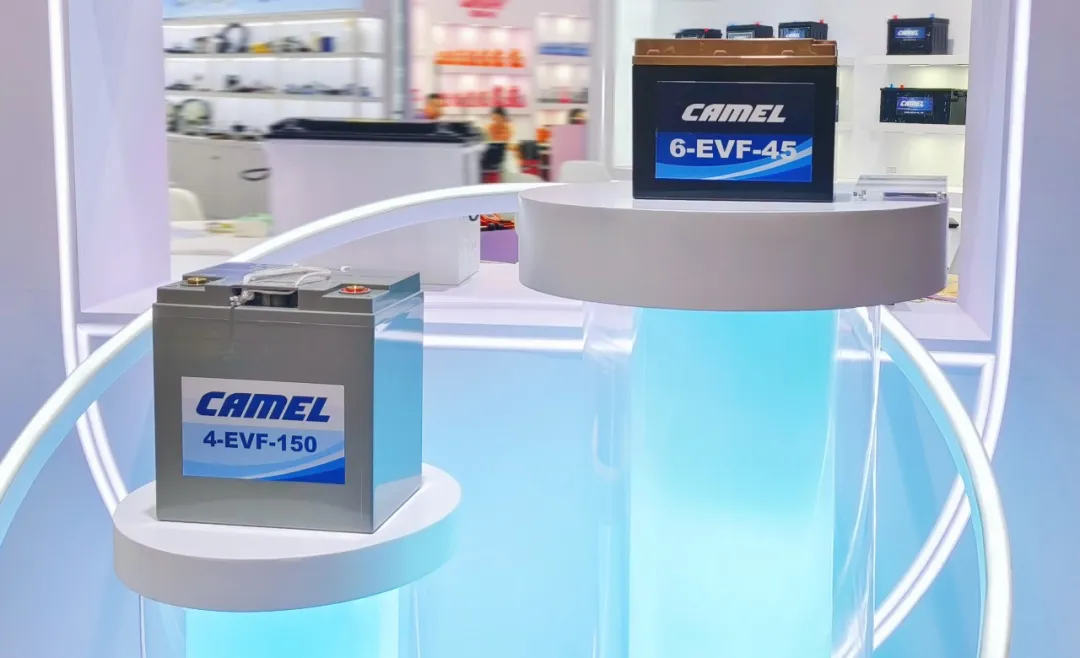
- Camel Group showcases diverse batteries at the 140th Canton Fair.
- Lithium-ion batteries span 64 V and 76.8 V platforms.
- European automaker project includes 12 V sodium-ion battery pre-development.
Camel Group Showcases Automotive and Small Motive Power Batteries
Camel Group Co., Ltd. presented a range of battery products at the 140th China Import and Export Fair, also known as the Canton Fair. Its display included SLI, EFB, and AGM automotive low-voltage lead-acid batteries, along with low-voltage lithium-ion batteries, sodium-ion batteries, and small motive power batteries. The products are intended for several applications, including vehicle starting, auxiliary power supply, power supply for parked vehicles, and small motive power requirements. The range demonstrates the company's coverage of both conventional lead-acid technologies and newer battery chemistries across automotive and light electric mobility applications.
Small Motive Power Batteries for Light Electric Vehicles
The company's small motive power battery portfolio targets electric two-wheelers, electric three-wheelers, low-speed four-wheelers, and golf carts. Its lithium-ion batteries are available on 64 V and 76.8 V voltage platforms, with capacities ranging from 20 Ah to 206 Ah. These products use lithium iron phosphate (LFP) cells and incorporate intelligent battery management systems (BMSs). The combination of multiple voltage platforms and a broad capacity range allows the portfolio to address different small-vehicle power requirements. The source announcement does not specify individual models, energy ratings, charging times, or performance comparisons for these batteries.
Lead-Acid Battery Options for Small Motive Power
Alongside its lithium-ion products, Camel Group displayed lead-acid batteries for small motive power applications. These batteries cover 6 V, 8 V, and 12 V voltage platforms, with capacities ranging from 13.3 Ah to 150 Ah. They are part of the company's broader offering for electric two- and three-wheelers, low-speed four-wheelers, and golf carts. The stated voltage and capacity ranges distinguish this portfolio from the company's higher-voltage lithium-ion options. The announcement does not provide product-by-product comparisons or identify specific vehicle models matched to each lead-acid battery configuration.
Automotive Low-Voltage Lead-Acid Battery Applications
Camel Group's automotive low-voltage lineup includes SLI, EFB, and AGM lead-acid batteries designed for starting applications in passenger and commercial vehicles. These product categories form part of the company's offering for conventional automotive electrical requirements. The displayed range also includes low-voltage lithium-ion and sodium-ion batteries, extending the portfolio beyond lead-acid chemistry. The announcement identifies the intended starting applications but does not provide detailed technical specifications, model-level compatibility information, or comparative performance data for the SLI, EFB, and AGM products. Those details would be needed to assess the suitability of individual batteries for specific vehicle platforms.
Low-Voltage Lithium-Ion Batteries for Auxiliary Power
The company's low-voltage lithium-ion batteries cover voltage platforms from 12 V to 48 V. According to the announcement, they can support vehicle starting, auxiliary and redundant power supply, and power supply for parking air conditioning in commercial vehicles. The portfolio also addresses 48 V power supply applications. These uses place the batteries across several vehicle electrical functions rather than limiting them to a single starting application. However, the source does not specify individual battery capacities, output ratings, vehicle integration details, or the conditions under which each product is intended to operate. The stated applications describe the portfolio's intended scope, not confirmed compatibility with every vehicle.
12 V Sodium-Ion Battery Pre-Development Project
Camel Group also reported that its related products had been included in a European automaker's 12 V sodium-ion battery pre-development project. Technical research and development, followed by validation, are to take place. This is a pre-development project, so the announcement does not establish that the battery has completed validation, entered mass production, or been adopted in a production vehicle. The automaker is not identified in the supplied information. The project nevertheless shows that sodium-ion technology is being considered within a low-voltage automotive development program, alongside the lead-acid and lithium-ion products presented at the fair.
Battery Portfolio Covers Multiple Vehicle Electrical Needs
The products displayed at the Canton Fair span automotive starting batteries, auxiliary and redundant power supply, parked-vehicle electrical loads, and small motive power applications. Camel Group's offering includes SLI, EFB, and AGM lead-acid batteries, low-voltage lithium-ion batteries, sodium-ion batteries, and battery options for light electric vehicles. Its specified platforms range from 6 V lead-acid batteries for small motive power uses to 48 V low-voltage lithium-ion applications. The announcement also identifies 64 V and 76.8 V lithium-ion platforms for small motive power products. It does not provide sales figures, production capacity, pricing, or launch schedules for the displayed products.
Industry Impact & Outlook
Camel Group's displayed portfolio highlights how automotive and light-mobility battery suppliers are addressing different electrical requirements through multiple chemistries and voltage platforms. Lead-acid products remain part of the company's starting-battery and small motive power offering, while lithium-ion batteries serve a wider range of low-voltage and light-vehicle applications. The 12 V sodium-ion pre-development project is an early-stage indication of interest in an alternative chemistry for automotive low-voltage systems, but technical R&D and validation remain ahead. For automakers and battery suppliers, the project's next meaningful milestone will be the outcome of that development and validation work; the announcement does not confirm production adoption or commercial timing.
Frequently Asked Questions
What battery products did Camel Group showcase at the Canton Fair?
Camel Group showcased automotive lead-acid batteries, low-voltage lithium-ion batteries, sodium-ion batteries, and small motive power batteries at the 140th China Import and Export Fair. Its lead-acid lineup included SLI, EFB, and AGM products for passenger and commercial vehicle starting applications. The display also covered batteries for electric two- and three-wheelers, low-speed four-wheelers, and golf carts. The products are intended for vehicle starting, auxiliary power, parked-vehicle power supply, and small motive power applications. The announcement does not provide a complete model-by-model catalog or pricing information.
What voltage and capacity ranges are available for Camel Group's small motive power lithium-ion batteries?
Camel Group's small motive power lithium-ion batteries are offered on 64 V and 76.8 V voltage platforms, with capacities ranging from 20 Ah to 206 Ah. The company states that these batteries use lithium iron phosphate cells and intelligent battery management systems. They are designed for applications including electric two-wheelers, electric three-wheelers, low-speed four-wheelers, and golf carts. The supplied announcement does not specify the capacity of each individual model, its energy rating, or charging performance. Those details cannot be established from the stated platform and capacity ranges alone.
What voltage and capacity ranges do the small motive power lead-acid batteries cover?
The small motive power lead-acid batteries displayed by Camel Group cover 6 V, 8 V, and 12 V voltage platforms, with capacities ranging from 13.3 Ah to 150 Ah. They form part of the company's offering for electric two- and three-wheelers, low-speed four-wheelers, and golf carts. The source identifies the overall voltage and capacity ranges but does not map specific batteries to individual vehicle types or applications. It also does not provide comparative data on service life, charging characteristics, weight, or cost, so those performance factors cannot be compared using the announcement alone.
What applications are supported by Camel Group's automotive low-voltage lithium-ion batteries?
Camel Group's automotive low-voltage lithium-ion batteries cover voltage platforms from 12 V to 48 V and are intended for several vehicle electrical applications. These include vehicle starting, auxiliary and redundant power supply, power supply for parking air conditioning in commercial vehicles, and 48 V power supply applications. The announcement establishes these intended uses but does not provide detailed specifications for individual products or confirm compatibility with particular vehicle models. Vehicle manufacturers and system integrators would need product-level technical information to assess suitability for a specific electrical architecture or operating requirement.
What is the status of Camel Group's 12 V sodium-ion battery project?
Camel Group stated that its related products had been included in a European automaker's 12 V sodium-ion battery pre-development project, with technical research and development and validation to follow. This indicates that the project remains at a pre-development stage in the information provided. The announcement does not identify the automaker or confirm that the battery has completed validation, been approved for production, or entered commercial use. It also does not disclose a development schedule, performance results, or planned production volume. Those outcomes remain unconfirmed in the supplied source material.
Which vehicle categories are covered by Camel Group's displayed battery portfolio?
Camel Group's displayed portfolio covers passenger and commercial vehicles through its SLI, EFB, and AGM starting batteries, as well as low-voltage lithium-ion products for additional electrical functions. Its small motive power batteries target electric two-wheelers, electric three-wheelers, low-speed four-wheelers, and golf carts. The products therefore address both conventional automotive electrical systems and selected light electric mobility applications. The announcement does not identify every compatible vehicle model or market, and it does not provide sales or deployment figures. Its stated application categories describe the intended scope of the products rather than confirmed adoption across all vehicles in those segments.
Click above to visit the official source.
Discussion
Join the conversation.