- Hyundai Mobis targets domestic automotive chip supply by 2029.
- Nine semiconductor projects are confirmed for mass production.
- South Korea's automotive semiconductor support center is due in 2027.
Hyundai Mobis Targets Domestic Automotive Semiconductor Supply by 2029
Hyundai Mobis plans to supply automotive semiconductors developed in South Korea for vehicles manufactured by Hyundai Motor and Kia from 2029. The initiative supports South Korea's efforts to reduce its dependence on imported automotive chips, which currently account for more than 95 percent of the country's automotive semiconductor use, according to Korea JoongAng Daily. Hyundai Mobis is collaborating with domestic semiconductor companies, including Samsung Electronics and SK keyfoundry, to develop chips for vehicle applications. The company is also considering potential demand from overseas automakers as it develops the technology, indicating that the initiative could eventually extend beyond the domestic market.
Hyundai and Kia to Begin Vehicle Testing
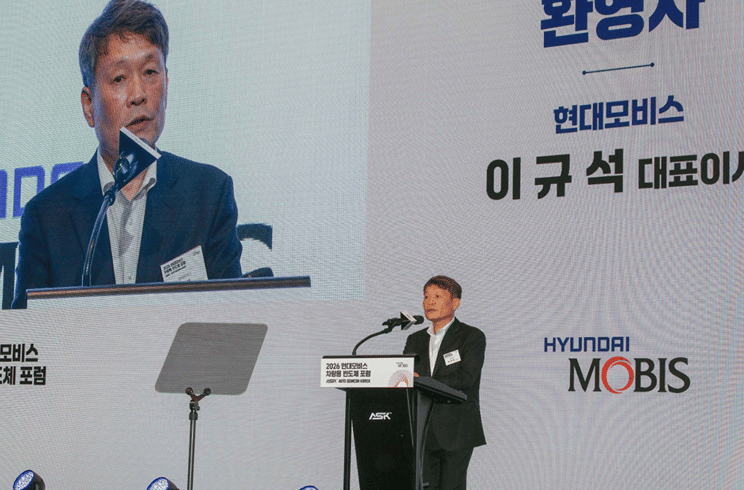
Hyundai Mobis president Lee Gyu-suk said Hyundai and Kia would begin using the chips developed through the initiative in vehicle testing from 2027, according to his remarks at the Auto Semicon Korea forum in Pangyo, Gyeonggi. The testing milestone precedes the planned 2029 supply timeline and represents a step toward introducing domestically developed semiconductors into vehicles produced by the two automakers. Lee also indicated that the development effort was being undertaken with potential overseas sales in mind. The source does not identify the individual chip models or specify which vehicle platforms will use them, so the scope of the initial applications remains to be confirmed.
Auto Semicon Korea Advances Domestic Chip Projects
Launched in 2025, the Auto Semicon Korea forum brings together companies and institutions to support the development of automotive semiconductors within South Korea. The forum included 53 participating companies and institutions, reflecting cooperation across the domestic automotive and semiconductor sectors. Participants undertook approximately 13 chip development projects during the previous year, and nine of those projects have been confirmed for mass production in vehicles from Hyundai and Kia. These projects provide a pathway for locally developed chips to progress toward automotive production. However, the source does not identify all nine projects or provide their individual specifications, production volumes, or exact commercialization schedules.
Hyundai Mobis Expands Semiconductor Research and Development
Hyundai Mobis acquired Hyundai Autron's semiconductor business in 2020 and has since expanded its research and development activities in power semiconductors and system semiconductors. These areas are relevant to the broader range of electronic functions required in modern vehicles. Power semiconductors are particularly important for electric vehicles, making their development a focus of the domestic semiconductor initiative. By working with South Korean chip companies, Hyundai Mobis aims to develop components for vehicles produced by Hyundai Motor and Kia while building capabilities within the country's automotive supply chain. The source does not provide details of individual chip designs, manufacturing processes, or the relative contribution of each participating semiconductor company.
Past Chip Shortages Strengthen the Case for Domestic Development
The effort to develop automotive semiconductors domestically follows the global chip shortage triggered by the COVID-19 pandemic. The disruption forced factories operated by Hyundai Motor to halt production, demonstrating how semiconductor supply constraints can affect vehicle manufacturing. South Korea's current dependence on imported automotive chips adds further importance to efforts aimed at developing domestic alternatives. Hyundai Mobis's work with local semiconductor companies is intended to support the country's automotive industry by creating additional sources of vehicle chips. The source does not quantify the financial impact of the earlier production stoppages or establish how much the new development program could reduce future import dependence.
South Korea Establishes Support for Power Semiconductor Research
At the Auto Semicon Korea forum, South Korea's Industry Minister Kim Jung-kwan signed a memorandum of understanding with Hyundai Mobis to establish a domestic research laboratory for power semiconductors. These components are used in electric vehicles and form part of the wider effort to strengthen local automotive semiconductor capabilities. The agreement connects government support with Hyundai Mobis's development activities and its collaboration with domestic semiconductor companies. The source does not specify the laboratory's budget, staffing, research capacity, or precise opening date. Its planned establishment nevertheless signals a coordinated effort to support power semiconductor research within South Korea's automotive industry.
Automotive Semiconductor Support Center Planned for 2027
The South Korean government is also developing an automotive semiconductor support center in Asan, South Chungcheong. The facility is intended to verify and evaluate chip reliability, an important step in assessing semiconductors for automotive applications. It is scheduled for completion in 2027, ahead of Hyundai Mobis's planned domestic chip supply to Hyundai Motor and Kia vehicles from 2029. The source does not specify the center's testing procedures, certification responsibilities, or the range of semiconductor products it will assess. Its stated reliability and evaluation role could support development efforts by providing a dedicated facility for examining automotive chips before their broader adoption.
Hyundai Mobis Seeks Opportunities Beyond South Korea
Hyundai Mobis says it will continue collaborating with domestic semiconductor companies to develop chips for South Korea's automotive industry while pursuing opportunities to supply overseas manufacturers. This approach places the domestic vehicle program alongside a potential international business opportunity, although no overseas customers or supply agreements are identified in the source. The initial focus remains on chips developed in South Korea for Hyundai Motor and Kia vehicles, with vehicle testing expected to begin in 2027 and planned supply from 2029. The company's longer-term commercial reach will depend on subsequent development and customer decisions; the source provides no confirmed export volumes, foreign production arrangements, or additional market-entry dates.
Industry Impact & Outlook
Hyundai Mobis's initiative reflects South Korea's effort to strengthen automotive semiconductor capabilities after a global shortage exposed the production risks associated with imported chips. If the planned testing, development, and mass-production steps proceed, Hyundai Motor and Kia could gain access to locally developed components, while domestic semiconductor suppliers could gain experience serving automotive applications. The government-backed research laboratory and the planned reliability support center add infrastructure to this effort, with the center scheduled for completion in 2027. Potential overseas supply could broaden the initiative's commercial reach, but the source does not confirm export customers or volumes. The next meaningful milestones are vehicle testing, progress toward mass production, and the planned 2029 supply start.
Frequently Asked Questions
When does Hyundai Mobis plan to supply South Korean automotive chips to Hyundai and Kia?
Hyundai Mobis plans to supply domestically developed automotive semiconductors for Hyundai Motor and Kia vehicles from 2029, following development and vehicle testing. Hyundai Mobis president Lee Gyu-suk said the two automakers would begin using the chips in vehicle testing from 2027. The schedule places testing before the planned supply start, although the source does not specify individual chip launch dates, production volumes, or the vehicle models that will receive the components. The timeline describes the company's plan rather than confirmation that all targeted chips have already completed validation.
Why is South Korea developing its own automotive semiconductors?
South Korea is pursuing domestic automotive chip development to reduce its dependence on imported semiconductors and strengthen the resilience of its vehicle manufacturing supply chain. More than 95 percent of the automotive chips used in the country are currently imported, according to the source. The global semiconductor shortage triggered by the COVID-19 pandemic also forced Hyundai Motor factories to halt production, highlighting the impact of supply disruptions. Hyundai Mobis is working with domestic semiconductor companies to develop chips for vehicles, but the source does not quantify how much the initiative will reduce imports or prevent future shortages.
Which companies are working with Hyundai Mobis on automotive chip development?
Hyundai Mobis is working with South Korean semiconductor companies, including Samsung Electronics and SK keyfoundry, to develop chips for automotive applications. The planned components are intended for vehicles manufactured by Hyundai Motor and Kia, with the companies expected to begin vehicle testing from 2027. The collaboration forms part of South Korea's wider effort to build domestic automotive semiconductor capabilities. The source does not provide a detailed division of responsibilities among the participating companies, identify every supplier involved in each project, or specify which company will manufacture each individual chip.
What progress has the Auto Semicon Korea forum reported?
The Auto Semicon Korea forum, launched in 2025, brought together 53 companies and institutions to support domestic automotive semiconductor development. Participants undertook around 13 chip development projects during the previous year, and nine projects have been confirmed for mass production in Hyundai and Kia vehicles. These figures indicate progress toward translating development work into automotive applications. However, the source does not identify all the projects, disclose their technical specifications, or provide individual production dates and volumes. The confirmed projects should therefore not be interpreted as evidence that every chip is already in mass production.
What new semiconductor research and testing facilities are planned in South Korea?
South Korea is supporting domestic semiconductor development through a planned power semiconductor research laboratory and an automotive semiconductor support center in Asan, South Chungcheong. Hyundai Mobis and Industry Minister Kim Jung-kwan signed a memorandum of understanding to establish the research laboratory. Separately, the government is developing the Asan support center to verify and evaluate chip reliability, with completion scheduled for 2027. The source does not specify the laboratory's opening date or the center's full technical capabilities. Both initiatives are intended to support domestic automotive semiconductor development and evaluation.
Does Hyundai Mobis plan to sell its automotive semiconductors outside South Korea?
Yes. Hyundai Mobis president Lee Gyu-suk said the company was developing its automotive semiconductors with potential sales to overseas automakers in mind. The company's stated plans include continued collaboration with domestic semiconductor companies and efforts to identify opportunities to supply foreign manufacturers. However, the source does not name prospective overseas customers, confirm export contracts, or provide expected international sales volumes. The planned supply to Hyundai Motor and Kia from 2029 remains the identified vehicle program, while overseas supply is described as an opportunity the company is considering rather than a confirmed commercial arrangement.
Top of Form
Bottom of Form
Click above to visit the official source.
Discussion
Join the conversation.