- Freudenberg Sealing Technologies unveils new PEM electrolysis membranes.
- New CCMs use 0.5 mg of iridium per sq. cm.
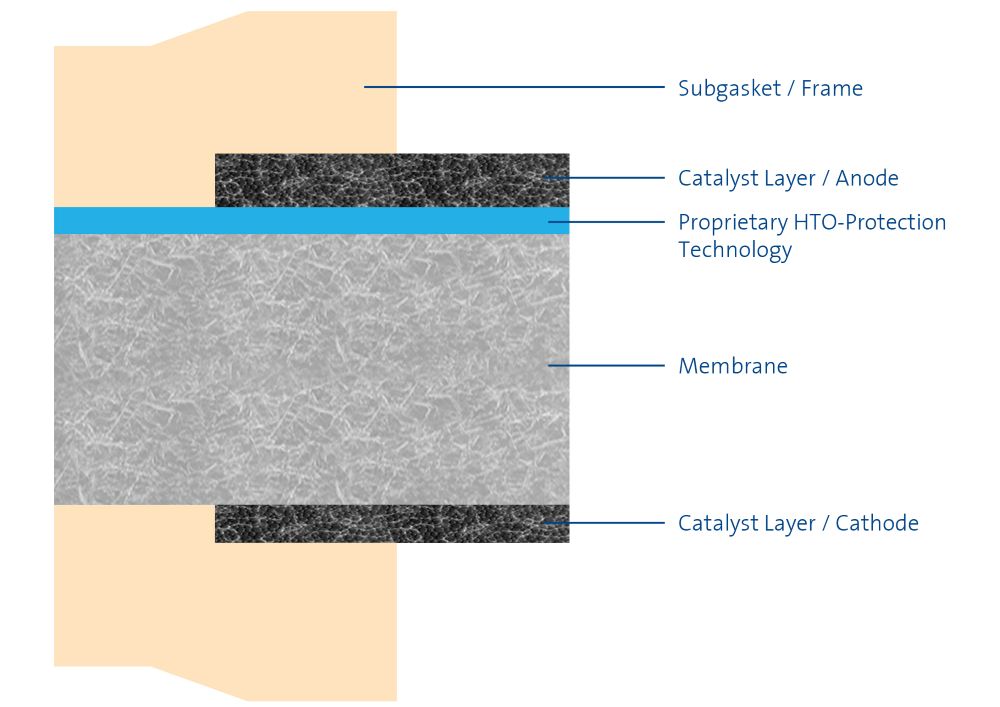
- HTO-Protection limits hydrogen migration to below 0.25% by volume.
Freudenberg Introduces New Catalyst-Coated Membranes for PEM Electrolysis
Freudenberg Sealing Technologies, a business group of Freudenberg SE, is presenting a new generation of catalyst-coated membranes (CCMs) for proton exchange membrane (PEM) electrolysis at the Hydrogen Technology Expo in Hamburg, Germany, from October 20 to 22, 2026. The new membranes are designed to lower capital and operating costs by reducing precious-metal consumption while maintaining high efficiency. Accelerated aging tests showed no significant degradation, according to the company. The development addresses key priorities for electrolyzer technology: using less costly catalyst material, maintaining performance, and supporting reliable operation. The announced specifications also include a defined iridium loading, cell voltage, operating current density, and a hydrogen-migration limit associated with the company's HTO-Protection technology.
Iridium Loading and Electrolysis Performance
The new CCM generation requires just 0.5 milligrams of iridium per square centimeter. This low loading is intended to reduce reliance on a precious metal while retaining the efficiency needed for PEM electrolysis. Freudenberg reports a cell voltage of 1.74 volts at a current density of 3 amperes per square centimeter. These figures describe the performance conditions specified in the company's announcement and provide a quantitative basis for evaluating the membranes. The source does not provide a comparison with an earlier membrane generation, an independent test result, or a quantified cost reduction, so the extent of any improvement beyond the stated specifications cannot be determined from the available information.
HTO-Protection Technology and Operational Safety
The membranes incorporate Freudenberg's HTO-Protection technology, which is designed to limit hydrogen migration to the oxygen side during operation. The company reports that hydrogen migration remains below 0.25% by volume at a current density of 0.5 amperes per square centimeter. This limit is relevant to operational safety because hydrogen crossover is an important consideration in PEM electrolysis systems. The reported migration figure applies to the stated current density; it should not be interpreted as a universal result across every operating condition. The announcement does not specify additional test parameters or provide a full safety assessment, but it identifies crossover control as a feature of the new membrane design.
Membrane Thicknesses and Available Supply Formats
Freudenberg will offer the new CCMs in two membrane thicknesses: 50 and 80 micrometers. Customers can obtain the products as rolls, sheets, or ready-to-install assemblies, providing several supply formats for different integration and manufacturing needs. These options allow prospective customers to consider the membrane according to their process requirements without being restricted to a single delivery format. The announcement does not identify specific customer programs, production volumes, delivery schedules, or pricing. It also does not state whether the two thicknesses differ in performance or intended application, so customers would need further product documentation to determine which configuration best matches a particular electrolyzer design.
PEM Fuel Cell Products for Commercial Transport
Alongside its electrolysis membranes, Freudenberg also offers catalyst-coated membranes and membrane electrode assemblies (MEAs) for PEM fuel cells used in trucks, buses, and ships. CCMs and MEAs are components used within fuel-cell systems, but they serve a different application from the newly announced CCMs for PEM electrolysis. The company therefore describes offerings across both hydrogen electrolysis and fuel-cell applications. The announcement does not indicate that the new electrolysis membrane generation is intended for direct use in those fuel-cell products. Instead, the transport-related offerings provide context for Freudenberg's wider membrane and assembly portfolio serving hydrogen-related technologies.
Hydrogen Technology Expo Presentation in Hamburg
The new membrane generation is being presented at the Hydrogen Technology Expo in Hamburg from October 20 through October 22, 2026. The event provides the announced setting for the company to showcase the CCM technology and its technical specifications. The presentation highlights the combination of low iridium loading, reported electrolysis performance, limited hydrogen migration, and multiple supply formats. The company has not disclosed additional commercial terms in the source announcement, including pricing, order availability, manufacturing capacity, or confirmed customer deployments. Accordingly, the presentation establishes the product's announced features, while further details would be needed to assess its adoption, economics, and performance under specific customer operating conditions.
Industry Impact & Outlook
Reducing iridium requirements while maintaining electrolysis performance could help address material-cost pressures in PEM hydrogen production, where precious-metal use is an important design consideration. Freudenberg's reported crossover limit also highlights the role of membrane engineering in operational safety, while the choice of rolls, sheets, and ready-to-install assemblies offers flexibility for manufacturers integrating CCMs into their processes. The significance of the new generation will depend on how its stated specifications translate into real-world operating performance, durability, and total system costs. Further comparative data, customer deployments, and commercial details would help electrolyzer developers determine whether the membranes deliver measurable benefits in their intended applications.
Frequently Asked Questions
What has Freudenberg Sealing Technologies announced?
Freudenberg Sealing Technologies has announced a new generation of catalyst-coated membranes designed for proton exchange membrane electrolysis, with lower iridium use and reported high efficiency. The membranes were presented at the Hydrogen Technology Expo in Hamburg, Germany, scheduled for October 20–22, 2026. The company says accelerated aging tests showed no significant degradation. The announcement also identifies HTO-Protection technology, two available membrane thicknesses, and several supply formats. It does not provide pricing, production volumes, or confirmed customer deployments.
How much iridium do the new CCMs require?
The new catalyst-coated membranes require 0.5 milligrams of iridium per square centimeter, according to Freudenberg Sealing Technologies. The reduced precious-metal requirement is intended to help lower capital and operating costs while maintaining high efficiency in PEM electrolysis. The announcement reports a cell voltage of 1.74 volts at a current density of 3 amperes per square centimeter. It does not quantify the cost savings or provide a direct comparison with the company's previous membrane generation, so the financial impact cannot be calculated from the announced figures alone.
What electrolysis performance does Freudenberg report?
Freudenberg reports that the new CCMs achieve a cell voltage of 1.74 volts at a current density of 3 amperes per square centimeter. The company also says accelerated aging tests showed no significant degradation. These figures describe the performance and durability observations included in the announcement, but the source does not provide a complete test protocol, an independent verification, or a comparison against alternative membranes. The results should therefore be understood within the stated conditions rather than treated as a guarantee of identical performance in every electrolyzer system or operating environment.
What is HTO-Protection technology?
HTO-Protection is Freudenberg's technology incorporated into the new membranes to limit hydrogen migration to the oxygen side during PEM electrolysis. The company reports hydrogen migration below 0.25% by volume at a current density of 0.5 amperes per square centimeter. Limiting crossover is relevant to operational safety in electrolysis systems. However, the announced figure applies to the specified current density, and the source does not describe all test conditions or provide a complete safety evaluation. It should not be interpreted as a universal crossover result under every operating condition.
Which thicknesses and supply formats are available?
The new CCM generation is available in membrane thicknesses of 50 and 80 micrometers, according to Freudenberg Sealing Technologies. The company can supply the membranes as rolls, sheets, or ready-to-install assemblies. These options provide different formats for customers' manufacturing and integration processes. The announcement does not explain whether the thicknesses have different performance characteristics or are designed for distinct electrolyzer configurations. It also does not specify order quantities, prices, delivery schedules, or production capacity, so those commercial and application details remain unconfirmed in the available source material.
Does Freudenberg also supply components for fuel cells?
Yes. Freudenberg also offers catalyst-coated membranes and membrane electrode assemblies for PEM fuel cells used in trucks, buses, and ships. These products serve fuel-cell applications, while the newly announced CCM generation is specifically described as being designed for PEM electrolysis. The announcement does not say that the new electrolysis membranes are directly interchangeable with fuel-cell components. The two offerings illustrate the company's presence in membrane technologies for both hydrogen production and hydrogen-based energy conversion, but further product-specific documentation would be needed to establish compatibility or application requirements.
Click above to visit the official source.
Discussion
Join the conversation.