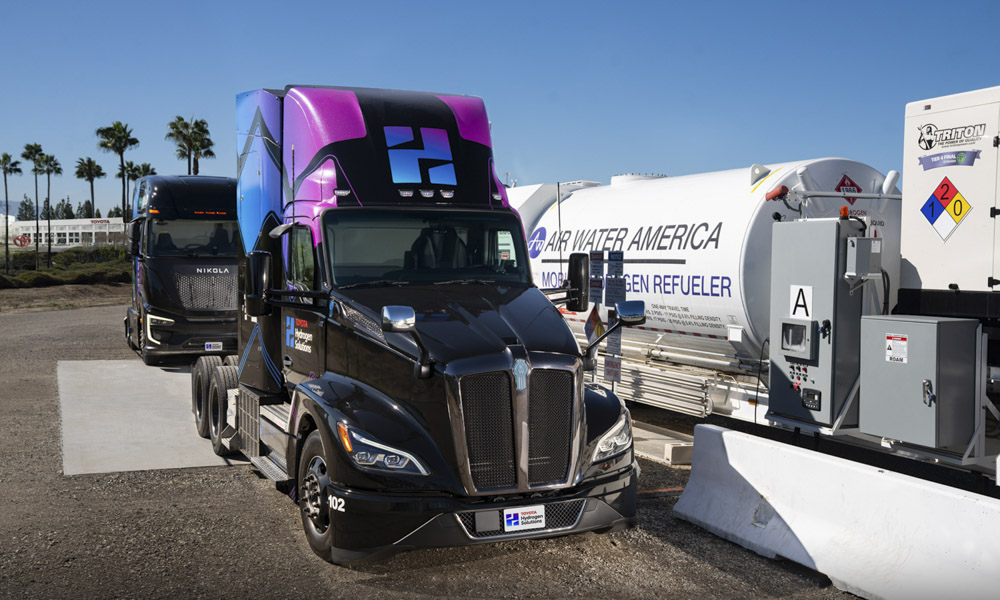
- Toyota hydrogen fueling advances with new mobile stations in California.
- Toyota-powered commercial fuel cell trucks are expected in 2027.
Toyota Expands Hydrogen Fueling for Heavy-Duty Trucks
On October 20, Toyota Motor North America reported progress in improving hydrogen fueling for heavy-duty fuel cell trucks through its Hydrogen Headquarters (H2HQ) division. The company is working to bring these developments into its U.S. commercial fleets, with an emphasis on fueling infrastructure capable of supporting freight operations. Its latest activities include installing mobile hydrogen fueling devices at a major California parts distribution facility and planning a permanent station at the same location. Toyota is also upgrading its private fueling infrastructure for vehicle testing and collaborating with a U.S. Department of Energy national laboratory on high-flow fueling research. These efforts support the company's broader work on hydrogen-powered commercial transportation, while Toyota-powered trucks are expected to enter commercial operations in 2027.
Toyota Installs Mobile Hydrogen Fuelers in California
Toyota recently installed two mobile hydrogen fueling devices at North American Parts Center California (NAPCC), which the company identifies as its largest parts distribution facility in the United States. Toyota plans to build a permanent hydrogen station at the location to support both conventional and high-flow hydrogen fueling for heavy-duty trucks. The planned facility will also include a separate area for fueling light-duty vehicles. This arrangement is intended to accommodate different vehicle requirements at the distribution site, while the mobile equipment provides fueling support during the current phase of the project. The planned permanent station represents a further step in developing hydrogen infrastructure for Toyota's commercial fleet operations in California.
Hydrogen Fueling for Freight Operations in Southern California
Toyota's commercial logistics fleets plan to use the mobile fuelers to support company operations by refueling heavy-duty fuel cell trucks that transport freight from the Port of Los Angeles to Ontario, California. The station will initially serve heavy-duty trucks commissioned through Hyroad Energy. Toyota plans to integrate trucks using its own certified fuel cell powertrain at a later stage. This phased approach connects the fueling project with an established freight route and provides a planned pathway for bringing Toyota-powered fuel cell trucks into the operation. The announcement does not specify the number of trucks involved or the volume of hydrogen the mobile devices can deliver, so the scale of the initial deployment remains unconfirmed.
Planned Upgrades at Toyota Hydrogen Headquarters
Toyota also intends to upgrade the private fueling infrastructure at its Hydrogen Headquarters over the next several months. The upgrades are intended to bring the site's heavy-duty vehicle testing capabilities to the same high-flow standard and to add equipment for light passenger fuel cell electric vehicles. Toyota plans to use the additional equipment to evaluate station hardware and share insights from that work. The program therefore covers both heavy-duty and light-duty vehicle fueling needs, rather than focusing exclusively on freight trucks. The announcement does not provide a detailed installation schedule, equipment specifications, or performance results from the planned upgrades, leaving those details to be established as the work progresses.
Research Into 70 MPa High-Flow Hydrogen Fueling
Toyota is collaborating with the U.S. Department of Energy's National Laboratory of the Rockies (NLR) in Golden, Colorado, on several research initiatives, including 70 MPa high-flow hydrogen fueling for heavy-duty trucks. The stated research focus connects fueling technology with the requirements of larger fuel cell vehicles. High-flow fueling is a central part of Toyota's infrastructure work, alongside the mobile fuelers, planned permanent station, and upgrades to the company's private testing facilities. The announcement does not provide specific research findings, fueling-time targets, or a confirmed timetable for completing the laboratory initiatives. It identifies the collaboration and the 70 MPa research area as part of Toyota's ongoing effort to advance hydrogen fueling for commercial trucking.
Toyota Targets Commercial Fuel Cell Truck Operations in 2027
Toyota expects production trucks powered by its fuel cell technology to begin operating commercially on public roads in 2027. The planned timeline provides a future milestone for the company's heavy-duty hydrogen activities, which currently include fueling equipment deployment, infrastructure planning, and technical research. The announcement does not specify the number of production trucks expected, their final configurations, or the precise commercial launch date. It also does not establish that every planned fueling facility will be completed before the trucks enter service. The 2027 expectation should therefore be understood as Toyota's stated target for commercial operations, supported by the infrastructure and development work described in the announcement.
Industry Impact & Outlook
Toyota's work illustrates how hydrogen-powered freight operations depend on fueling infrastructure, vehicle technology, and coordinated testing rather than trucks alone. The mobile fuelers at NAPCC are intended to support a defined logistics route, while the planned permanent station and H2HQ upgrades could help Toyota evaluate fueling requirements across heavy-duty trucks and light passenger fuel cell vehicles. The collaboration with the National Laboratory of the Rockies adds a research component focused on 70 MPa high-flow fueling. The next meaningful milestone will be progress toward the permanent station and the expected 2027 commercial operations of Toyota-powered trucks. For fleet operators and infrastructure developers, the project's practical significance will depend on the deployment and performance of the fueling systems as these plans advance.
Frequently Asked Questions
What hydrogen fueling equipment has Toyota installed in California?
Toyota has installed two mobile hydrogen fueling devices at North American Parts Center California, its largest parts distribution facility in the United States. The equipment is intended to support hydrogen fueling for heavy-duty fuel cell trucks serving Toyota's commercial logistics operations. Toyota also plans to construct a permanent station at the location, with conventional and high-flow fueling for heavy-duty trucks and a separate fueling area for light-duty vehicles. The announcement does not specify the mobile devices' capacity or the station's completion date.
How will Toyota use the mobile hydrogen fuelers?
Toyota's commercial logistics fleets plan to use the mobile fuelers to support heavy-duty fuel cell trucks carrying freight from the Port of Los Angeles to Ontario, California. The station will initially fuel heavy-duty trucks commissioned through Hyroad Energy. Toyota intends to integrate trucks equipped with its own certified fuel cell powertrain later. The announcement describes this as a phased approach but does not provide the number of trucks involved, the frequency of fueling, or the amount of hydrogen expected to be consumed along the freight route.
What is Toyota planning for its permanent hydrogen station?
Toyota plans to build a permanent hydrogen fueling station at North American Parts Center California to expand the fueling capabilities available at the facility. The planned station is expected to provide conventional and high-flow hydrogen fueling for heavy-duty trucks, alongside a separate area for light-duty vehicle fueling. The project follows the installation of two mobile fueling devices at the site. Toyota has not announced a confirmed completion date, detailed equipment specifications, or the station's planned fueling capacity, so those details remain unspecified in the announcement.
What hydrogen fueling research is Toyota conducting with the National Laboratory of the Rockies?
Toyota is collaborating with the U.S. Department of Energy's National Laboratory of the Rockies in Golden, Colorado, on several research initiatives, including 70 MPa high-flow hydrogen fueling for heavy-duty trucks. This work forms part of Toyota's broader effort to improve fueling systems for commercial fuel cell vehicles. The announcement identifies the research topic but does not disclose experimental results, performance targets, or a completion schedule. It also does not specify how the research findings will be incorporated into individual fueling stations or future production vehicles.
What upgrades are planned at Toyota's Hydrogen Headquarters?
Toyota plans to upgrade the private fueling infrastructure at its Hydrogen Headquarters over the next several months. The objective is to bring the site's heavy-duty vehicle testing infrastructure to the same high-flow standard and add equipment for light passenger fuel cell electric vehicles. Toyota intends to evaluate station hardware and share insights from this work. The announcement does not identify the equipment suppliers, provide technical specifications, or give a precise installation date. The planned upgrades are part of the company's effort to assess fueling hardware for different fuel cell vehicle applications.
When are Toyota-powered fuel cell trucks expected to enter commercial operations?
Production trucks powered by Toyota's fuel cell technology are expected to begin commercial operations on public roads in 2027. This is the timeline stated in the announcement, alongside ongoing work on mobile fueling equipment, a planned permanent station, private testing infrastructure, and high-flow fueling research. Toyota has not disclosed the expected number of trucks, their final specifications, or an exact start date for commercial service. The announcement also does not confirm that every planned infrastructure project will be completed before these trucks enter operation.
Click above to visit the official source.
Discussion
Join the conversation.