- Renault India expects hybrids to support CAFE III compliance.
- CAFE III reference consumption tightens 16.7% by FY2032.
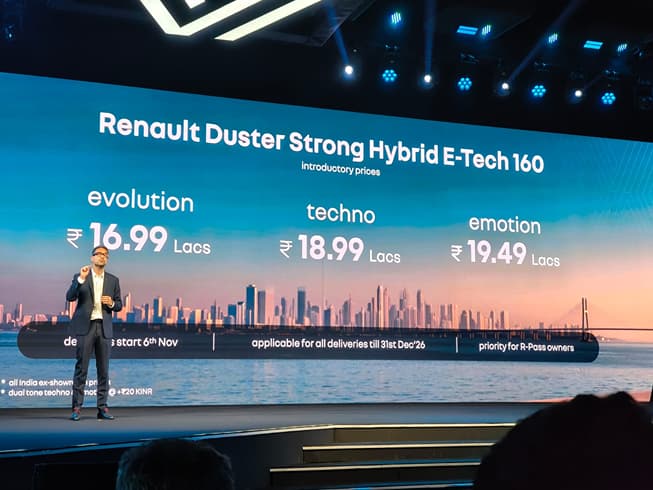
- Duster Strong Hybrid delivers ARAI-certified efficiency of 29 km/l.
Renault Expands Powertrain Options Ahead of CAFE III
Renault expects its expanding portfolio of strong hybrid, compressed natural gas (CNG), and electric vehicles to help it comply with India's upcoming Corporate Average Fuel Economy (CAFE III) regulations. Stéphane Deblaise, CEO of Renault Group India, said the company has the technologies needed to meet the requirements, although the outcome will depend on customer demand for different powertrain options. He explained that the company's planned mix of hybrid electric vehicles, CNG models, and electric vehicles should support compliance. His comments follow the government's notification of CAFE III on September 29, with the new framework scheduled to replace CAFE II from April 1, 2027.
CAFE III Timeline and Fuel-Consumption Targets
The CAFE III framework will apply from April 1, 2027, through March 31, 2032, introducing progressively tighter fleet-average fuel-consumption requirements for passenger vehicle manufacturers. The reference benchmark will decline from 3.996 liters per 100 kilometers in fiscal year 2028 to 3.3273 liters per 100 kilometers in fiscal year 2032, representing an improvement of approximately 16.7%. A manufacturer's actual target will depend on the average weight of its passenger vehicle fleet, rather than solely on a single national benchmark. The framework therefore makes the composition of each automaker's vehicle portfolio important to compliance as the requirements become stricter over the five-year period.
How Fleet-Average Fuel Consumption Regulations Work
Unlike standards that establish emissions limits for individual vehicle models, CAFE regulations assess the average fuel consumption of an automaker's passenger vehicle portfolio. This approach allows manufacturers to balance less fuel-efficient petrol or diesel vehicles with more efficient models, including hybrids and battery-electric vehicles. The notified framework also provides specific compliance benefits for cleaner powertrains through multipliers applied in fleet-average calculations. Battery-electric vehicles receive a volume multiplier of 3.0, while strong hybrids receive a multiplier of 1.6. The regulations also recognize CNG and other alternative fuels through provisions that account for their environmental benefits. These mechanisms can help manufacturers manage fleet-wide targets, although the contribution of each technology will depend partly on vehicle sales.
Renault Duster Strong Hybrid E-Tech 160 and Fuel Efficiency
The introduction of the Duster Strong Hybrid E-Tech 160 is a significant step in Renault's effort to expand its fuel-efficient vehicle lineup. Launched at an introductory price of Rs 16.99 lakh, the SUV combines a 1.8-liter petrol engine with two electric motors and a 1.4 kWh battery, producing a combined output of 160 PS. It has an ARAI-certified fuel efficiency rating of 29 kilometers per liter. The company is positioning the hybrid system as an alternative to diesel for customers seeking lower running costs without switching to a fully battery-electric vehicle. The model also adds a strong hybrid option to a portfolio that has historically relied heavily on petrol engines in the Indian passenger vehicle market.
Why Renault Is Prioritizing Hybrid Technology
Deblaise expects hybrid powertrains to become increasingly important as the passenger vehicle market in India moves beyond its earlier dependence on petrol and diesel vehicles. Renault has decided against bringing back diesel technology, drawing on its experience in overseas markets where hybrids have increasingly replaced diesel vehicles. This strategy places greater emphasis on offering alternatives that can improve fuel efficiency while responding to customer preferences. However, the company's ability to meet CAFE III requirements will not depend on technology availability alone. Actual customer choices among petrol, hybrid, CNG, and electric models will influence the powertrain mix and determine how much each option contributes to the manufacturer's fleet-average performance.
CNG Expansion and Dual-Cylinder Technology
Alongside hybrid development, Renault is expanding its CNG offerings for customers seeking an alternative to conventional petrol powertrains. The company currently provides government-approved CNG kit fitment options through its dealer network for the Triber and Kiger. It is also developing factory-fitted dual-cylinder CNG technology intended to improve packaging within the vehicle. In an earlier interview, Deblaise said the cylinders would be positioned beneath the vehicle floor to preserve luggage space. He also indicated that the system was being developed around a 1.0-liter turbo-petrol engine. These details describe technology under development; the source article does not provide a confirmed launch date or final production specifications for the factory-fitted system.
Electric Vehicles and the futuREady India Strategy
Electric vehicles form another part of Renault's planned product expansion under its futuREady India strategy, announced in April. The company intends to increase its portfolio to seven models by 2030, spanning compact cars and larger SUVs with petrol, hybrid, and fully electric powertrain options. Its upcoming Bridger-based compact SUV is planned for development on a platform designed to accommodate multiple propulsion technologies, including electric drive. This multi-powertrain approach gives the company flexibility to develop vehicles for different customer requirements rather than relying on a single technology. The stated portfolio target outlines the company's plan, while the eventual contribution of electric models to regulatory compliance will depend on their introduction and customer adoption.
Customer Choice and Fleet-Level Compliance Credits
Deblaise said the country's powertrain landscape has changed substantially, with buyers now choosing among petrol, diesel, CNG, hybrid, and electric vehicles. He identified a key lesson from Renault's recent experience in India as the importance of providing a broader choice of engines and powertrains. That flexibility also matters under CAFE III because the regulatory benefits associated with efficient technologies can only translate into fleet-level results according to the vehicles customers purchase. The new framework additionally allows manufacturers to generate, exchange, and trade compliance credits, providing another mechanism for managing their targets. These provisions give automakers more options, but they do not remove the need to achieve the applicable fleet-average requirements.
Renault's Product Portfolio and Market Position
The move toward a wider mix of powertrains is part of Renault's broader effort to rebuild sales and market share while preparing its vehicles for tighter fuel-efficiency requirements. The company's plans cover strong hybrids, expanded CNG availability, and a future lineup that includes fully electric models. Its strategy combines vehicles already offered, such as the Duster Strong Hybrid E-Tech 160, with technologies still being developed, including factory-fitted dual-cylinder CNG systems. The distinction matters because announced plans and development programs are not the same as confirmed customer availability. As CAFE III approaches, the balance between product launches, vehicle efficiency, and actual demand will influence how effectively the company adapts to the new regulatory framework.
Industry Impact & Outlook
CAFE III is likely to make powertrain planning and customer adoption more consequential for passenger vehicle manufacturers operating in India. Renault's approach illustrates how automakers can combine strong hybrids, CNG, and electric vehicles rather than depending exclusively on one propulsion technology, while compliance multipliers and tradable credits provide additional flexibility. The practical challenge will be matching those options to customer demand while meeting progressively tighter fleet-average fuel-consumption targets. For buyers, the expanding range could provide more choices across running costs and electrification levels, although the source does not establish future prices or sales outcomes beyond the stated Duster introductory price. The effectiveness of Renault's strategy will become clearer as its planned models and technologies reach customers before and during the CAFE III period.
Frequently Asked Questions
What are the CAFE III norms in India?
CAFE III is India's next Corporate Average Fuel Economy framework, setting fleet-average fuel-consumption requirements for passenger vehicle manufacturers from April 1, 2027, through March 31, 2032. Unlike rules focused on individual vehicle models, it evaluates the average fuel consumption of an automaker's passenger vehicle portfolio. The reference benchmark tightens from 3.996 liters per 100 kilometers in fiscal year 2028 to 3.3273 liters per 100 kilometers in fiscal year 2032. Individual manufacturers' targets depend on the average weight of their passenger vehicle fleets, and the framework provides compliance benefits for selected cleaner powertrains.
How does Renault plan to meet CAFE III requirements?
Renault plans to broaden its powertrain portfolio through strong hybrid vehicles, CNG options, and electric vehicles as it prepares for India's upcoming fleet-average fuel-consumption regulations. Stéphane Deblaise said the company has the technologies needed to comply, while emphasizing that customer demand will affect the outcome. The Duster Strong Hybrid E-Tech 160 is one concrete step in the strategy, and the company is also developing factory-fitted dual-cylinder CNG technology. Its longer-term plan includes a seven-model portfolio by 2030, with petrol, hybrid, and fully electric powertrains across compact cars and larger SUVs.
What are the fuel-efficiency targets under CAFE III?
The CAFE III reference fleet-average fuel-consumption benchmark is scheduled to decline from 3.996 liters per 100 kilometers in fiscal year 2028 to 3.3273 liters per 100 kilometers in fiscal year 2032. That change represents an improvement of approximately 16.7% over the period. These figures describe the reference benchmark, not a universal target that applies identically to every manufacturer. Each automaker's actual requirement depends on the average weight of its passenger vehicle fleet. The regulations take effect on April 1, 2027, and remain in force through March 31, 2032, replacing the previous CAFE II framework.
What are the specifications of the Renault Duster Strong Hybrid E-Tech 160?
The Duster Strong Hybrid E-Tech 160 combines a 1.8-liter petrol engine, two electric motors, and a 1.4 kWh battery to deliver a combined output of 160 PS. Its ARAI-certified fuel efficiency is 29 kilometers per liter, and it was launched at an introductory price of Rs 16.99 lakh. Renault positions the SUV as an option for customers who want lower running costs without moving to a fully battery-electric vehicle. These specifications and the introductory price are the details provided in the source article; it does not establish any additional future pricing or changes to the model's equipment.
What CNG technology is Renault developing for India?
Renault is developing a factory-fitted dual-cylinder CNG system intended to preserve luggage space by placing the cylinders beneath the vehicle floor. Stéphane Deblaise previously indicated that the technology was being developed around a 1.0-liter turbo-petrol engine. In the meantime, the company provides government-approved CNG kit fitment options through its dealer network for the Triber and Kiger. The source article does not specify a confirmed launch date or final production specifications for the factory-fitted system. The development forms part of the company's wider effort to offer multiple powertrain choices as fuel-efficiency requirements become stricter.
What is Renault's vehicle portfolio target for 2030?
Under its futuREady India strategy, announced in April, Renault plans to expand its portfolio to seven models by 2030, covering compact cars and larger SUVs. The planned range is intended to include petrol, hybrid, and fully electric powertrains, giving the company several technology options for different customer needs. Renault has also said its upcoming Bridger-based compact SUV will use a platform designed to accommodate multiple powertrain technologies, including electric propulsion. These are announced plans rather than confirmation that every model or powertrain is already available. Their contribution to CAFE III compliance will depend on rollout timing and customer demand.
Click above to visit the official source.
Discussion
Join the conversation.