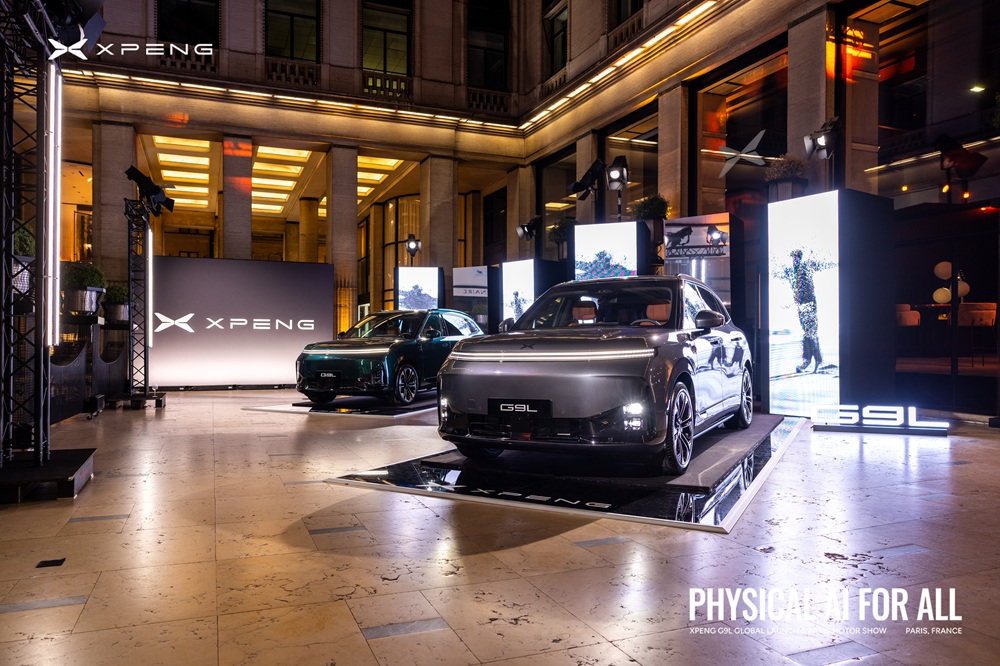
- XPENG G9L debuts in Europe starting at EUR 74,990.
- The SUV offers up to 591 km WLTP range.
- Its 800V system enables 10%–80% charging in 11.7 minutes.
XPENG G9L Makes European Debut at the Paris Motor Show
On October 12, XPeng Inc. introduced the XPENG G9L Next-Gen AI Flagship SUV for Europe at the Paris Motor Show, with prices starting at EUR 74,990. The model combines a sophisticated chassis with two seating configurations, offering six-seat and seven-seat layouts, alongside luxury AI-Adaptive Front Seaters. The launch highlights the company's focus on combining electric mobility, passenger comfort, rapid charging, and artificial intelligence in a flagship SUV. XPENG also presented its latest developments in intelligent driving and other emerging technologies at the event. The announcement did not specify the European market's delivery schedule or provide a detailed breakdown of equipment across the different seating configurations.
XPENG G9L Range, 800V Architecture, and Fast Charging
The electric variants of the XPENG G9L offer a projected driving range of up to 591 km under the WLTP testing procedure. Its 800V electrical architecture works with 5C charging technology to enable charging from 10% to 80% in as little as 11.7 minutes. These specifications emphasize range and charging speed as central features of the SUV's European offering. The published charging time describes the stated capability under suitable conditions, rather than a guarantee that every charging session will achieve the same result. The announcement does not provide battery capacity, charging-station requirements, or separate range figures for individual variants, leaving those technical details unspecified.
Chassis Engineering, Seating Options, and Passenger Comfort
The XPENG G9L combines a sophisticated chassis with a choice of six-seat and seven-seat configurations, giving the flagship SUV two passenger-layout options. The announcement also identifies luxury AI-Adaptive Front Seaters as part of the vehicle's offering. These features position the model around passenger accommodation and an enhanced in-cabin experience alongside its electric powertrain and intelligent driving technology. However, the available information does not detail the adjustment functions of the adaptive seats, explain differences between the two cabin layouts, or provide luggage-capacity measurements. Buyers evaluating the SUV will therefore need further specifications to compare the configurations and understand the precise comfort features offered in each version.
XPENG NGP Introduces VLA 2.0 AI Driving Technology
XPENG also introduced XPENG NGP powered by VLA 2.0, an intelligent driving system supported by proprietary Turing AI chips and 4D spatiotemporal understanding. According to the announcement, VLA 2.0 can retain up to 30 seconds of contextual information and predict how a driving scenario may develop up to six seconds ahead. These capabilities are intended to help NGP interpret changing road conditions, anticipate possible developments, and respond accordingly. The company said the technology has been tested against complex European driving conditions. The announcement does not specify the complete feature availability, operational limitations, or rollout schedule for individual European markets, so those details should not be assumed.
AI Context Retention, Prediction, and European Road Testing
The contextual processing described for VLA 2.0 combines a memory window of up to 30 seconds with the ability to predict scenario development up to six seconds into the future. These functions are intended to help the intelligent driving system understand the broader driving situation rather than respond only to isolated inputs. XPENG links this capability to 4D spatiotemporal understanding, proprietary Turing AI chips, and the operation of XPENG NGP. The company also states that the technology has been tested against complex European driving conditions. No detailed test results, independent performance measurements, or market-specific deployment dates were included in the announcement, limiting further conclusions about its capabilities in everyday driving.
XPENG G9L Safety Strategy and Testing Program
The XPENG G9L's stated safety approach combines active prevention, passive protection, and system redundancy. Together, these categories describe a layered approach to addressing driving risks, protecting occupants, and providing additional system safeguards. XPENG reported that the vehicle underwent three years of testing across 26 countries and regions. The announcement presents this testing history as part of the SUV's development, but it does not identify the individual locations, testing protocols, measured outcomes, or specific redundancy mechanisms. It also does not provide crash-test ratings or other independent safety assessments. The disclosed information establishes the company's stated development and testing scope without supplying enough detail to compare individual safety systems quantitatively.
XPENG's Wider Technology Showcase in Paris
At the Paris Motor Show, XPENG displayed 11 vehicles, including the G9L, L03, P7+, G6, G9, and X9. The presentation also included one Land Aircraft Carrier and two IRON humanoid robots. Dedicated technology areas highlighted VLA 2.0 and the Turing AI Chip, alongside the company's latest developments in humanoid robotics and flying mobility. The showcase therefore extended beyond the G9L launch to include vehicles and technologies across several areas of XPENG's product and development portfolio. The announcement did not provide separate commercial launch schedules or pricing details for the other displayed products, so their presence at the event should not be interpreted as confirmation of European availability.
Industry Impact & Outlook
The G9L's European introduction places rapid charging, long-range electric driving, and AI-assisted vehicle technology at the center of XPENG's flagship SUV proposition. Its EUR 74,990 starting price, up to 591 km of WLTP range, and stated 11.7-minute charging window give prospective buyers concrete specifications to consider when comparing premium electric vehicles. The reported testing across 26 countries and regions also highlights the company's attention to varied driving environments, although detailed results remain unavailable. The broader Paris showcase demonstrates XPENG's interest in presenting automotive products alongside AI computing, robotics, and flying mobility. European market performance, customer deliveries, and the availability of the announced intelligent driving features remain matters for subsequent confirmation.
Frequently Asked Questions
What is the starting price of the XPENG G9L in Europe?
The XPENG G9L Next-Gen AI Flagship SUV was introduced for Europe at the Paris Motor Show with a starting price of EUR 74,990. The announcement identifies the model as a flagship SUV combining electric powertrain technology, advanced driver-assistance capabilities, and multiple passenger-layout options. It is offered with six-seat and seven-seat configurations and luxury AI-Adaptive Front Seaters. However, the available information does not provide a complete price breakdown by configuration, market-specific taxes, optional equipment costs, or a confirmed European delivery schedule.
What is the driving range of the XPENG G9L?
The electric variants of the XPENG G9L offer a projected driving range of up to 591 km under the WLTP testing procedure. The announced figure represents the maximum stated range rather than a guarantee of the distance achievable in every driving situation. The SUV also features 800V architecture and 5C charging technology, supporting its emphasis on electric driving convenience. The announcement does not provide battery capacity or individual range figures for each variant. Prospective buyers should consult the specifications for their selected version when comparing range and charging requirements.
How quickly can the XPENG G9L charge?
The XPENG G9L uses 800V electrical architecture and 5C charging technology to support charging from 10% to 80% in as little as 11.7 minutes. This is the charging performance stated in the announcement and represents the minimum reported time under suitable conditions. Actual charging duration can depend on factors that are not detailed in the supplied information. XPENG did not specify battery capacity, charging-station power requirements, or a complete charging curve. The published figure therefore provides a headline capability rather than a guarantee for every charging session.
What is XPENG VLA 2.0, and how does it support NGP?
VLA 2.0 is the AI technology powering XPENG NGP, supported by proprietary Turing AI chips and 4D spatiotemporal understanding. XPENG says the system can retain up to 30 seconds of contextual information and predict how a scenario may unfold up to six seconds ahead. These capabilities are intended to help the system interpret changing road conditions and anticipate developments. The company reports testing against complex European driving conditions. However, the announcement does not specify all operating limitations, feature availability by market, or the timing of any regional rollout.
What safety features and testing does the XPENG G9L have?
The XPENG G9L combines active prevention, passive protection, and system redundancy as the three stated elements of its safety approach. XPENG also reports that the vehicle underwent three years of testing across 26 countries and regions. These details describe the company's stated safety strategy and development program. However, the announcement does not identify individual testing protocols, independent crash-test ratings, or measured results for specific safety systems. The information therefore establishes the reported testing scope without allowing a quantitative comparison with other vehicles or confirmation of particular safety outcomes.
Which seating configurations are available in the XPENG G9L?
The XPENG G9L is described as offering both six-seat and seven-seat configurations, alongside luxury AI-Adaptive Front Seaters. These options provide different passenger-layout choices within the same flagship SUV model. The announcement identifies the seating arrangements but does not explain how the cabin equipment differs between configurations or provide detailed measurements for passenger and cargo space. It also does not list all adjustment functions associated with the adaptive front seats. Buyers seeking a specific layout or comfort feature will need the detailed specification for the relevant version before making a purchasing decision.
What other products did XPENG present at the Paris Motor Show?
XPENG displayed 11 vehicles at the Paris Motor Show, including the G9L, L03, P7+, G6, G9, and X9. Its presentation also featured one Land Aircraft Carrier and two IRON humanoid robots. Dedicated technology areas highlighted VLA 2.0 and the Turing AI Chip, along with developments in humanoid robotics and flying mobility. The showcase covered a broader range of products and technologies than the G9L alone. However, the announcement did not establish commercial availability, pricing, or launch schedules for every other product displayed at the event.
Click above to visit the official source.
Discussion
Join the conversation.