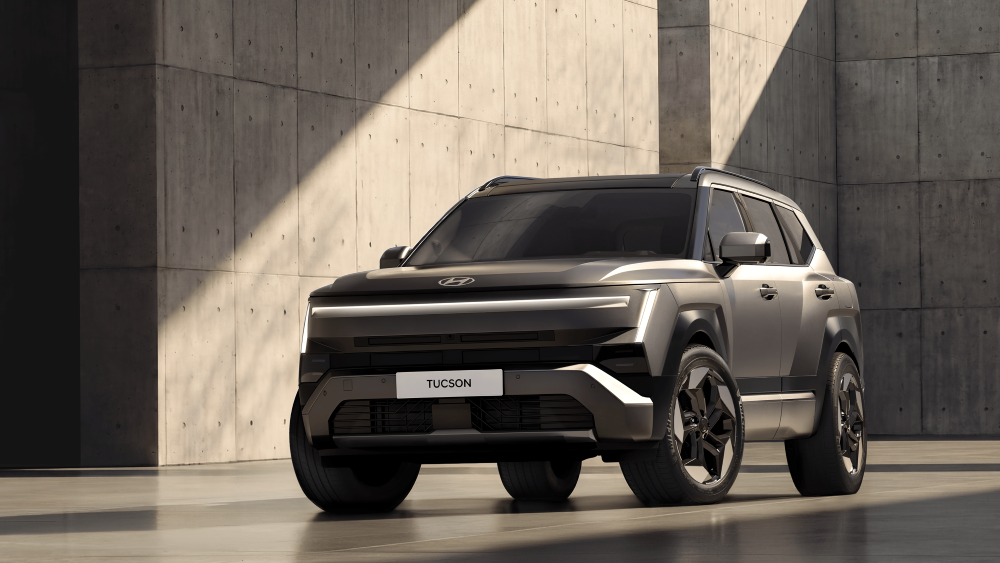
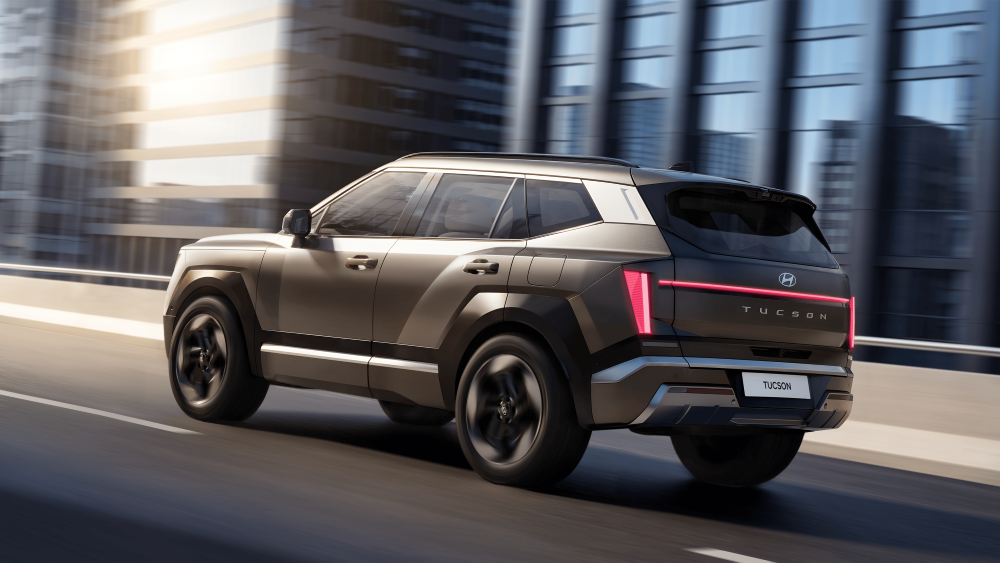
- Hyundai Tucson debuts with next-generation hybrid technology.
- PHEV delivers 292 PS and 81 km range.
- Pleos Connect adds AI and OTA updates.
Fifth-Generation Tucson Introduces New Hybrid Technology
Hyundai Tucson has entered its fifth generation with a new hybrid system, updated infotainment technology, and revised exterior styling as part of a global unveiling on October 1. The C-segment SUV will be offered with gasoline, hybrid, and plug-in hybrid powertrains, expanding its range across major international markets. The new model also introduces Hyundai Motor Company’s Pleos Connect infotainment platform, based on Android Automotive OS, with conversational AI and over-the-air update capability. Together, these changes position the latest SUV around improved efficiency, connected vehicle functions, and broader powertrain choice while retaining the core characteristics of a compact sport utility vehicle.
Updated Exterior Design Defines the New SUV
The new model adopts Hyundai’s Art of Steel design language, giving the SUV a combination of a bold profile and more refined detailing. At the front, H-Edge Lighting draws inspiration from architectural lighting principles and creates a distinctive lighting signature. The rear incorporates Prism Rear Lamps, which are intended to improve visibility while contributing to the vehicle’s visual identity. These design elements accompany the broader fifth-generation update rather than representing an isolated styling change. The exterior treatment is therefore integrated with the vehicle’s wider technology and powertrain developments as Hyundai prepares the model for introduction across Korea, North America, Europe, and other global markets.
Pleos Connect Adds AI and Over-the-Air Updates
The infotainment system is centered on Pleos Connect, Hyundai’s next-generation platform built on Android Automotive OS. Depending on vehicle specification, the system uses either a 17-inch or 12.9-inch main touchscreen together with a 9.9-inch slim display. It also incorporates Gleo AI, a conversational assistant designed to support natural-language vehicle controls and information searches. Over-the-air updates are supported, allowing compatible vehicle software functions to be updated without relying solely on conventional service interventions. This combination extends the SUV’s digital functionality beyond conventional infotainment and connects the cabin experience with Hyundai’s broader software-based vehicle strategy.
Hybrid and Plug-In Hybrid Systems Increase Performance
The gasoline version uses a 1.6-liter turbocharged engine producing between 150 and 193 PS, while the HEV and PHEV variants use a next-generation dual-motor hybrid architecture. The system combines a 13 kW P1 motor with a 47.7 kW P2 motor, while the PHEV uses a 79 kW P2 motor. System output reaches 236-245 PS for the HEV and 292 PS for the PHEV. The plug-in hybrid also receives a 17.1 kWh battery, providing an electric driving range of approximately 81 km. These configurations are intended to balance improved efficiency with stronger driving performance across the available powertrain lineup.
New Stay Mode Expands Hybrid Cabin Functionality
The HEV also introduces a new Stay Mode designed to maintain selected electrical functions while the engine is switched off. Occupants can continue using the air conditioning system, audio functions, and power outlets for external devices under this operating mode. The feature extends the practical use of the hybrid system beyond propulsion and provides additional flexibility when the vehicle is stationary. Alongside the new dual-motor architecture, it demonstrates how the updated powertrain is being used to support both driving efficiency and cabin-related functions. The feature is part of the broader technology package accompanying the fifth-generation vehicle.
Different Dimensions Serve Regional Markets
The long-wheelbase version intended for South Korea and North America measures 4,700 mm in length, 1,905 mm in width, and 1,685 mm in height, with a 2,785 mm wheelbase. The short-wheelbase version developed for Europe measures 4,560 mm in length, 1,900 mm in width, and 1,670 mm in height, with a 2,720 mm wheelbase. This regional differentiation allows the vehicle to address different market requirements while maintaining the same fifth-generation model identity. The dimensional variations also demonstrate that the global rollout is being structured around market-specific vehicle configurations rather than a single body specification.
Global Launch Schedule Begins With Korea
The all-new model is scheduled to launch in South Korea later in the year, followed by North America, Europe, and other global markets in 2027. The rollout gives Hyundai Motor Company a staged path for introducing the updated powertrain portfolio, connected technologies, and regional body configurations. The combination of gasoline, HEV, and PHEV options provides flexibility across markets with different consumer preferences and vehicle requirements. The launch sequence also establishes 2027 as the key period for broader international availability of the fifth-generation SUV and its newly introduced technology package.
Industry Impact & Outlook
The fifth-generation SUV strengthens Hyundai’s position in the competitive C-segment market by combining hybrid and plug-in hybrid propulsion with a software-focused infotainment platform and region-specific vehicle configurations. Its 292 PS PHEV system, approximately 81 km electric range, AI-enabled controls, and OTA capability illustrate how automakers are increasingly integrating electrification and connected functions within mainstream SUVs. The staged launch across North America, Europe, and other markets will allow Hyundai to apply the new technology package across regions with different requirements. The model’s market impact will depend on how these efficiency, performance, digital, and packaging attributes translate into customer demand.
Frequently Asked Questions
What powertrain options does the fifth-generation Tucson offer?
The fifth-generation Tucson is offered with gasoline, hybrid, and plug-in hybrid powertrains, giving customers multiple propulsion choices across global markets. The gasoline version uses a 1.6-liter turbocharged engine producing 150-193 PS, while the HEV produces 236-245 PS. The PHEV reaches 292 PS and uses a 17.1 kWh battery capable of approximately 81 km of electric driving range. The HEV and PHEV also feature a next-generation dual-motor hybrid system, while the HEV introduces Stay Mode for selected cabin functions with the engine turned off.
Click above to visit the official source.
Discussion
Join the conversation.