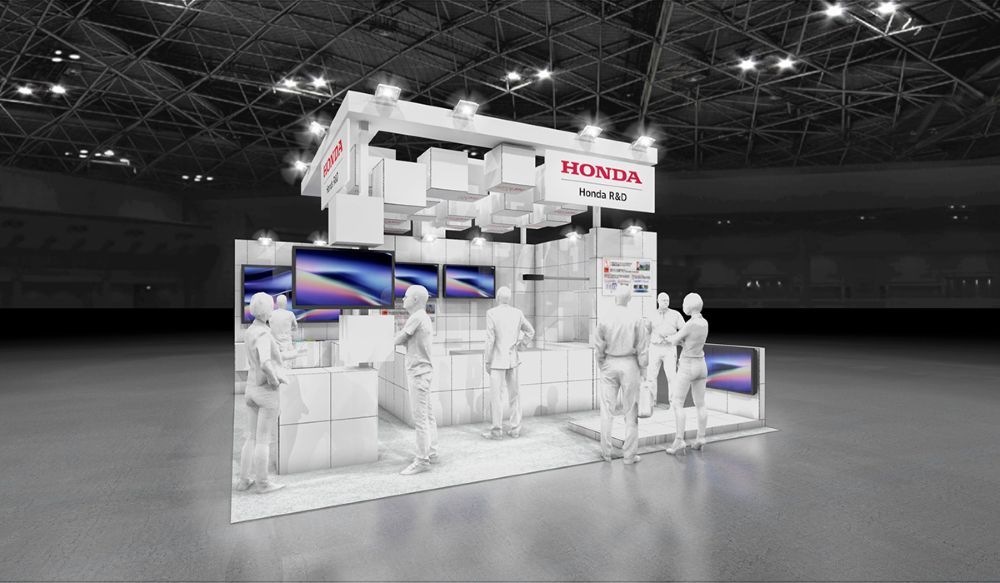
- Honda CEATEC 2026 showcases AI safety technology.
- Honda will demonstrate its Avatar Robot technology.
On October 5, Honda R&D Co Ltd, the research and development subsidiary of Honda Motor Co Ltd, announced its planned exhibits for Honda CEATEC 2026, scheduled for October 13 through 16 at Makuhari Messe in Chiba Prefecture, Japan. Under the booth concept “Honda Innovation Lab - Missing Piece,” the company will present technologies aimed at creating a future society where people can augment their abilities through technological connectivity. The planned exhibits focus on two areas: an AI-powered driver assistance smartphone application designed to support safer road use and an avatar robot intended to let users perform sophisticated tasks remotely.
AI-Powered Driver Assistance Technology
Honda will demonstrate a driver assistive smartphone app that combines its proprietary Honda CI (Cooperative Intelligence) artificial intelligence with a smartphone as part of its efforts to advance safety technologies and work toward zero traffic fatalities. The system uses a smartphone together with an aftermarket camera installed on a vehicle to identify nearby road users. Honda CI then predicts and assesses potential risks ahead, enabling the application to provide alerts based on anticipated hazards. During the exhibition, visitors will be able to experience a demonstration of how the system predicts risks and communicates warnings, providing a practical view of how future driver assistance technologies could support road safety.
Honda Avatar Robot Demonstration
Honda will also showcase its “Honda Avatar Robot,” a robotics technology designed to function as a second self of the user and perform tasks remotely when the user cannot physically be present at the location. The system combines a multi-fingered hand designed to provide dexterity and strength comparable to a human hand with an artificial intelligence support system that assists the user. Honda is working toward an avatar robot capable of carrying out sophisticated tasks while the human operator remains at a remote location. At CEATEC, the company will demonstrate tasks performed by the multi-fingered hand with motion assistance from the AI support system.
Connected Human and Machine Capabilities
The two demonstrations address different applications but share Honda’s broader objective of using technology to extend human capabilities. The driver assistance application applies artificial intelligence and connected devices to help identify and anticipate potential road risks, while the avatar robot combines remote operation, robotic dexterity, and AI assistance to support physical tasks from another location. Together, the technologies illustrate Honda’s approach to cooperation between people and intelligent systems. The company’s CEATEC presentation is therefore positioned around practical demonstrations of how connected technologies could support safer mobility and enable people and robots to work together more effectively.
CEATEC 2026 Demonstration Focus
The planned demonstrations will give visitors an opportunity to directly observe the technologies rather than simply view conceptual descriptions. For the driver assistance application, the demonstration will focus on the system’s ability to predict potential risks and issue alerts using information captured through a smartphone and aftermarket vehicle camera. For the avatar robot, Honda will show how AI-supported motion assistance can help control a multi-fingered hand for remote tasks. The demonstrations are intended to communicate the practical value of these technologies and provide a firsthand look at Honda’s work in safety, artificial intelligence, and human-robot cooperation.
Honda’s Technology Development Direction
Honda’s planned exhibits also reflect a development strategy centered on combining existing human capabilities with intelligent technological assistance. The driver assistance application extends safety support through a smartphone, camera, and Honda CI, while the avatar robot seeks to extend physical presence through remote robotic operation. Both approaches depend on technology assisting rather than simply replacing the user. The demonstrations at Makuhari Messe will provide a visible representation of this concept, showing how AI, connected devices, and robotics can be integrated into systems designed to help people operate more safely or perform tasks from locations where direct physical presence is not possible.
Industry Impact & Outlook
Honda’s CEATEC demonstrations highlight how automotive technology development is expanding beyond conventional vehicle functions into AI-assisted safety and broader human-machine collaboration. The driver assistance application could be particularly relevant to future safety solutions that combine smartphones, cameras, and software without requiring changes to vehicle hardware, while the avatar robot points toward applications where remote human capability is extended through robotics. The immediate next step is continued technology development and demonstration, with the practical value of these concepts depending on further refinement, validation, and deployment. The broader significance lies in how AI and robotics could create new interfaces between people, vehicles, and connected machines.
Frequently Asked Questions
What will Honda demonstrate at CEATEC 2026?
Honda will demonstrate an AI-powered driver assistive smartphone application and its Honda Avatar Robot, highlighting different ways technology can extend human capabilities. The driver assistance system combines Honda CI, a smartphone, and an aftermarket vehicle camera to detect nearby road users, predict potential risks, and provide alerts. The avatar robot combines a multi-fingered hand with an AI support system to assist remote users in performing sophisticated tasks. Both demonstrations are designed to show practical applications of artificial intelligence, connected technology, safety systems, and robotics while emphasizing cooperation between people and intelligent machines.
Click above to visit the official source.
Discussion
Join the conversation.