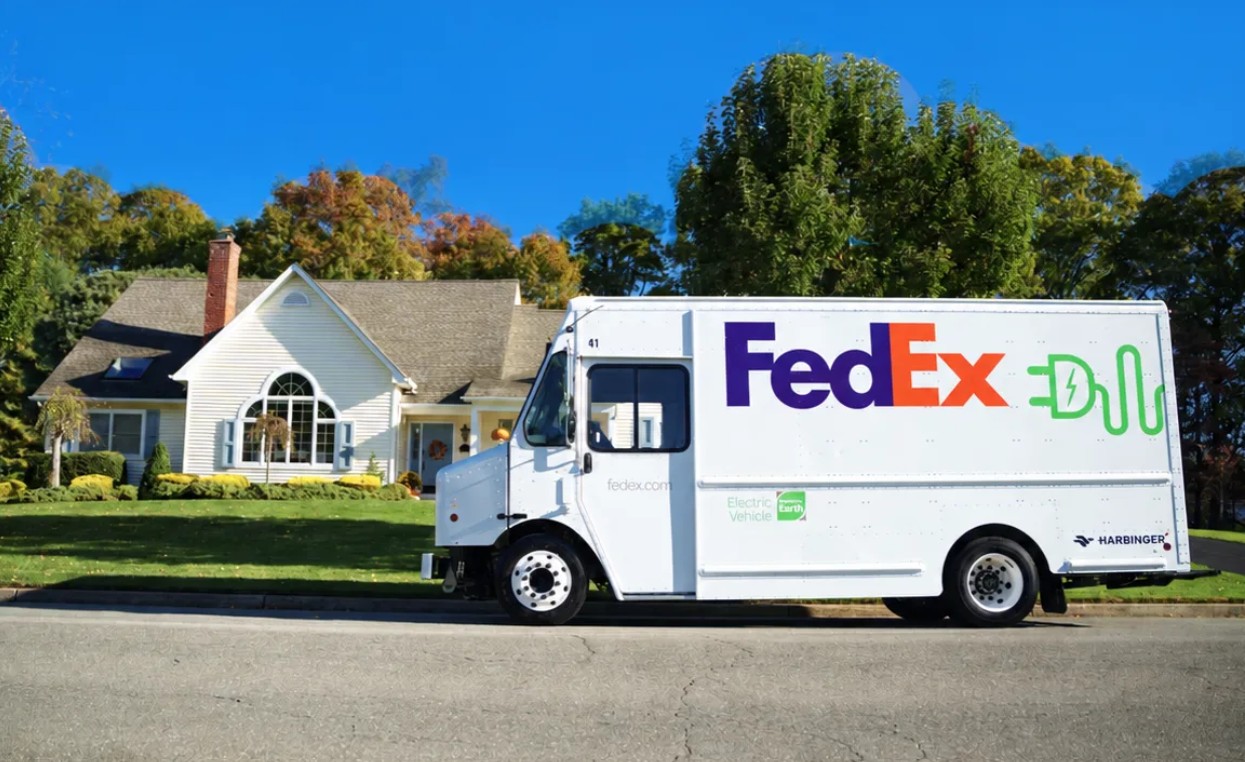
- Harbinger electric trucks win major FedEx order.
- FedEx order exceeds $300 million in value.
- Deliveries are planned through the end of 2027.
On October 1, Harbinger announced an order from FedEx for 2,000 all-electric trucks valued at more than $300 million, making it one of the largest binding orders for electric medium- or heavy-duty trucks. The agreement follows a successful deployment of Harbinger vehicles within the FedEx network and builds on FedEx’s previous co-lead investment in Harbinger’s $160 million Series C equity financing. The order represents a significant commercial commitment to fleet electrification, with the vehicles intended to replace conventional trucks on a one-for-one basis across pickup and delivery operations.
FedEx Orders 2,000 Harbinger Electric Trucks
Harbinger, based in Garden Grove, California, plans to manufacture and deliver all 2,000 vehicles by the end of 2027. The trucks will be deployed across United States and Canadian pickup and delivery operations operated by FedEx. The order includes multiple models from Harbinger’s all-electric vehicle lineup and is intended to support FedEx’s efforts to reduce fleet emissions while modernizing conventional vehicle operations. The agreement also extends an existing relationship between the two companies following earlier deployments of Harbinger vehicles within the FedEx network.
Fleet Replacement and Operating Cost Savings
The vehicles are planned as one-for-one replacements for conventional vehicles, allowing FedEx to integrate the electric trucks directly into its existing pickup and delivery operations. Harbinger estimates that each electric truck can reduce fuel costs by an average of $20,000 annually compared with a conventional diesel vehicle. Based on that estimate, a fleet of 2,000 Harbinger vehicles could generate approximately $40 million in annual fuel savings. Over a typical 20-year vehicle life, Harbinger estimates the combined fuel savings could reach $800 million, subject to actual operating conditions and fleet utilization.
Harbinger’s Expansion Through the FedEx Relationship
The order builds on more than a single vehicle deployment because FedEx has previously used Harbinger vehicles within its network and also participated as a co-lead investor in the company’s $160 million Series C equity raise. The new commitment therefore connects vehicle deployment, fleet replacement, and previous financial support within the same commercial relationship. For Harbinger, the agreement provides a large-scale production and delivery target through 2027, while for FedEx it establishes a substantial planned deployment of electric trucks across its pickup and delivery fleet in North America.
Industry Impact & Outlook
The order highlights the growing importance of large-scale electric commercial vehicle deployments in fleet modernization, particularly where operators can combine emissions reduction with lower fuel costs. Its scale gives Harbinger an opportunity to expand production against a defined delivery commitment, while FedEx gains a pathway to replace conventional vehicles across operations in the United States and Canada. The next major step will be Harbinger’s ability to manufacture and deliver all 2,000 vehicles by the end of 2027, making production execution and fleet deployment important factors in realizing the projected operating savings.
Frequently Asked Questions
How many electric trucks did FedEx order from Harbinger?
FedEx ordered 2,000 all-electric trucks from Harbinger in an agreement valued at more than $300 million, according to Harbinger’s October 1 announcement. The vehicles will be used for FedEx pickup and delivery operations across the United States and Canada, with Harbinger planning to build and deliver the full order by the end of 2027. The trucks are expected to replace conventional vehicles on a one-for-one basis, while Harbinger estimates that the fleet could produce approximately $40 million in annual fuel savings compared with conventional diesel vehicles.
Click above to visit the official source.
Discussion
Join the conversation.