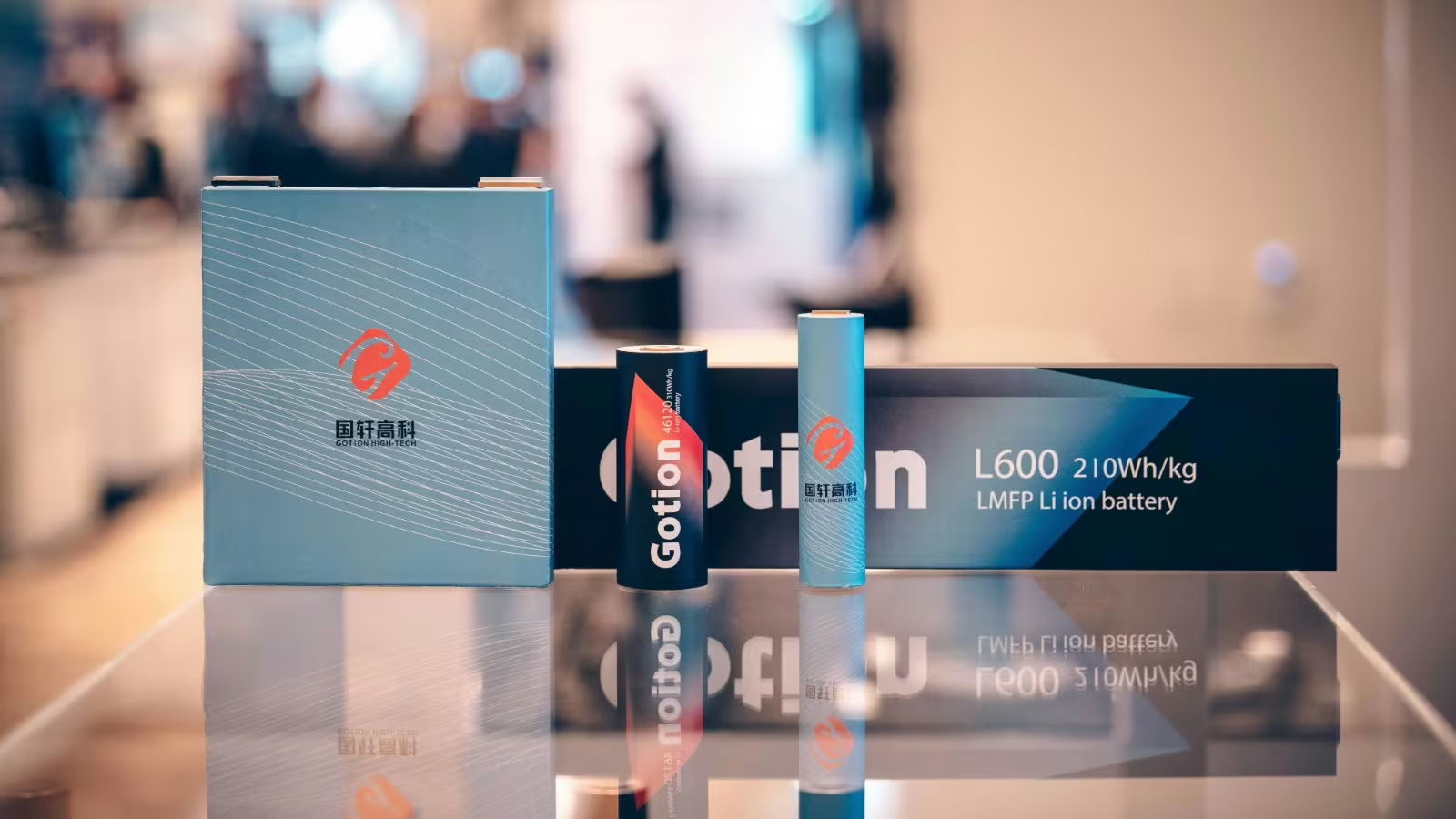
- Gotion Volkswagen battery projects total €3.22 billion.
- Three joint ventures will span Europe and Morocco.
- European projects will prioritize Volkswagen's battery demand.
The Gotion Volkswagen battery projects represent a planned €3.22 billion investment in battery and materials production across Spain, Slovakia and Morocco. Gotion High-tech and Volkswagen Group intend to establish three joint ventures through subsidiaries, with the projects designed to deepen supply chain cooperation and support Volkswagen's European market. Gotion plans to invest about €1.6 billion in total, while Volkswagen's PowerCo plans to contribute approximately €1.62 billion. The funding would be provided in stages, and the proposed cooperation covers lithium-ion battery production in Europe and lithium iron phosphate cathode materials production in North Africa. The companies have not yet signed the investment agreement, and the transaction remains subject to shareholder approval and government clearances.
Three Joint Ventures Cover Batteries and Materials
The planned structure includes projects in Spain, Slovakia and Morocco, creating a localized battery supply network intended to serve Volkswagen's European operations. The largest project would be established in Valencia, Spain, with approximately €2.26 billion allocated to annual lithium-ion battery production capacity of 29.1 GWh. Gotion plans to acquire a 49% stake in the existing PowerCo Spain through a capital increase, while PowerCo would retain control with a 51% holding. In Šurany, Slovakia, the companies plan to invest approximately €480 million in annual lithium-ion battery production capacity of 8.4 GWh. Gotion would hold 51% of that joint venture, with PowerCo owning 49%.
Morocco Project Targets Cathode Materials
The third project is planned for Kenitra, Morocco, where the companies intend to invest approximately €480 million in a lithium iron phosphate cathode materials operation. The facility is planned to have annual capacity of 100,000 metric tons, with production intended to prioritize supplies for the two European battery joint ventures. Gotion would control the Moroccan joint venture with a 51% stake, while PowerCo would hold the remaining 49%. Together, the three projects connect battery-cell manufacturing in Europe with upstream cathode-material production in North Africa. The arrangement is designed to strengthen supply chain localization while giving both companies ownership interests across different stages of battery production.
European Battery Output Will Prioritize Volkswagen
Cells produced by the two European projects are planned to prioritize Volkswagen Group's demand in Europe. However, the specific purchase volumes and supply assurance arrangements have not yet been finalized and remain subject to subsequent definitive agreements. The construction scope identified in the filing for all three projects excludes land and factory buildings. Each project is expected to require no more than five years to build, although the actual schedule will depend on construction progress. The proposed cooperation therefore combines production capacity expansion with a longer-term supply relationship, while leaving important commercial terms and execution details to be finalized after the investment agreement and required approvals.
Investment Structure Deepens Existing Ties
The proposed transactions would expand the existing equity and business relationship between Gotion and Volkswagen. Volkswagen (China) Investment Co held a 24.28% stake in Gotion as of September 20, making it the battery manufacturer's largest shareholder. Under the new cooperation, Gotion would participate in the development of Volkswagen's key European cell production base, while PowerCo would take stakes in Gotion's battery and materials projects in Europe and Africa. The companies would consequently have direct interests in projects spanning cell manufacturing and materials production. This structure is intended to support a more localized battery supply network for Volkswagen's European market while strengthening the companies' existing commercial and ownership connections.
Approvals and Financing Remain Outstanding
Gotion's board approved the proposal on September 28, but the companies have not yet signed the investment agreement. Completion remains subject to shareholder approval and government clearances in China and overseas. Gotion also said the projects would increase its capital expenditure in the near term. Financing conditions, regulatory approvals and market changes could affect construction progress and expected returns, creating execution considerations before the planned facilities become operational. The proposed investments therefore establish a framework rather than a completed transaction. The final timing, funding sequence and implementation of the projects will depend on the required corporate, regulatory and construction processes.
Gotion's Global Battery Installations Continue to Grow
The investment plan comes as Gotion expands its position in the global EV battery market. According to South Korean market research firm SNE Research, Gotion's global EV battery installations totaled 34.0 GWh during the first seven months of 2026, representing a 44.2% increase from the same period a year earlier. Gotion ranked fifth globally during that period, while its market share increased to 4.7% from 3.9% a year earlier. The proposed European and North African projects would therefore add planned manufacturing and materials capacity while the company is reporting higher global battery installations and an increased share of the market.
Global EV Battery Market Share, January-July 2026
The January-July 2026 market data cited in the article show Gotion with a 4.7% global EV battery market share, compared with 39.9% for CATL, 14.7% for BYD, 8.3% for LGES and 5.1% for CALB. Panasonic accounted for 3.6%, Eve Energy 3.5%, SK On 3.1%, Svolt 2.6% and Rept 2.3%, while other manufacturers represented 12.1%. The figures provide context for Gotion's planned investment because the company is expanding its European and North African production footprint while holding a fifth-place position in the cited January-July 2026 global installation ranking.
| EV Battery Maker | Market Share |
|---|---|
| CATL | 39.9% |
| BYD | 14.7% |
| LGES | 8.3% |
| CALB | 5.1% |
| Gotion | 4.7% |
| Panasonic | 3.6% |
| Eve Energy | 3.5% |
| SK On | 3.1% |
| Svolt | 2.6% |
| Rept | 2.3% |
| Others | 12.1% |
Industry Impact & Outlook
The planned cooperation could broaden Gotion's manufacturing and materials presence across Europe and North Africa while giving Volkswagen a more closely connected battery supply structure for its European market. The combination of cell production in Spain and Slovakia with cathode-material production in Morocco links multiple stages of the battery supply chain within the proposed investment framework. The practical impact will depend on definitive agreements, financing, shareholder approval, government clearances and construction progress. If those steps are completed, the projects would create additional localized battery and materials capacity, while the planned ownership structure would establish continuing commercial ties between Gotion and PowerCo across the three locations.
Frequently Asked Questions
How much do Gotion and Volkswagen plan to invest?
The companies plan to invest about €3.22 billion across three battery and materials projects in Spain, Slovakia and Morocco. Gotion plans to contribute about €1.6 billion, while Volkswagen's PowerCo plans to contribute about €1.62 billion, with funding provided in stages. The largest project is planned for Valencia, Spain, at approximately €2.26 billion, while the Slovakia and Morocco projects are each planned at approximately €480 million. The investment agreement has not yet been signed, and the transaction remains subject to shareholder approval and government clearances.
Frequently Asked Questions
Where will the planned battery projects be located?
The three planned joint ventures are located in Valencia, Spain; Šurany, Slovakia; and Kenitra, Morocco. The Valencia project is planned to provide 29.1 GWh of annual lithium-ion battery production capacity, while the Slovakia project is planned for 8.4 GWh annually. The Morocco project is focused on lithium iron phosphate cathode materials and is planned to provide annual capacity of 100,000 metric tons. The construction scope described in the filing excludes land and factory buildings, and each project is expected to take no more than five years to build.
Frequently Asked Questions
What is Gotion's current global battery market position?
Gotion's global EV battery installations reached 34.0 GWh during the first seven months of 2026, according to SNE Research, representing 44.2% year-over-year growth. The company ranked fifth globally during that period, with its market share increasing to 4.7% from 3.9% a year earlier. The cited market-share data place Gotion behind CATL, BYD, LGES and CALB, while other manufacturers account for the remaining reported share. The planned projects would expand Gotion's production and materials footprint as its reported global battery installations continue to grow.
Click above to visit the official source.
Discussion
Join the conversation.