- Aumovio semi-dry brake system equips Mission Efficiency concept.
- Electromechanical brakes dynamically adjust the air gap.
- System supports regenerative braking and energy efficiency.
Aumovio Equips Semi-Dry Braking System on Mission Efficiency Concept
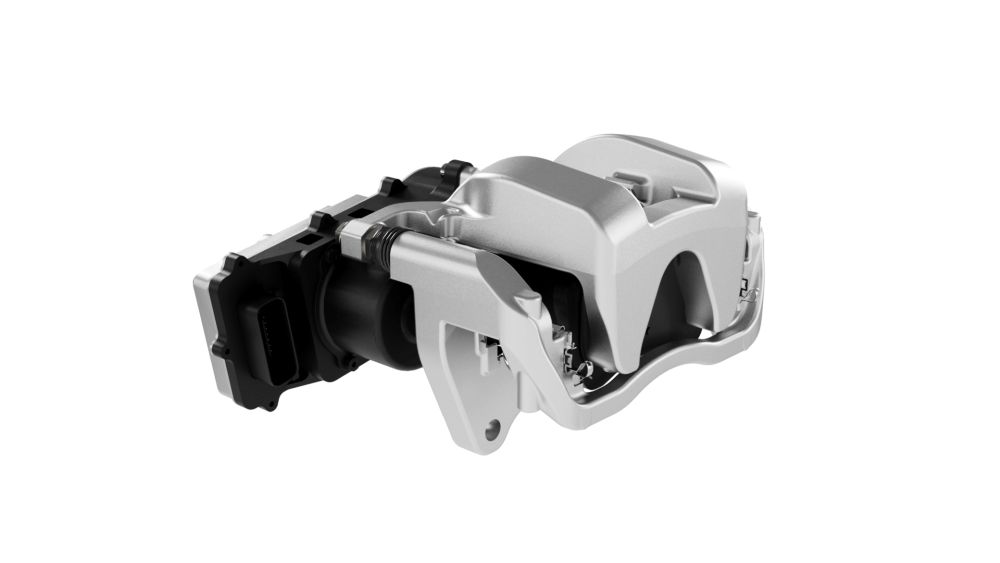
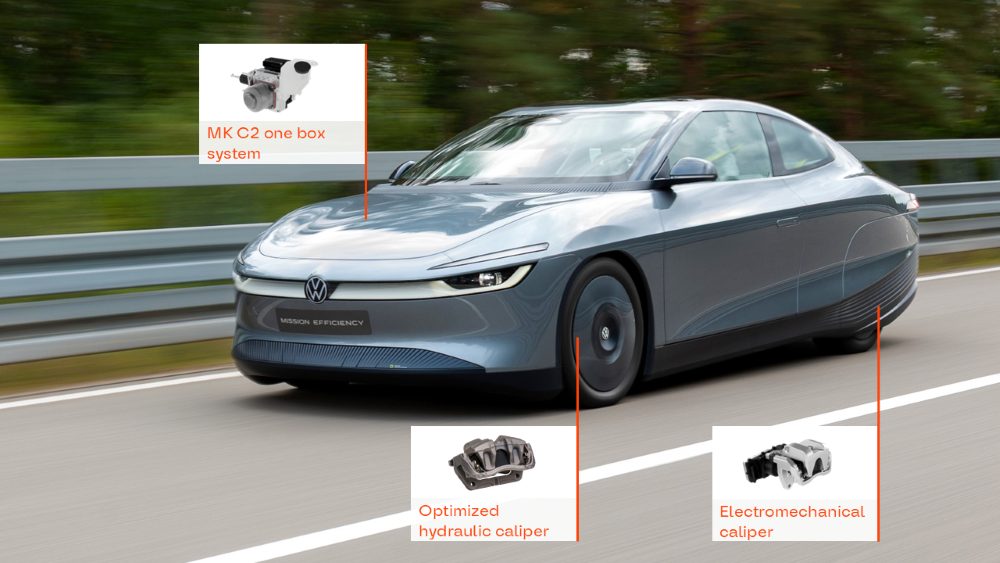
Aumovio SE has equipped its new semi-dry brake system on Volkswagen's Mission Efficiency concept car, a near-production electric vehicle based on the ID. Polo. The braking system combines hydraulic and electromechanical technologies across the vehicle's front and rear axles. At the front, the concept uses Aumovio's one box braking system MK C2 with optimized hydraulic brake calipers, while the rear axle receives a near-production electromechanical brake. The system is designed to create a larger air gap between the brake disc and brake pad, helping increase regenerative braking effectiveness and energy efficiency while reducing residual braking torque during vehicle operation.
Hydraulic and Electromechanical Technologies Work Together
The braking architecture combines different technologies to manage braking forces across the vehicle. The front axle uses the MK C2 one box braking system with optimized hydraulic calipers, while the rear axle uses an electromechanical brake. This arrangement allows the system to support regenerative braking while also managing vehicle stability and braking comfort. The electromechanical brakes can actively adjust the air gap between the brake disc and brake pad through an electric motor. By controlling this gap dynamically, the system can reduce unwanted contact between braking components and support more efficient energy recovery during deceleration.
Electromechanical Brakes Remove Hydraulic Lines
The electromechanical brake technology also changes the hardware required at the rear axle. Because the EMBs do not require hydraulic lines or brake fluid, the architecture can potentially reduce vehicle weight and maintenance requirements. Removing hydraulic connections also provides greater flexibility for vehicle design and packaging. The brakes can independently distribute braking forces to individual wheels, supporting several functions within the vehicle's braking strategy. These include regenerative braking, vehicle stability, and braking comfort. The active air-gap adjustment is another part of the system's approach to reducing residual braking torque and improving the efficiency of braking-related energy management.
Technology Already Used With ID. Polo Production System
Volkswagen already has a production connection with the braking technology described for the concept vehicle. Aumovio SE currently supplies a braking system that integrates the MK C2 system with its front-axle calipers for the in-series production ID. Polo. The Mission Efficiency concept therefore combines an existing production-related braking system at the front with the near-production electromechanical brake technology at the rear. This application demonstrates how the braking architecture can combine hydraulic and electromechanical components while addressing regenerative braking, energy efficiency, braking performance, and vehicle packaging requirements in an electric vehicle.
Industry Impact & Outlook
The braking system highlights the growing role of integrated electromechanical technologies in electric-vehicle architectures, particularly where regenerative braking and energy efficiency are important. A larger controllable air gap can reduce residual braking torque, while eliminating hydraulic lines and brake fluid from the EMBs may create opportunities for different packaging and maintenance approaches. The use of the MK C2 system and front-axle calipers in the production ID. Polo also provides a direct link between the concept application and existing vehicle production. Further development of electromechanical braking technology could therefore influence how automakers integrate braking, energy recovery, vehicle stability, and packaging requirements in future EV platforms.
Frequently Asked Questions
What is the Aumovio semi-dry brake system used on?
The system is equipped on Volkswagen's Mission Efficiency concept car, a near-production electric vehicle based on the ID. Polo. It combines hydraulic and electromechanical braking technologies, with the MK C2 system and optimized hydraulic calipers at the front axle and a near-production electromechanical brake at the rear. The system is designed to increase the air gap between the brake disc and pad, supporting regenerative braking and energy efficiency while reducing residual braking torque. The rear EMBs can also adjust the air gap electronically and distribute braking forces to individual wheels.
Click above to visit the official source.
Discussion
Join the conversation.