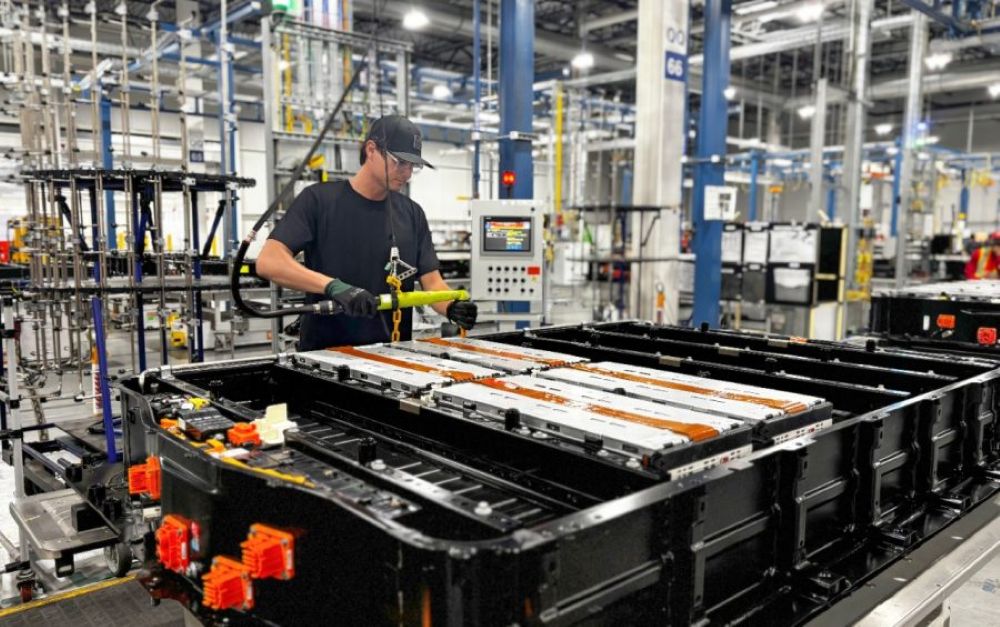
- GM battery recycling powers first EVs with recycled materials.
- Pilot recovered 80 end-of-life GM EV batteries.
- More than 12 metric tons of cathode material produced.
General Motors Completes Closed-Loop Battery Recycling Pilot
General Motors has completed a closed-loop battery recycling pilot that produced its first electric vehicles using battery cells made with cathode active material containing 100% recycled nickel, cobalt, and manganese. The project, announced September 22, involved partner Cirba Solutions and recovered 80 end-of-life General Motors EV batteries. Those batteries were recycled at a Cirba Solutions facility and converted into black mass, which was then processed into more than 12 metric tons of new cathode active material. The result provides a direct example of recovered battery materials moving through recycling, cell production, vehicle manufacturing, and deployment in new EVs.
Recycled Materials Enter New EV Battery Cells
The recycled materials were used only after testing showed that battery cells made with them performed as well as cells produced with virgin material. Ultium Cells then manufactured new EV battery cells using the recycled cathode active material. General Motors manufacturing teams assembled those cells into battery modules and packs at Factory ZERO and Spring Hill. This step connected the recycling pilot with vehicle production rather than limiting recovered materials to laboratory testing or intermediate material applications, allowing the company to demonstrate the use of recycled battery inputs in newly built electric vehicles.
GM EVs Built With Recycled Cathode Active Material
In September, the first Cadillac LYRIQ, LYRIQ-V, VISTIQ, ESCALADE IQ and IQL, Chevrolet Silverado EV Trail Boss, and GMC Sierra EV AT4 built with the recycled-material battery cells rolled off the lines at Spring Hill Assembly and Factory ZERO. These vehicles were powered by General Motors battery cells containing recycled cathode active material. The deployment shows that the recovered nickel, cobalt, and manganese progressed from end-of-life EV batteries into newly manufactured cells and then into finished vehicles, completing the closed-loop pathway demonstrated by the pilot program.
Battery Reuse Expands Beyond Material Recycling
General Motors is also pursuing battery reuse through remanufacturing and refurbishment programs. With Redwood Materials, the company is deploying approximately 10,000 second-life General Motors batteries in real-world energy infrastructure. The applications include the largest second-life battery microgrid in North America and energy systems within General Motors manufacturing plants in the United States. These efforts broaden the company's battery circularity work beyond material recovery by creating additional uses for batteries after their initial vehicle service, while the recycling pilot focuses on recovering valuable materials for incorporation into new battery cells.
Closed-Loop Battery Recycling Connects Multiple EV Stages
The project has practical implications for how automakers can manage battery materials across multiple stages of an EV's life cycle. The demonstrated process links end-of-life battery recovery with cathode material production, new cell manufacturing, vehicle assembly, and second-life applications. For General Motors and its partners, the pilot provides a manufacturing-based demonstration that recycled nickel, cobalt, and manganese can be incorporated into new EV battery cells after performance testing. The next steps described by the company involve continuing recycling, remanufacturing, and refurbishment efforts, while the broader impact will depend on how these approaches are deployed across future battery volumes and vehicle programs.
Industry Impact & Outlook
The pilot demonstrates a circular battery pathway in which recovered materials can move from end-of-life EV batteries into cathode production, new cells, and finished vehicles, while second-life programs provide another route for batteries after vehicle use. For the automotive industry, this approach could support more integrated battery lifecycle management by connecting recycling, material processing, cell manufacturing, and vehicle assembly within a single chain. The immediate significance is the demonstrated use of 100% recycled nickel, cobalt, and manganese in new battery cells after performance testing, while future relevance will depend on how General Motors and its partners scale these recycling, remanufacturing, and refurbishment activities.
Frequently Asked Questions
What did General Motors achieve with its battery recycling pilot?
General Motors' closed-loop battery recycling pilot uses recovered nickel, cobalt, and manganese to produce new EV battery cells for newly manufactured vehicles. The program recovered 80 end-of-life EV batteries with Cirba Solutions and converted them into black mass, which supported production of more than 12 metric tons of recycled cathode active material. After testing showed comparable performance to cells using virgin material, Ultium Cells produced new cells with the recycled material. General Motors then used those cells in battery packs for several Cadillac, Chevrolet, and GMC electric vehicles.
Click above to visit the official source.
Discussion
Join the conversation.