- BYD Seagull enters its second generation.
- New model gains 95 kW motor output.
- Seagull adds five-seat capacity and LiDAR.
BYD Seagull Gets a Redesigned Second-Generation Cabin
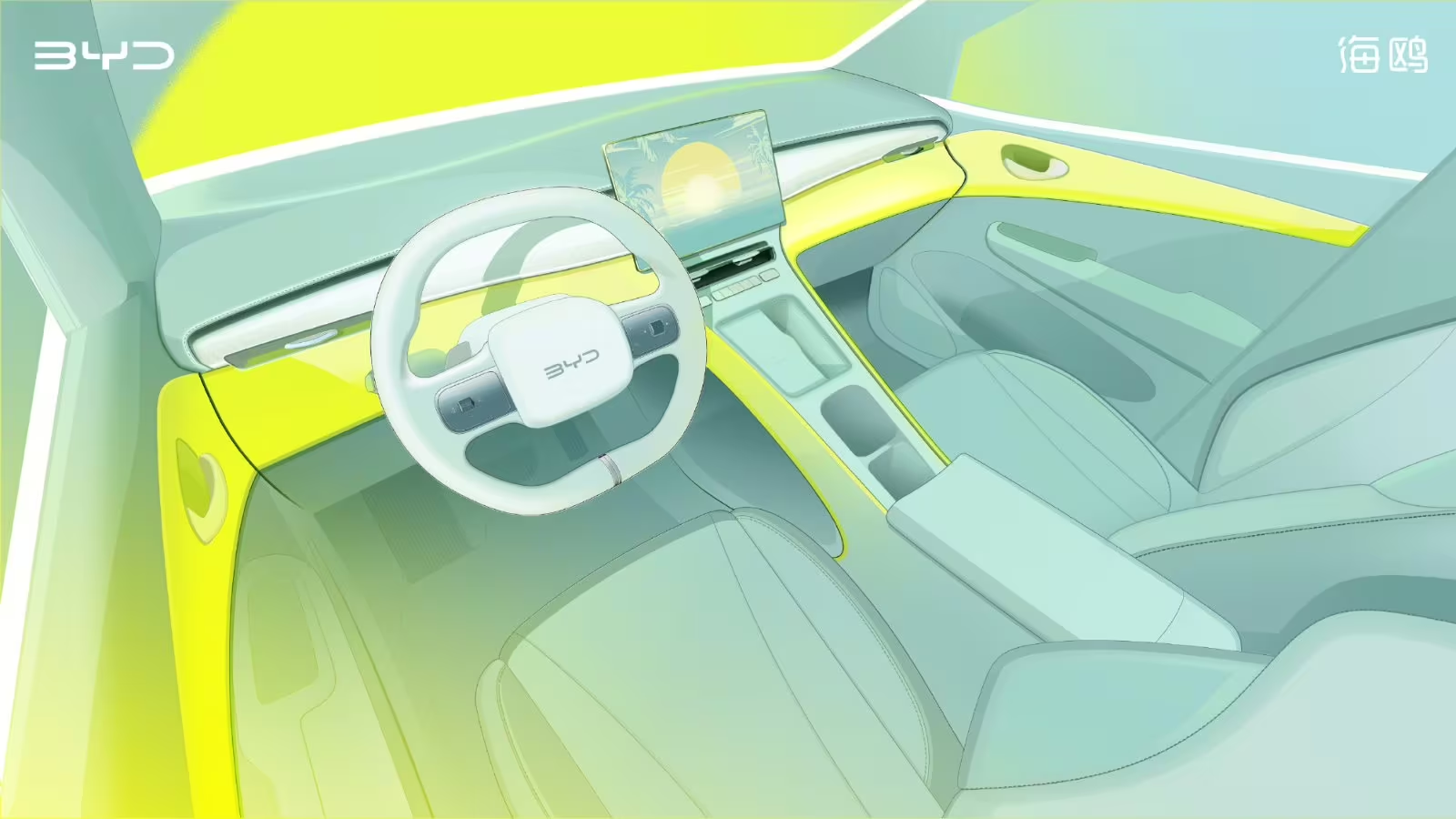
BYD Seagull is entering its second generation with a redesigned cabin, larger dimensions, stronger power output, and expanded driver-assistance hardware. BYD has now released interior sketches after previewing the exterior design, giving a clearer picture of the small electric vehicle’s next iteration. The cabin keeps a large floating center touchscreen but removes the digital instrument display, while a new two-spoke steering wheel and additional storage emphasize a minimalist layout. Regulatory filings also show that the new model will offer a longer wheelbase, five-seat capacity, and a 95 kW permanent magnet synchronous motor. More details, including the launch date and pricing, have not yet been announced.
Interior Design Adds Storage and Simplifies the Dashboard
The interior sketches shared by Zhang Zhuo, general manager of BYD's Ocean lineup sales division, show a dashboard built around straight lines and a new two-spoke steering wheel. The second-generation model retains a large floating central touchscreen, but the digital dashboard used in the previous configuration is no longer shown. The center console continues to provide open storage beneath it and adds wireless phone charging and two front cupholders. The number of storage compartments also appears to have increased. Zhang said on Weibo that additional information would be released soon, although he has not disclosed when the vehicle will launch or how much it will cost.
Exterior Redesign Accompanies Larger Dimensions
The interior preview follows exterior design sketches released on September 22. Those images showed a redesigned front end with trident-style lighting, indicating that the second-generation model will receive a substantial visual update rather than a limited refresh. The broader redesign is accompanied by significant changes in the vehicle’s dimensions. According to regulatory filings previously released by China's Ministry of Industry and Information Technology, the vehicle measures 4,205 mm in length, 1,810 mm in width, and 1,570 mm in height, with a 2,650 mm wheelbase. The changes move the Seagull closer in overall size to BYD's Dolphin.
Five Seats and a Longer Wheelbase Change Packaging
Compared with the current model, the new Seagull is 425 mm longer and has a wheelbase that is 150 mm longer. Seating capacity also rises from four to five occupants, representing a meaningful change for a vehicle positioned in the small electric-car segment. The larger footprint should provide a different cabin and packaging proposition than the current model, while the five-seat configuration expands its practical passenger capacity. These specifications come from regulatory filings rather than estimates, providing a defined picture of the vehicle’s physical changes even though BYD has not yet announced final launch specifications, equipment levels, or pricing for the second-generation model.
Motor Output and Driver-Assistance Hardware Increase
The regulatory filings also identify two variants using a permanent magnet synchronous motor with a maximum output of 95 kW, or 127 hp. That represents an increase from the previous generation’s 55 kW output. Both variants use lithium iron phosphate batteries, while one can be equipped with LiDAR and front, rear, and side radar sensors. BYD had already introduced a LiDAR option on the 2026 Seagull launched in May, so the technology is being carried into the next-generation vehicle’s available hardware. The combination of higher motor output and expanded sensing equipment points to a broader upgrade beyond the changes visible in the exterior and cabin.
Seagull Sales Show Mixed Recent Performance
The Seagull remains an important sales driver for BYD's Ocean lineup, despite weaker year-to-date sales. The current model is priced from 69,900 yuan to 85,900 yuan, while the vehicle sold 529,537 units in 2025. Cumulative sales exceeded 1.5 million from its launch in April 2023 through the end of August 2026. In August, Seagull sales reached 36,106 units, an increase of 5.56% from the same month a year earlier. That result ended a 12-month streak of year-over-year declines, although the broader annual trend remained weaker.
Year-to-Date Sales Remain Below Prior-Year Levels
For the first eight months of 2026, Seagull sales totaled 227,251 units, down 37.50% from the same period a year earlier. The contrasting monthly and year-to-date figures provide context for the importance of the second-generation model as BYD prepares its next product cycle. The August increase suggests a recent improvement in monthly performance, while the cumulative decline shows that the model still faces a substantial gap versus the prior-year pace. BYD's decision to expand the Seagull’s dimensions, power output, seating capacity, and available sensing hardware therefore arrives as the nameplate moves into its next generation with significant changes in both product positioning and specification.
Industry Impact & Outlook
The second-generation Seagull could affect China's small electric-vehicle market by combining a larger five-seat body with higher motor output and optional LiDAR-based sensing. Its significance will depend on final pricing, launch timing, equipment availability, and how buyers respond to the expanded size and technology package. For BYD, the model’s substantial historical sales base makes the transition relevant to Ocean lineup performance, while the year-to-date decline creates a clear commercial context for the redesign. The next important steps are BYD’s disclosure of launch details, pricing, and remaining specifications, which will determine how the new model compares with the current Seagull and nearby products.
Frequently Asked Questions
What changes does the second-generation Seagull introduce?
The second-generation Seagull is larger than the current model, seats five, and offers more power plus additional available sensing technology. It measures 4,205 mm long, uses a 2,650 mm wheelbase, and its listed variants use a 95 kW permanent magnet synchronous motor with LFP batteries. One variant can add LiDAR plus front, rear, and side radar sensors. BYD has not announced the launch date or pricing yet. The company is expected to provide more information soon as the next-generation model moves closer to its market introduction.
Click above to visit the official source.
Discussion
Join the conversation.