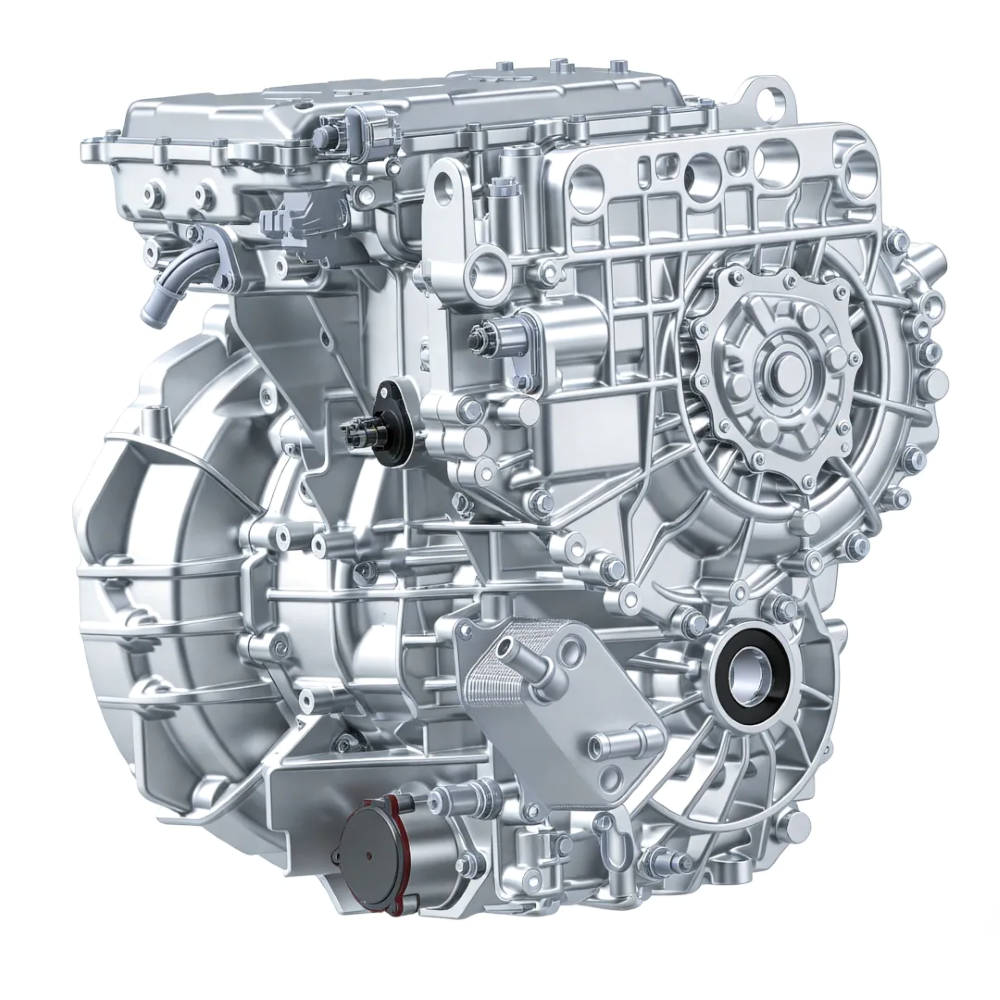
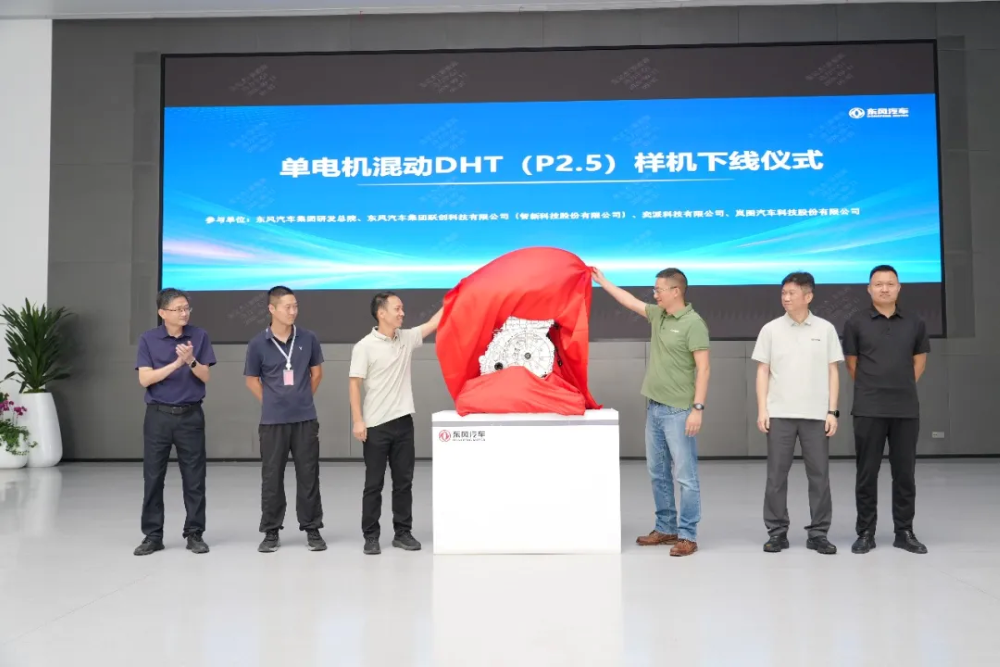
- MACH Power P2.5 prototype has entered production.
- System weighs 39% less than conventional dual-motor systems.
- High-speed engine drive can reduce fuel consumption 15%.
MACH Power P2.5 Prototype Enters Production
On September 21, Dongfeng Motor Corporation’s R&D Institute announced that a prototype of the in-house-developed MACH Power P2.5 Single-Motor Hybrid Electric Drive System had recently rolled off the production line. The development centers on an optimized hybrid-drive configuration intended to provide high reliability while supporting multiple vehicle platforms. According to Dongfeng Motor Corporation, the system combines a single-motor architecture with a configuration designed to reduce weight and cost while retaining all-wheel-drive capability. The announcement marks the production-line completion of the prototype and highlights the company’s focus on applying the system across different vehicle platforms.
Reduced Weight and Drag Losses
Dongfeng Motor Corporation said the system weighs 39% less than a conventional P1+P3 dual-motor hybrid electric drive system. The optimized configuration is designed to reduce both system weight and cost while maintaining the capability to support cost-effective all-wheel drive. Under common driving conditions, the motor can be disconnected from the wheels, reducing drag losses when electric motor assistance is not required. This operating strategy is intended to further lower energy consumption per 100 kilometers. The combination of reduced system mass and the ability to disengage the motor represents the key efficiency-focused elements described in the company’s announcement.
Engine Drive Supports Long-Distance Efficiency
The hybrid system also allows vehicles equipped with it to be driven directly by the engine at high speeds. According to the announcement, this operating mode can reduce fuel consumption by 15% during long-distance trips when the battery is depleted. The capability provides an alternative operating strategy for conditions in which available battery energy has been exhausted, allowing the engine to provide direct propulsion at higher speeds. Alongside its lower weight, reduced drag losses, and multi-platform compatibility, the high-speed engine-drive function forms part of the system’s stated approach to improving energy efficiency while retaining flexibility across different driving conditions.
Industry Impact & Outlook
The MACH Power P2.5 development highlights how hybrid powertrain architectures can pursue lower system weight and cost while retaining drivetrain flexibility across vehicle platforms. Its 39% lower weight compared with the stated P1+P3 configuration and its ability to disconnect the motor or rely directly on the engine at high speeds could influence how Dongfeng Motor Corporation approaches hybrid vehicle efficiency and packaging. The next relevant step is the application of the production-line prototype to compatible vehicle platforms, where real-world operating conditions will determine how effectively the system’s claimed efficiency and cost advantages translate into vehicle-level performance.
Frequently Asked Questions
What are the main benefits of the MACH Power P2.5 system?
The MACH Power P2.5 Single-Motor Hybrid Electric Drive System is designed around four stated advantages: high reliability, cost-effective all-wheel drive, reduced weight and cost, and compatibility with multiple vehicle platforms. The system weighs 39% less than a conventional P1+P3 dual-motor hybrid electric drive system. It can also disconnect the motor from the wheels under common driving conditions to reduce drag losses and energy consumption. At high speeds, vehicles can use direct engine drive, with the announcement stating that this can reduce long-distance fuel consumption by 15% when the battery is depleted.
Click above to visit the official source.
Discussion
Join the conversation.