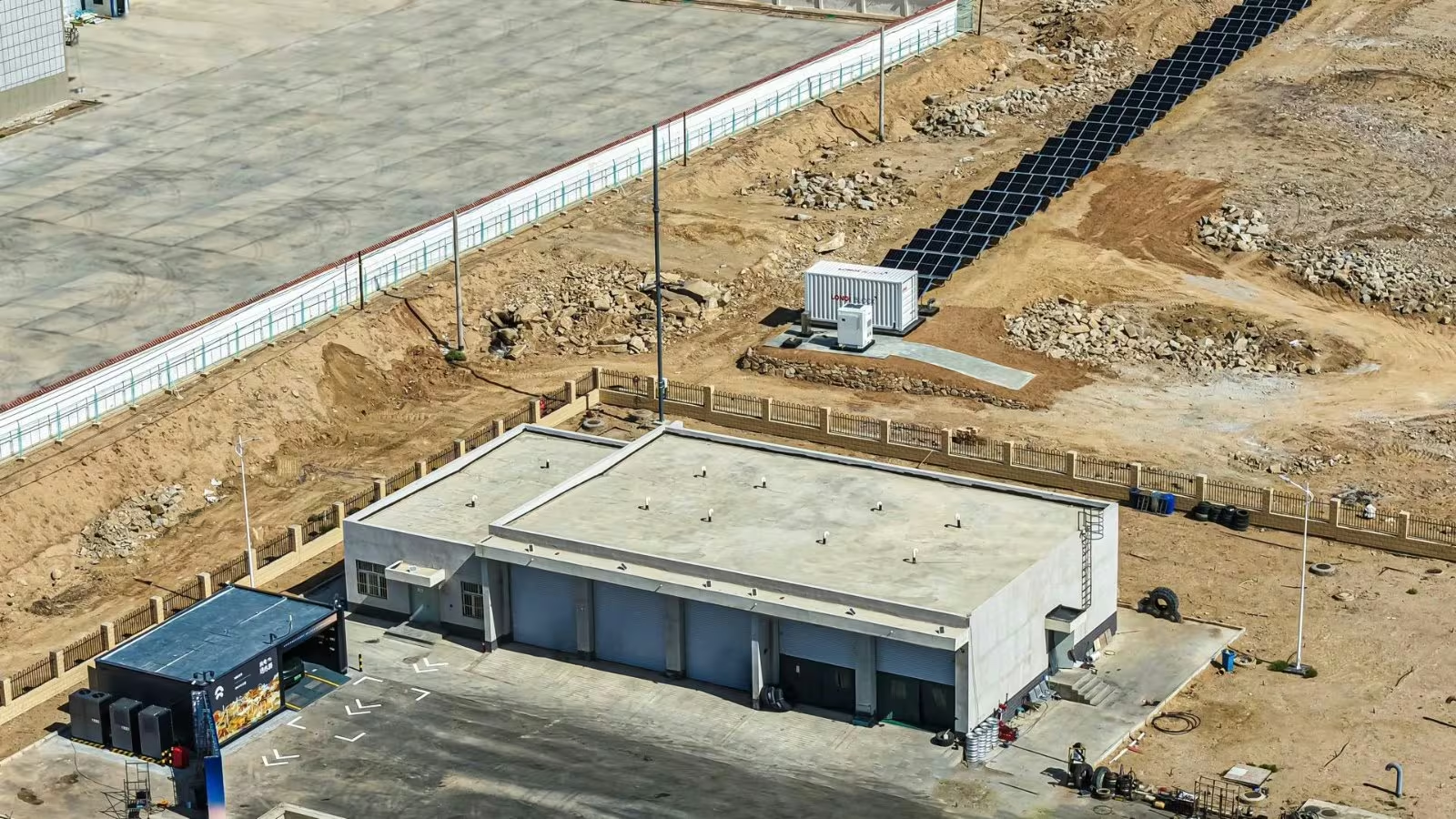
- Nio battery swap station now operates fully off-grid.
- Solar generation and storage support 24-hour operation.
- Silk Road route spans 3,605 kilometers and 33 stations.
Nio Opens Solar-Powered Off-Grid Battery Swap Station
Nio has opened its first battery swap station powered entirely by solar energy, establishing a new approach for expanding its energy network into remote areas with limited grid coverage. The station at the Xingxingxia service area in Xinjiang has officially begun operations and is described by Nio as the world's first zero-carbon, off-grid battery swap station powered by solar generation and energy storage. Located along the G30 Lianyungang-Horgos Expressway, the facility meets its electricity requirements without relying on the power grid. The project gives Nio its first operational validation of off-grid battery swapping and is intended to provide experience for similar deployments.
Station Designed for Xinjiang's Remote Conditions
Xingxingxia is located in the Gobi Desert in eastern Xinjiang, where limited grid coverage makes conventional power infrastructure difficult to extend. Nio said traditional grid expansion would require power lines to cross large stretches of desert, resulting in lengthy construction periods and high costs. The location also presents demanding operating conditions for energy equipment. Winds of force 8 or higher occur on more than 100 days each year, summer ground temperatures can exceed 70 degrees Celsius, and extreme winter temperatures can fall to minus 30 degrees Celsius. These conditions require the station's power and temperature-management systems to operate reliably across significant environmental extremes.
Solar Generation and Energy Storage Enable Off-Grid Operation
The Xingxingxia station uses Chinese solar company Longi's Longi Block mobile energy station together with the Longi H2D energy storage system. The equipment automatically changes operating modes according to available sunlight, allowing the facility to maintain operations around the clock without on-site staff managing those transitions. During daylight hours, solar generation supplies electricity directly to the battery swap station, while surplus power is stored for later use. After sunset, the energy storage system discharges electricity to maintain operations. During extended cloudy conditions, the system can automatically enter an emergency mode that reserves available electricity for critical loads.
Equipment Built for Extreme Weather Conditions
Nio said the station incorporates liquid-cooling temperature control and other technical features intended to help the equipment withstand the severe environmental conditions at Xingxingxia. Automatic operating-mode changes reduce the need for personnel to intervene when sunlight availability changes or when the system enters an emergency operating state. This design allows solar generation, energy storage, and battery swapping equipment to function as an integrated energy system rather than depending on continuous grid access. The approach is particularly relevant to remote highway locations where extending conventional electrical infrastructure can require significant construction across difficult terrain and may increase both deployment time and infrastructure costs.
Silk Road Battery Swap Route Adds a Key Station
The Xingxingxia facility also serves as an important node on Nio's Silk Road battery swap route, which spans 3,605 kilometers and includes 33 swap stations. Nio said the route is scheduled to be fully connected on September 26. Once connected, users starting from any Nio battery swap station in China will be able to reach every provincial-level administrative region in the Chinese mainland by changing batteries along the route. The Xingxingxia deployment therefore combines an energy-infrastructure experiment with the expansion of Nio's broader battery swapping network across a long-distance highway corridor extending into a region where conventional grid access is limited.
Nio Has Expanded Solar Integration Across Its Energy Network
The new station builds on several years of work by Nio to incorporate solar generation into its battery swapping and charging infrastructure. In 2021, the company signed an agreement with Unisun Energy to install rooftop solar systems at its second-generation battery swap stations. In January 2024, Nio and Longi established a strategic partnership focused on using solar power at charging and battery swap stations. Their first jointly developed HPBC, or Hybrid Passivated Back Contact, solar-powered swap station opened in Xi'an during that period. The Xingxingxia project extends that effort by moving from grid-connected solar integration to a system designed to operate entirely off-grid.
Nio's Battery Swap and Charging Network Continues to Grow
As of September 23, Nio had 4,109 battery swap stations in China, including 1,060 stations located along highways, according to the company. Its network also included 5,301 charging stations. The Xingxingxia project adds a distinct technical capability to this growing infrastructure by demonstrating how battery swapping can be supported through solar generation and energy storage where conventional grid connections are unavailable or difficult to establish. For Nio, the deployment provides an operating reference for assessing whether similar off-grid configurations can support additional remote locations while maintaining the service continuity expected from its battery swapping network.
Industry Impact & Outlook
The Xingxingxia deployment demonstrates how solar generation and energy storage could provide an alternative infrastructure model for battery swapping in remote automotive corridors where grid expansion is difficult or costly. Its significance for the broader industry will depend on operating performance under the extreme environmental conditions found in Xinjiang and on whether the approach can be replicated economically at other locations. Nio's experience may inform future infrastructure planning for long-distance EV travel, particularly in areas with strong solar resources but limited grid coverage. The completed Silk Road route will also provide a practical setting for Nio to integrate remote energy infrastructure into a larger battery swapping network.
Frequently Asked Questions
What is significant about Nio's Xingxingxia battery swap station?
Nio's Xingxingxia station is designed to operate without grid electricity by combining solar generation with energy storage for continuous battery swapping operations. Located in Xinjiang's Gobi Desert, the station addresses an infrastructure challenge created by limited grid coverage and difficult terrain. Nio says the facility is the world's first zero-carbon, off-grid battery swap station powered by solar energy and storage. The project also provides Nio with operational experience in deploying battery swapping infrastructure at remote locations where conventional grid expansion could require substantial construction and investment.
Click above to visit the official source.
Discussion
Join the conversation.