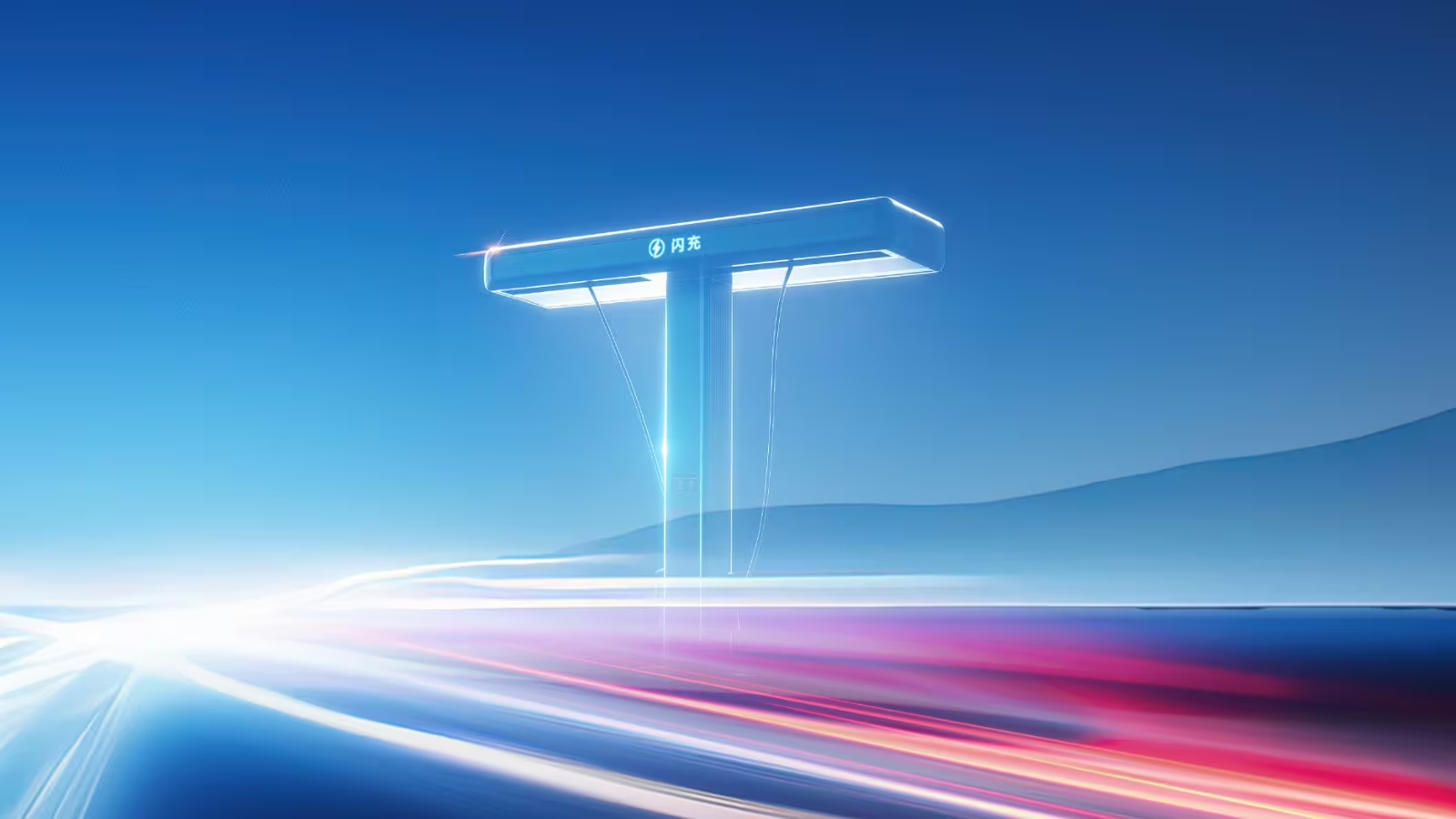
- BYD highway flash charging stations reach 2,000.
- Highway stations cover nearly one-third of service areas.
- Network served more than 1.83 million users.
BYD Completes 2,000-Station Highway Charging Milestone
BYD highway flash charging stations will reach the 2,000-station milestone in China on September 24, completing the highway phase of the company’s Flash Charging China strategy ahead of the schedule announced in March. The milestone station will begin operations at the Baoying service area in Yangzhou, Jiangsu province, where BYD plans to hold an opening ceremony. The company originally targeted 2,000 highway stations by the end of 2026, but it has moved that deadline forward to late September. The accelerated rollout puts the infrastructure in place before the Mid-Autumn Festival and National Day holiday travel periods.
Highway Charging Network Expands Before Holiday Travel
China’s Mid-Autumn Festival falls on September 25, with the holiday continuing through September 27, followed by three working days before the National Day holiday from October 1 to October 7. Holiday travel has exposed persistent charging constraints on China’s highways, where limited charger availability and long queues can complicate long-distance electric vehicle journeys. The completed rollout by BYD therefore arrives immediately before two major travel periods, when convenient highway charging will be particularly relevant for drivers traveling between cities and regions. The timing gives the expanded network an immediate practical role during a period of concentrated road travel.
BYD Targets 20,000 Flash Charging Stations
The 2,000 highway flash charging stations cover nearly one-third of China’s expressway service areas, with average spacing of just over 100 kilometers. The highway network forms one part of BYD’s broader goal of building 20,000 flash charging stations across the country. With the highway phase completed, the remaining expansion through the end of the year will concentrate on urban locations. BYD had built 10,000 flash charging stations in China as of August 28, leaving the company with a substantial pace requirement to reach its full-year target. The next stage will therefore depend on continued construction and commissioning across urban areas.
Urban Expansion Requires Rapid Station Deployment
From the end of August, BYD needed to add an average of about 80 stations each day to reach its 20,000-station year-end target. That pace illustrates the scale of the next stage of the rollout, which shifts from a highway-focused expansion to a broader urban deployment program. The highway milestone is therefore not the endpoint of the strategy, but a major infrastructure phase within a larger national network. The remaining target requires sustained construction and commissioning activity across urban locations. The transition also broadens the network’s potential role from supporting long-distance highway travel to providing high-power charging access in cities.
Second-Generation Flash Chargers Deliver 1,500 kW
BYD’s second-generation flash chargers, introduced in March, are designed to support very high-power charging for compatible vehicles. Each connector can deliver peak output of 1,500 kW and support 1,000-volt vehicle architectures, which BYD describes as the highest level available in global mass production. When paired with the second-generation Blade Battery, the system can charge a battery from 10% to 70% in five minutes and from 10% to 97% in nine minutes at normal temperatures. Charging performance varies by vehicle and operating conditions, so the stated charging times represent the capabilities of the compatible system rather than a universal result for every EV using the network.
Flash Charging Demonstrates Cold-Weather Performance
The system is also designed to maintain short charging times under very cold conditions. BYD said charging from 20% to 97% at minus 30 degrees Celsius takes only three minutes longer than under normal temperatures. A demonstration involving a Denza Z9GT showed the technology operating at minus 33.4 degrees Celsius at the Beijing Auto Show in April 2026. These demonstrations highlight the company’s emphasis on high-power charging performance across a wider range of temperatures. Actual charging results, however, remain dependent on vehicle battery characteristics, charging capability, ambient conditions, and the technical limits of the vehicle connected to the charger.
Network Serves EV Drivers Across Multiple Brands
BYD’s flash charging network is open to electric vehicles from other brands, although the power delivered to an individual vehicle depends on that vehicle’s battery and charging system. By the end of August, the network had delivered a cumulative 210 million kWh of electricity and served more than 1.83 million users, according to previously released BYD data. Owners of vehicles from other brands represented nearly one-third of users. That usage indicates the network extends beyond BYD’s own customer base and provides charging infrastructure for a wider group of EV drivers. The open-network approach also increases the potential utilization of stations across different vehicle brands.
BYD Expands Flash Charging Network Overseas
The company is also taking its flash charging network beyond China. BYD has completed its first flash charging stations in the United Kingdom and plans to deploy 300 there this year. The overseas expansion extends the company’s charging-infrastructure strategy into another market while its domestic program moves toward urban coverage. The UK deployment shows that BYD is treating high-power charging infrastructure as a network capability rather than limiting the technology to its home market. Future deployment will depend on local infrastructure requirements, vehicle compatibility, and the pace of station construction. The international rollout also gives the company an opportunity to apply its charging technology in different market conditions.
Megawatt Charging Becomes a Competitive Focus
Megawatt charging is becoming an increasingly visible area of competition among Chinese automakers. Geely Auto is also expected to unveil a megawatt charging solution this week, adding another major automaker to the push toward higher charging power. The development places BYD’s 1,500-kW charging capability within a broader industry effort to reduce charging times and address long-distance EV use. For automakers, charging infrastructure is becoming closely connected with vehicle technology, battery architecture, customer convenience, and the ability to support EV adoption beyond urban driving. Continued development in this area could make charging performance an increasingly important part of competition among EV manufacturers.
Industry Impact & Outlook
BYD’s accelerated highway rollout expands high-power charging coverage across a significant portion of China’s expressway service areas while the company prepares to shift its expansion effort toward urban locations. The milestone also arrives as charging speed and megawatt-level infrastructure become more prominent areas of competition among Chinese automakers. For EV drivers, broader highway coverage and shorter charging times could address practical challenges associated with long-distance travel, although vehicle compatibility remains important. BYD’s UK expansion adds an international dimension to the strategy, while the emergence of competing megawatt solutions could increase pressure on automakers to develop compatible vehicles, batteries, and charging networks that deliver higher power in real-world conditions.
Frequently Asked Questions
When will BYD open its 2,000th highway charging station?
BYD is scheduled to open its 2,000th highway flash charging station in China on September 24 at the Baoying service area in Yangzhou, Jiangsu province. The milestone completes the highway phase of the company’s Flash Charging China strategy ahead of its original end-2026 target. BYD moved the deadline forward to late September, placing the station rollout ahead of China’s Mid-Autumn Festival and National Day holiday travel periods. The timing is significant because highway charging demand can increase during major holiday travel periods.
How many flash charging stations does BYD target in China?
BYD is targeting 20,000 flash charging stations in China by the end of the year. The company had built 10,000 stations as of August 28, while the highway portion was approaching 2,000 stations. After completing the highway phase, BYD’s remaining expansion is focused primarily on urban locations. From the end of August, the company needed to add an average of about 80 stations per day to meet the 20,000-station target. The required pace highlights the scale of the remaining infrastructure deployment.
What charging performance does BYD’s second-generation system offer?
BYD’s second-generation flash chargers can deliver peak output of 1,500 kW per connector and support 1,000-volt vehicle architectures. When paired with the second-generation Blade Battery, the system can charge from 10% to 70% in five minutes and from 10% to 97% in nine minutes at normal temperatures. BYD also reports that charging from 20% to 97% at minus 30 degrees Celsius takes only three minutes longer than under normal temperatures. Actual performance depends on the connected vehicle and operating conditions.
Click above to visit the official source.
Discussion
Join the conversation.