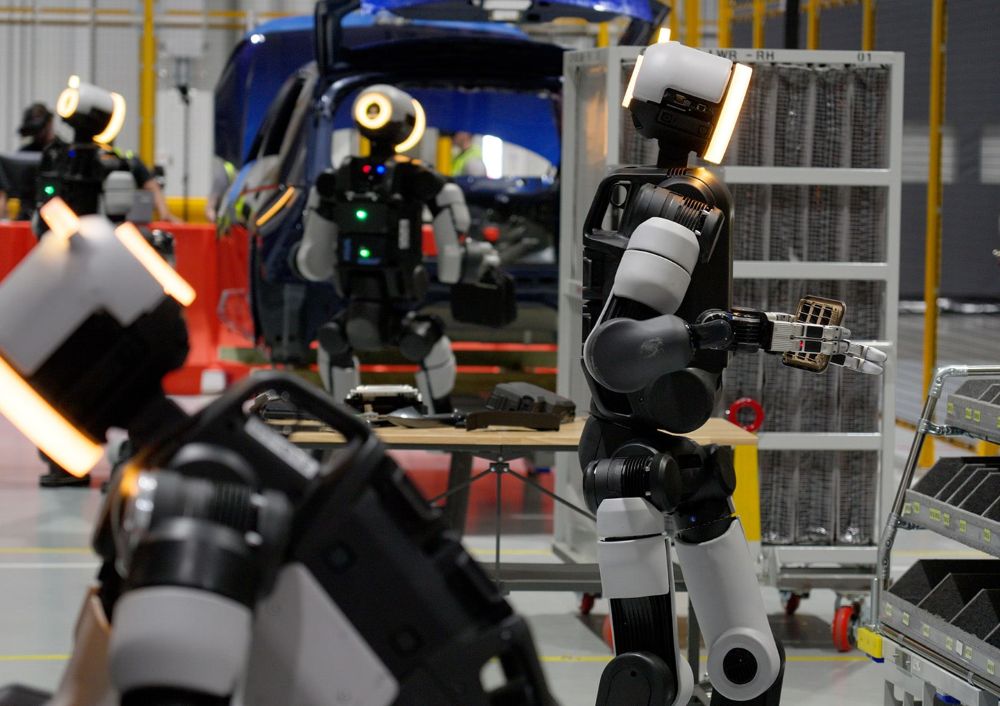
- Boston Dynamics Atlas Robots begin Hyundai factory training.
- RMAC targets logistics and sequencing before assembly.
- Hyundai plans 25,000 Atlas deployments globally.
Boston Dynamics Launches RMAC at Hyundai Metaplant
Boston Dynamics launched the Robotics Metaplant Application Center (RMAC) on September 21 at Hyundai Motor Group Metaplant America (HMGMA), creating a dedicated testbed and training center for integrating Atlas humanoid robots into automotive manufacturing. The facility is designed to place the robots in real production environments rather than limiting development to controlled laboratory settings. Initial work focuses on logistics and sequencing automotive parts, including preparing components and placing them in the correct order for assembly. The program centers on Boston Dynamics Atlas Robots and connects Boston Dynamics’ humanoid robotics development with Hyundai’s manufacturing operations while providing a setting for evaluating practical factory tasks.
Atlas Training Focuses on Automotive Logistics
At RMAC, Atlas robots are being trained for work that supports the movement and preparation of automotive parts. One early application involves logistics and sequencing, where robots prepare components before placing them in the correct order for assembly. This approach allows the technology to be evaluated against real manufacturing requirements and operating conditions. The training environment is intended to help identify tasks that can be transferred from development into production while maintaining a focus on practical factory needs. As the program advances, the center will provide a dedicated location for preparing Atlas for broader deployment across Hyundai’s automotive manufacturing network.
Atlas Applications Are Planned for Component Assembly
The planned scope of Atlas applications extends beyond logistics. Boston Dynamics and Hyundai intend to move into component assembly by 2030, while the robots are expected over time to take on repetitive motions and strenuous work, including lifting heavy loads. These applications target activities that can require sustained physical effort or repeated movement. The progression from parts preparation to assembly and demanding physical tasks indicates that the program is being developed as a broader manufacturing deployment rather than a single-use automation project. The stated timeline provides a framework for expanding Atlas capabilities as additional automotive use cases are developed and validated.
Hyundai Plans 25,000 Atlas Deployments
Hyundai Motor Group also plans to expand Atlas deployment to 25,000 units across Hyundai Motor and Kia’s global plants over the next few years. To support that scale, the Group plans to establish a new U.S. production facility capable of producing 30,000 robots annually. Together, the deployment target and planned manufacturing capacity indicate an effort to build both the operational footprint and production infrastructure needed for wider robotic adoption. The plans cover multiple global plants, while the proposed U.S. facility would provide additional capacity for producing robots as the manufacturing applications mature.
RMAC Expansion Is Planned for 2027
The first phase of RMAC is already operational at HMGMA, but the center is scheduled to move into a new building at the metaplant in 2027. That facility is expected to expand RMAC to approximately ten times its current size, providing more space for Atlas preparation and automotive deployment work. The expansion is intended to support continued development of manufacturing applications at Hyundai’s U.S. operation. Boston Dynamics also plans to begin exploring Atlas use cases in other industry sectors in 2027, extending the center’s role beyond automotive manufacturing while retaining its focus on real-world robot applications.
Manufacturing Robotics Program Sets Broader Deployment Path
The RMAC program could affect automotive automation by giving Hyundai a dedicated environment for testing humanoid robots against manufacturing tasks before broader deployment. Its significance is tied to the combination of factory-based training, a planned 25,000-unit deployment, and additional U.S. production capacity, while the 2027 expansion could increase the number of applications that can be evaluated. Hyundai and Kia manufacturing sites are the immediate focus, but Boston Dynamics’ planned exploration of other industries could broaden the technology’s potential reach. The next steps will depend on how Atlas performs in logistics, assembly, and physically demanding work as deployment expands.
Industry Impact & Outlook
RMAC gives Hyundai a dedicated environment for developing humanoid robotics applications under actual manufacturing conditions, potentially accelerating the transition from pilot programs to broader factory deployment. The planned 25,000-unit rollout across global Hyundai and Kia plants would make manufacturing execution a central part of the program, while the proposed U.S. facility could provide production capacity for the stated expansion. The 2027 RMAC enlargement is also significant because it is intended to support additional automotive applications and exploration of other industries. Progress in logistics, component assembly, and strenuous work will therefore remain important indicators of how the program develops.
Frequently Asked Questions
What is the Robotics Metaplant Application Center?
The Robotics Metaplant Application Center is a testbed and training center at Hyundai Motor Group Metaplant America for preparing Atlas humanoid robots for automotive manufacturing applications. It is initially focused on logistics and sequencing automotive parts before assembly, with component assembly planned by 2030. The center is already operational in its first phase, while a larger facility planned for 2027 is expected to expand its current footprint by approximately ten times. Boston Dynamics also plans to explore applications for Atlas in other industries at the expanded center beginning in 2027.
Click above to visit the official source.
Discussion
Join the conversation.