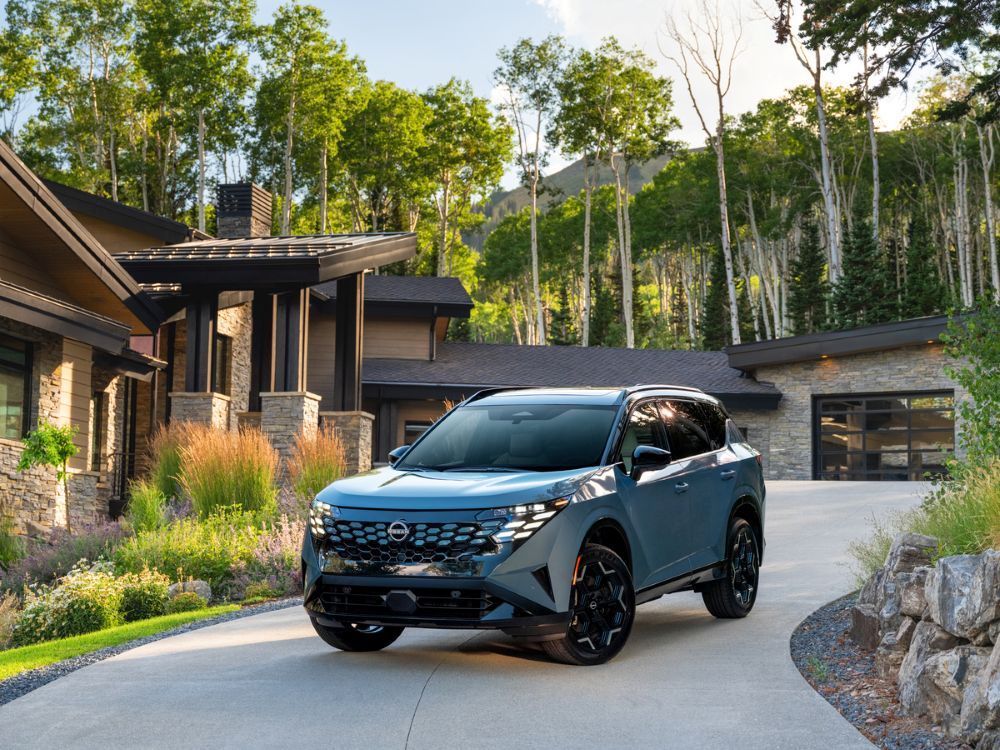
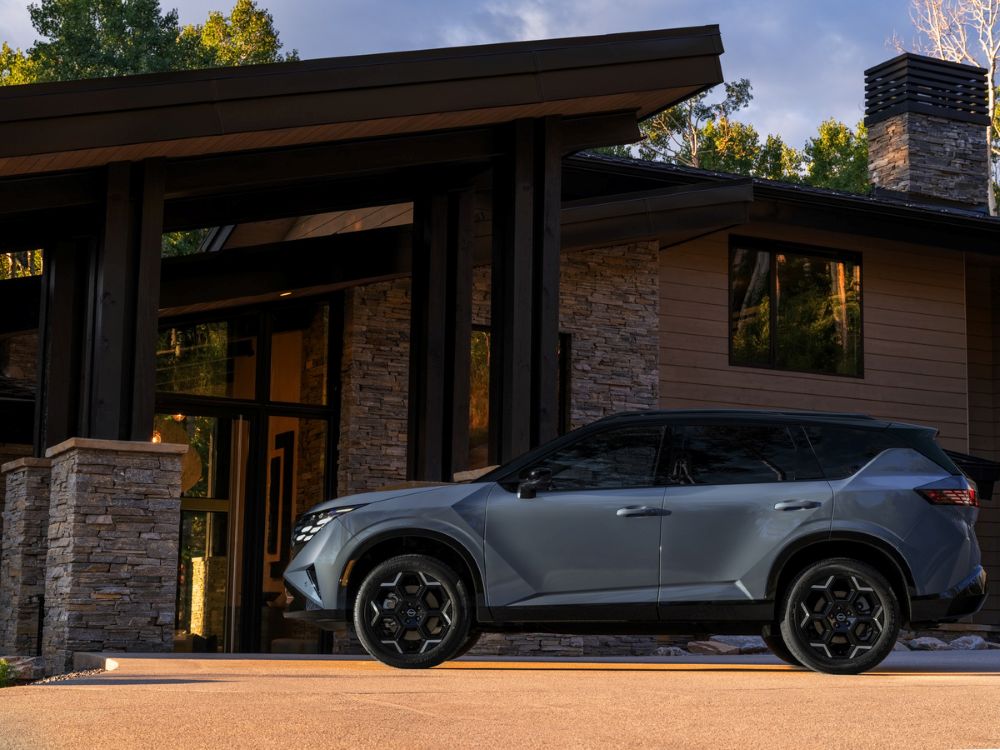
- 2027 Nissan Rogue Hybrid delivers 225-hp AWD.
- e-POWER system targets 38 mpg combined.
- Rogue Hybrid reaches U.S. dealers in fall 2026.
On September 21, Nissan revealed the all-new 2027 Nissan Rogue Hybrid as its most advanced and efficient version of the best-selling SUV for the U.S. market. The new model combines hybrid technology with everyday functionality and an updated design. It is a core vehicle for Nissan in the company's largest market and supports its Mobility Intelligence for Everyday Life strategy. The Rogue Hybrid SR AWD with the SR Technology Package is scheduled to reach U.S. dealerships in fall 2026, while SV, SR, and Platinum grades are planned for early 2027.
The Rogue Hybrid will be offered with dual-motor electric all-wheel drive as standard, producing a combined system output of 225 horsepower. Nissan's e-POWER system drives the wheels exclusively through electric motors, which is designed to provide smoother, quieter, and more responsive acceleration without requiring external charging. The technology is positioned as a segment-first application for the hybrid model and allows the vehicle to deliver an electric-motor driving experience while using a gasoline engine as an onboard generator.
The e-POWER system uses a dedicated 1.5-liter turbocharged engine to generate electricity rather than directly driving the wheels. When the battery has sufficient charge, the engine can shut off entirely. Nissan says the system achieves 42% thermal efficiency and contributes to estimated fuel economy of up to 40 mpg in city driving, 36 mpg on the highway, and 38 mpg combined. This setup gives the hybrid powertrain a distinct operating approach compared with conventional hybrids, while eliminating the need for drivers to connect the vehicle to an external charger.
The model is specifically tuned for North American driving conditions and will be assembled at Nissan Motor Kyushu in Japan. The SR AWD with the SR Technology Package is scheduled for U.S. availability in fall 2026, followed by the SV, SR, and Platinum grades in early 2027. The SV grade will start at an MSRP of $35,490. Nissan is therefore introducing the hybrid powertrain across multiple Rogue grades while maintaining a staged rollout for the U.S. market.
The hybrid e-POWER system represents the latest stage of Nissan's development of the technology, which has progressed through three generations. Since its introduction in 2016, nearly 2 million vehicles equipped with e-POWER have been sold globally across 68 countries. The experience accumulated through those deployments provides the technical background for applying the system to the U.S.-market Rogue, where the company is emphasizing fuel efficiency, electric-motor driving characteristics, all-wheel-drive capability, and everyday usability.
Industry Impact & Outlook
The Rogue Hybrid expands Nissan's hybrid offering in the U.S. with a powertrain that combines electric-motor propulsion, standard all-wheel drive, and gasoline-based electricity generation without external charging. Its staged rollout across several grades gives Nissan an opportunity to apply e-POWER technology across a major SUV nameplate while addressing buyers seeking improved fuel economy without requiring charging infrastructure. Assembly in Japan also connects the U.S. launch to Nissan's established e-POWER manufacturing experience, while the vehicle's pricing and estimated efficiency will shape how the model is positioned within the U.S. hybrid SUV market.
Frequently Asked Questions
What powertrain does the 2027 Nissan Rogue Hybrid use?
The Rogue Hybrid uses Nissan's e-POWER hybrid system with dual electric motors and standard all-wheel drive, producing a combined 225 horsepower. A dedicated 1.5-liter turbocharged gasoline engine operates as a generator rather than directly powering the wheels, while the battery supplies electricity to the electric motors. Nissan estimates fuel economy of up to 40 mpg city, 36 mpg highway, and 38 mpg combined. The system also does not require external charging, and its engine can shut off when the battery has sufficient charge, supporting quieter operation and electric-motor-driven acceleration.
Click above to visit the official source.
Discussion
Join the conversation.