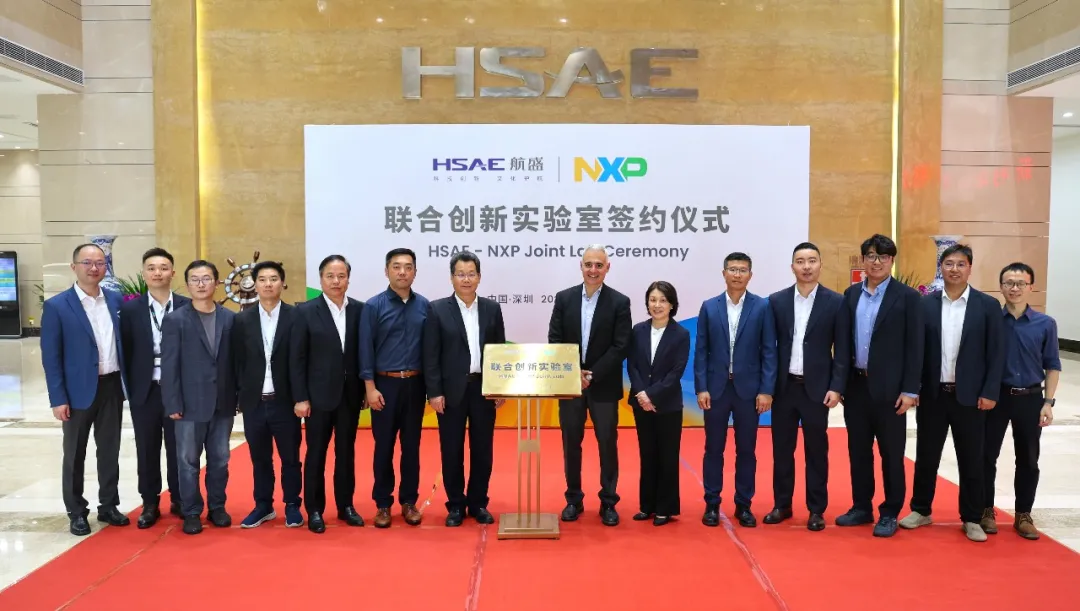
- Hangsheng Electronics NXP Technology Laboratory advances AI applications.
- Joint R&D targets SDV platforms and validation.
- Collaboration includes intelligent cockpits and edge computing.
Hangsheng Electronics NXP Technology Laboratory
Hangsheng Electronics NXP Technology Laboratory was established in Shenzhen through a joint initiative between Shenzhen Hangsheng Electronics Co., Ltd. and NXP Semiconductors N.V., with the companies holding a signing and unveiling ceremony for the new facility. The laboratory will focus on intelligent cockpits, software-defined vehicles, and artificial intelligence applications. Using NXP’s i.MX 9 platform and wireless connectivity product portfolio, the collaboration is intended to support the deployment of system-level intelligent cockpit solutions in customer projects. The initiative creates a dedicated framework for the two companies to pursue technology development and validation across several automotive electronics areas.
Intelligent Cockpit Development
The laboratory will use NXP technology as a foundation for advancing intelligent cockpit solutions aimed at customer applications. The work centers on system-level development, combining the i.MX 9 platform with NXP’s wireless connectivity products to support integrated cockpit functions. For Shenzhen Hangsheng Electronics Co Ltd, the collaboration provides a technology-development environment focused on bringing these solutions into customer projects. The companies’ stated objective is to promote practical deployment rather than limit the laboratory’s activities to individual component development, making system integration and application validation important elements of the collaboration.
Software-Defined Vehicle Platform R&D
For software-defined vehicles, the two companies will conduct joint research and development, preliminary research and validation, and proof-of-concept design for software-defined platforms. The work will be based on NXP’s CoreRide platform and S32K5 automotive microcontrollers, providing the technical foundation identified for the collaboration. These activities are intended to support development and validation work around software-defined vehicle architectures and related applications. By combining the capabilities of NXP Semiconductors N V with Hangsheng Electronics’ automotive electronics activities, the laboratory will provide a shared environment for progressing platform concepts toward customer-oriented applications.
AI Edge Computing and Future Collaboration
The collaboration also includes efforts to advance the development and market adoption of AI edge computing platforms. Beyond edge computing, the companies said their future cooperation will cover on-device AI, embodied intelligence, and software ecosystem integration. These areas broaden the laboratory’s scope beyond cockpit and software-defined vehicle platforms to include technologies that process and support AI capabilities closer to vehicle systems. The planned activities indicate a continued focus on integrating computing, connectivity, software, and AI capabilities within automotive applications while maintaining a connection to practical development, validation, and potential market deployment.
Industry Impact & Outlook
The laboratory gives the automotive electronics ecosystem a structured setting for combining intelligent cockpit, software-defined vehicle, connectivity, and AI technologies within customer-oriented development programs. Its focus on NXP’s CoreRide platform, S32K5 microcontrollers, i.MX 9 technology, and AI edge computing could support more integrated development and validation across these areas, while the stated emphasis on market adoption connects research activities with commercialization. For NXP Semiconductors N V and Hangsheng Electronics, the next phase will center on joint R&D, proof-of-concept work, validation, and the potential deployment of resulting solutions in automotive projects.
Frequently Asked Questions
What will the Hangsheng Electronics and NXP laboratory focus on?
The laboratory will focus on intelligent cockpits, software-defined vehicles, and AI applications, combining NXP platforms and connectivity technologies with joint development and validation activities. Its work will include system-level intelligent cockpit solutions, software-defined platforms based on CoreRide and S32K5 automotive microcontrollers, and AI edge computing platforms. The companies also plan future cooperation involving on-device AI, embodied intelligence, and software ecosystem integration. These activities are intended to support technology development, proof-of-concept work, validation, and potential deployment in customer automotive projects.
Click above to visit the official source.
Discussion
Join the conversation.