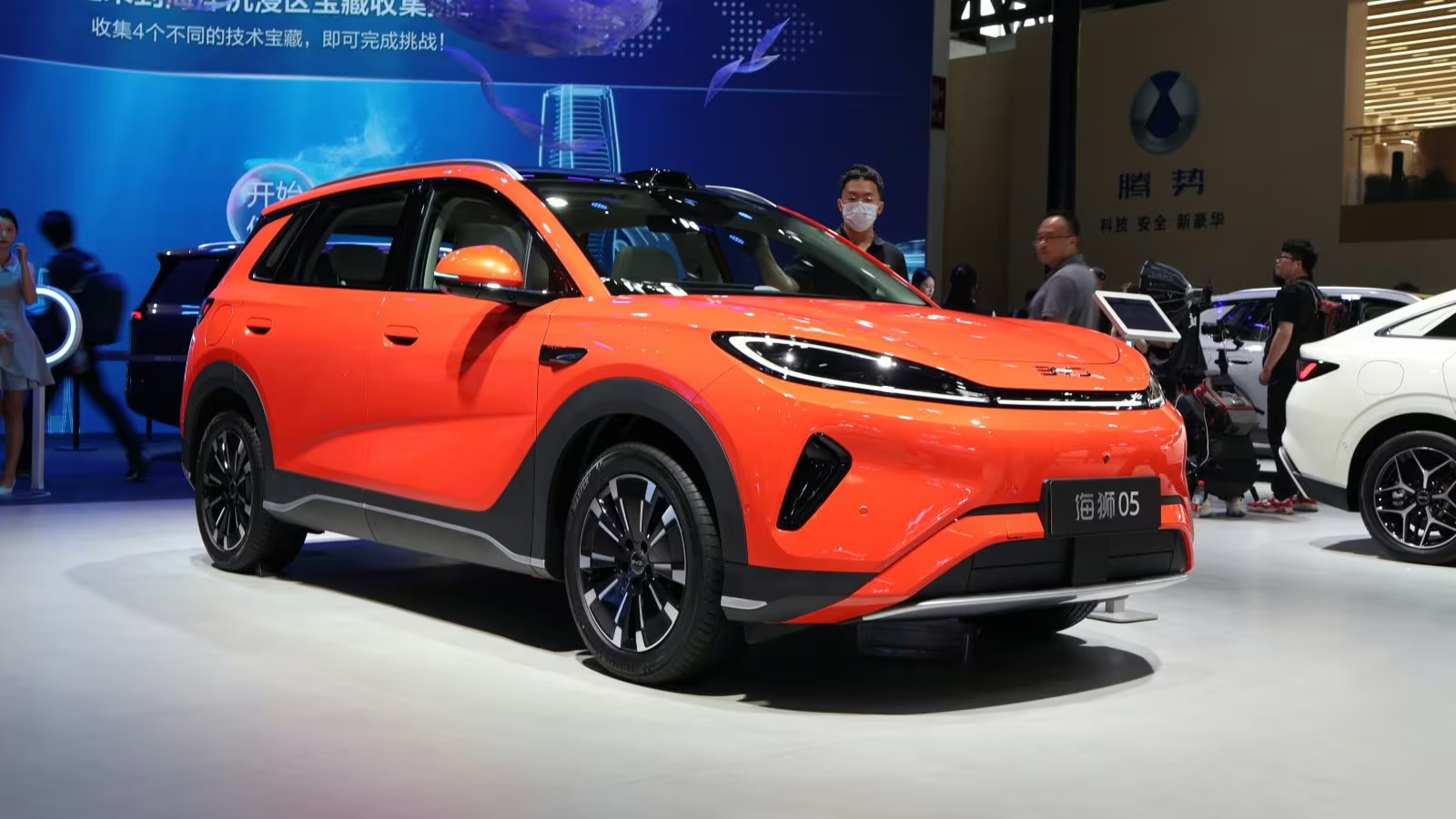
- BYD Europe Expansion plans three assembly plants.
- BYD expects its second European site decision this year.
- Overseas sales rose 85.72% in eight months.
BYD Plans Three European Assembly Plants and Battery Factory
BYD plans to establish three vehicle assembly plants and one battery factory in Europe over the long term as it expands regional sales and works to meet European manufacturing requirements. Alfredo Altavilla, the automaker's European adviser and former Fiat Chrysler executive, outlined the plans to reporters in Turin. The expansion is expected to take time, but Altavilla said the factories will ultimately be necessary for the company to achieve its sales targets while complying with European regulations. BYD has already begun production at its first European plant in Hungary.
BYD Weighs Existing Facilities for Second European Plant
BYD expects to decide on its second European assembly site by the end of this year, with the company favoring the acquisition and refurbishment of an existing facility instead of constructing a new plant from the ground up. Spain and France are among the preferred locations, while BYD is also discussing potential takeovers of underutilized vehicle factories with European automakers and governments. Italy remains under consideration, although Altavilla said it is less likely to be selected for the second assembly plant. He described Italy as a backup option while the company continues seeking the most competitive conditions.
Local Manufacturing Gains Importance Amid EU Trade Pressure
Local production is becoming increasingly important to BYD's European strategy as trade measures raise the importance of manufacturing within the region. The EU has imposed additional tariffs on China-made battery electric vehicles, while proposed Made in Europe rules could encourage further investment in European production. The European Union is also seeking a negotiated limit on imports of China-made hybrid vehicles and could increase tariffs if an agreement is not reached, according to the Financial Times. These developments could broaden trade pressure on Chinese automakers beyond battery electric vehicles and make regional manufacturing capacity more important for BYD's European growth plans.
Overseas Sales Support BYD's Global Expansion
BYD's overseas business is helping offset sales pressure in China as international operations become a larger part of the company's growth strategy. Overseas sales increased 85.72% year over year to 1,162,260 vehicles during the first eight months of the year. August overseas sales reached a record 189,466 vehicles, rising 134.45% from a year earlier and representing 43.03% of BYD's monthly total. These figures cover all overseas markets rather than Europe alone. BYD management raised its 2026 overseas sales guidance to between 1.9 million and 2 million vehicles and is targeting more than 2.5 million in 2027, according to a September 7 Deutsche Bank research note.
Overseas Production and Denza Expansion Continue
BYD is adding overseas production capacity and expanding its sales network as international operations become increasingly significant to the business. The company's overseas revenue exceeded domestic revenue for the first time during the first half of the year, highlighting the growing contribution of international markets. The company is also expanding its European brand presence through Denza, which is being introduced to the region's luxury vehicle market. Altavilla attended the opening of a Denza showroom in Turin, while the brand opened another showroom in Paris on Wednesday. Together with the planned manufacturing investments, the showroom expansion reflects BYD's broader effort to establish a stronger local presence across European markets.
Industry Impact & Outlook
BYD's planned European manufacturing network could give the company greater flexibility as it pursues regional sales growth while responding to tariffs and potential local-content requirements. Expanding assembly and battery production within Europe would also reduce the company's reliance on vehicles imported from China for markets affected by trade measures. For European governments and automakers, BYD's interest in underutilized factories could create opportunities for industrial assets seeking new investment, while competition among potential host locations may center on costs, facilities, incentives, and regulatory conditions. The next major development is expected to be BYD's decision on its second European assembly site, followed by further capacity expansion as its overseas sales targets advance.
Frequently Asked Questions
How many manufacturing facilities does BYD plan for Europe?
BYD plans to establish three vehicle assembly plants and one battery factory in Europe over the long term. The company is currently evaluating locations and expects to decide on its second European assembly site by the end of this year. Spain and France are among the locations being considered, while Italy remains a less likely alternative. BYD has also begun production at its first European plant in Hungary, making local manufacturing an increasingly important part of its strategy for supporting European sales and responding to changing trade requirements.
Click above to visit the official source.
Discussion
Join the conversation.