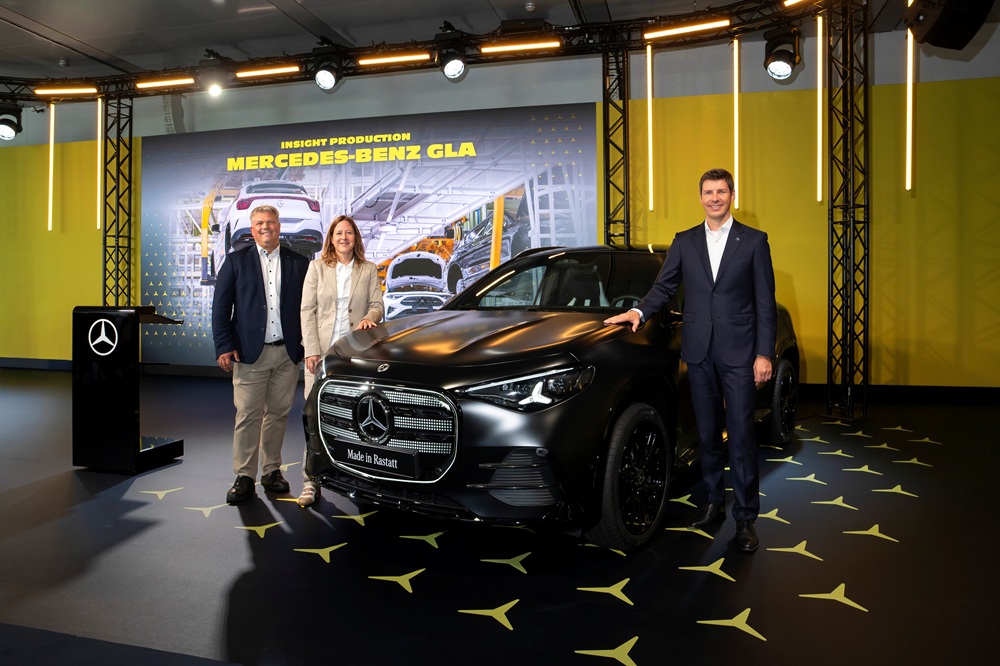
- Mercedes-Benz GLA production begins with electric models.
- Rastatt can build electric, hybrid, conventional vehicles together.
- Hybrid GLA production is scheduled for later 2026.
Mercedes-Benz GLA Production Starts in Germany With EVs
Mercedes-Benz began series production of the new-generation GLA on September 17 at its Rastatt plant in Germany. Mercedes-Benz GLA production currently includes the fully electric versions, while 48V hybrid models using a new combustion engine are scheduled to follow later in 2026. The Rastatt facility is designed to manufacture electric, hybrid, and conventional vehicles on the same production line, giving the plant flexibility across different powertrain configurations. The new GLA is currently being assembled in assembly hall 4.0, where the production setup supports the transition between these vehicle variants.
Rastatt Plant Prepares for Expanded GLA Production
Mercedes-Benz is investing a low three-digit million-euro amount to convert nearby assembly hall 4.1 for future GLA manufacturing. Production of the GLA in that hall is planned to begin in 2027, extending the plant's capacity for the new generation model. The company is using a digital twin to simulate and optimize the planned production line before physical construction begins. According to Mercedes-Benz, this approach is intended to reduce conversion time and costs and builds on its successful use during the 2023 upgrade of hall 4.0. The production strategy combines existing infrastructure with digitally planned modifications to support the next phase of manufacturing.
MB.OS Integrated Into GLA Manufacturing
Mercedes-Benz is also incorporating its Mercedes-Benz Operating System, or MB.OS, into GLA production. The system uses a chip-to-cloud architecture that enables vehicle software to be updated through the Mercedes-Benz Intelligent Cloud. This setup allows newly produced vehicles to leave the factory with the latest available software rather than relying solely on the software configuration established during initial vehicle assembly. The integration connects manufacturing with the vehicle's software environment and supports software updates after production. MB.OS therefore forms part of the manufacturing and delivery process for the new GLA alongside the physical assembly of its electric and combustion-based vehicle configurations.
German Plants Supply GLA Electric Components
The new GLA's electric drive units and axles are produced at Mercedes-Benz facilities in Untertürkheim, Mettingen, and Hedelfingen in Germany. High-voltage batteries are supplied by Accumotive from its plant in Kamenz, Saxony, while the nearby Kuppenheim plant provides body and structural components. Since 2026, Kuppenheim has been organizationally integrated into the Rastatt plant, further connecting the component supply structure with GLA manufacturing. This production network distributes major electric powertrain, battery, body, and structural work across several German facilities before the components support final vehicle production at Rastatt.
Rastatt Production Network Supports New GLA Generation
The Rastatt plant has produced vehicles since 1992 and employs around 7,000 people. The launch of the new-generation GLA adds another stage to the facility's long-running manufacturing operations while maintaining the ability to build vehicles with different powertrain types on the same production line. The planned conversion of hall 4.1 is intended to extend GLA production from 2027, while the current production operation in hall 4.0 provides the immediate manufacturing base. Together with component production at other German Mercedes-Benz facilities, the program establishes a coordinated manufacturing network for the new GLA and its electric and hybrid variants.
Industry Impact & Outlook
The GLA program illustrates how established automotive manufacturing facilities can accommodate multiple powertrain technologies while adding digitally planned production capabilities and software integration. For Mercedes-Benz, the ability to build electric, hybrid, and conventional vehicles on the same line provides manufacturing flexibility as powertrain demand evolves, while the planned hall 4.1 conversion extends that capability into 2027. The use of a digital twin may also help manage future factory changes by identifying production-line requirements before construction. The broader impact is concentrated across the company's German manufacturing network, where vehicle assembly, electric drive components, batteries, and structural parts are coordinated across multiple plants.
Frequently Asked Questions
When did Mercedes-Benz begin production of the new-generation GLA?
The new-generation GLA entered series production on September 17 at the Mercedes-Benz Rastatt plant in Germany, with fully electric versions already being manufactured there. The facility can produce electric, hybrid, and conventional vehicles on the same production line. Mercedes-Benz plans to add 48V hybrid GLA models using a new combustion engine later in 2026. Production is currently taking place in assembly hall 4.0, while conversion work for nearby hall 4.1 is planned to support additional GLA production beginning in 2027.
Click above to visit the official source.
Discussion
Join the conversation.