- Leapmotor LEAP 5.0 anchors the company’s next vehicles.
- New brand deliveries are planned for Q4 2027.
- August global deliveries reached 103,129 vehicles.
Leapmotor Targets Apple-Like Integration With Second Brand
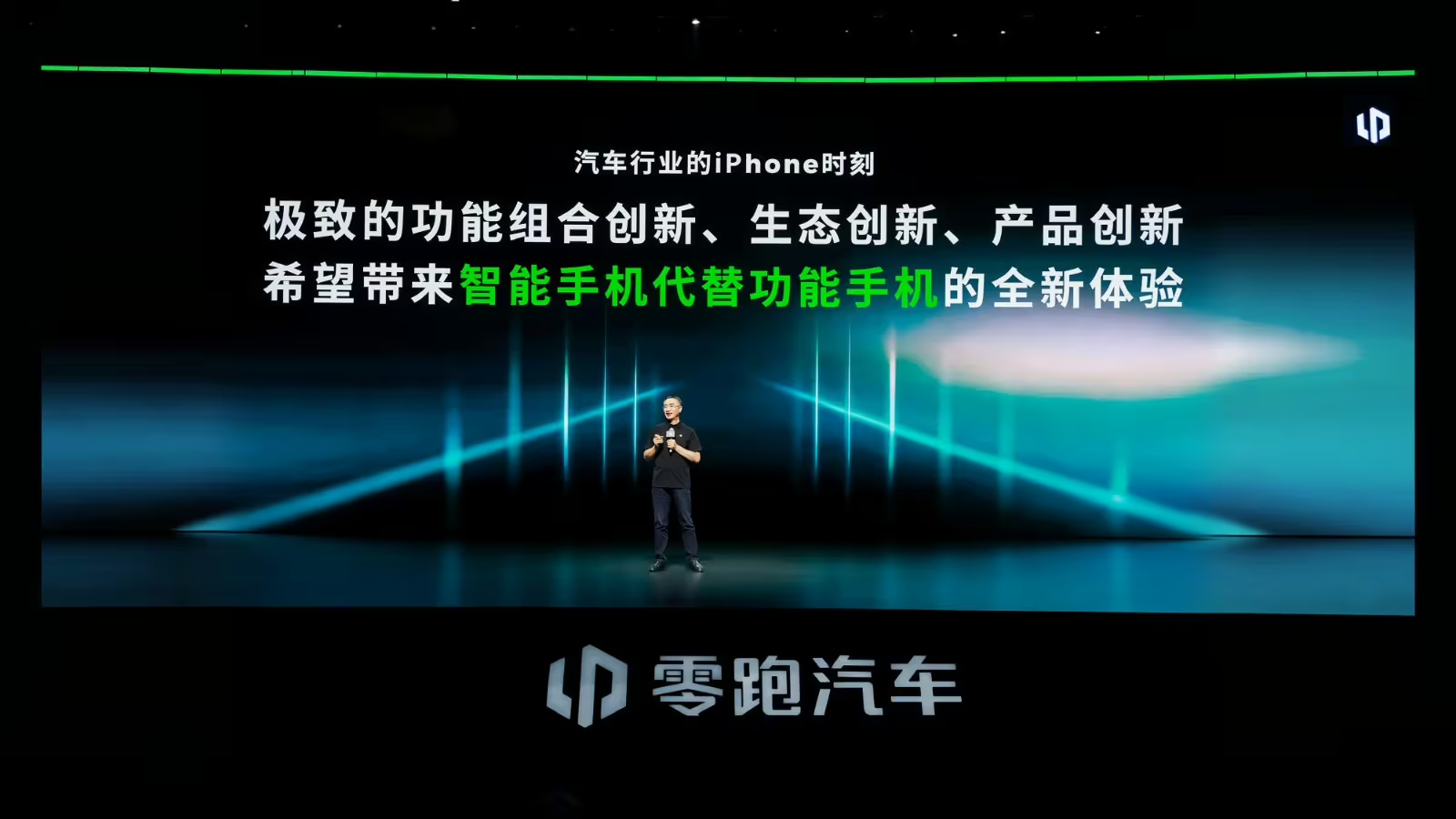
Leapmotor LEAP 5.0 is set to underpin the company’s future vehicles as founder, chairman and CEO Zhu Jiangming outlined plans for a second brand at its 2026 Technology Day in Huzhou, Zhejiang province. The new brand is expected to debut and begin vehicle deliveries in the fourth quarter of 2027, with its first product envisioned as a “mobile space.” Zhu said the company wants to emulate Apple’s ability to combine functions, build an ecosystem and create distinctive products rather than simply invent individual technologies. He argued that today’s electric vehicles remain broadly similar to gasoline vehicles in exterior design and cabin-function layouts, leaving significant room for new approaches.
LEAP 5.0 Architecture Expands Cabin Space
Leapmotor presented LEAP 5.0 as the foundation for its next generation of vehicles, with changes intended to create more usable interior space and integrate vehicle systems more closely. The architecture replaces a conventional in-cabin HVAC unit with an integrated air-conditioning module and shifts the powertrain to the rear. According to Leapmotor, these changes increase cabin space by more than 19%. The architecture is supported by Clover 5.0, a centrally integrated electrical and electronic architecture, alongside a vehicle-wide 48V power distribution system, Ethernet throughout the vehicle and Agent OS, which connects the vehicle with cloud services.
Leapmotor Introduces World Model Driver Assistance
The company also introduced its LWM, or Leapmotor World Model, driver-assistance system as part of its broader technology portfolio. Unlike conventional bird’s-eye-view perception approaches, LWM moves away from relying on that perception framework and uses LiDAR primarily as a safety backup. Zhu emphasized that algorithm development is more important than simply increasing computing power, while stating that Leapmotor’s driver-assistance algorithms now rank among the industry’s best. Leapmotor pledged to upgrade all LiDAR-equipped vehicles to the world model system at no charge and provide free lifetime use. By the end of August, 350,000 vehicles equipped with LiDAR and advanced chips had been delivered.
CTC 3.0 Removes the Lead-Acid Battery
Leapmotor also unveiled CTC 3.0, its cell-to-chassis battery integration technology, which incorporates the low-voltage battery into the main battery pack and eliminates the separate lead-acid battery. The company said it plans to open-source the technology for industry peers, potentially allowing other manufacturers to examine and adopt the underlying approach. CTC 3.0 forms part of a wider technology strategy focused on integrating vehicle systems rather than treating individual components as isolated functions. Together with LEAP 5.0 and Clover 5.0, the battery architecture illustrates Leapmotor’s effort to combine packaging, electrical architecture and vehicle-level integration into a common technology platform.
MM-i Adds Hybrid Powertrain Options
For global markets, Leapmotor introduced the MM-i intelligent multi-mode hybrid system, which supports both series and parallel operation across nine modes. The system broadens the company’s powertrain portfolio beyond battery electric vehicles and extended-range electric vehicles to include plug-in hybrid electric vehicles. The move gives Leapmotor an expanded set of powertrain configurations for different markets and operating requirements. The company’s presentation of MM-i alongside its new vehicle architecture and battery technology indicates that its product strategy is being developed around multiple propulsion formats rather than a single drivetrain approach.
Leapmotor Takes Cautious Approach to Embodied AI
Zhu also addressed embodied artificial intelligence, an area receiving significant attention across the technology and automotive sectors. He said Leapmotor has developed a robot entirely in-house but is investing only modestly in the area and is following rather than leading the field. Zhu questioned the commercial value of robots that can simply walk and emphasized that practical applications capable of generating economic value would be more significant. His comments indicate that the company is continuing to investigate robotics while prioritizing applications that demonstrate a viable real-world use case instead of committing substantial resources before those applications become clear.
Leapmotor Deliveries Continue Strong Growth
Leapmotor reported global deliveries of 103,129 vehicles in August, representing an 80.72% increase from the same month a year earlier and marking the second consecutive month in which deliveries exceeded 100,000 vehicles. Deliveries during the first eight months of the year reached 560,883 vehicles, equivalent to about 56% of the company’s full-year target of 1 million vehicles. The delivery figures provide the commercial backdrop for the technology announcements, as the company is simultaneously expanding its vehicle portfolio, developing new architectures and preparing a second brand intended to enter the market in the fourth quarter of 2027.
Technology Strategy Connects Vehicles and Software
The technologies presented at the event collectively point toward a vehicle strategy centered on deeper integration among hardware, software, electrical systems, battery packaging and driver assistance. Clover 5.0 provides a centralized electrical and electronic foundation, Agent OS connects the vehicle with cloud services, LWM addresses driver assistance, CTC 3.0 changes battery integration, and MM-i expands propulsion choices. In China, where Leapmotor is developing and presenting these technologies, the approach also supports Zhu’s stated ambition to differentiate vehicles through the combination of functions and systems rather than through any single component alone.
Second Brand Will Debut on LEAP 5.0
The second brand is scheduled to become the first Leapmotor brand to use LEAP 5.0, linking the company’s future brand strategy directly with its newly introduced architecture. Zhu said the first product is intended to create a user experience comparable to the transition from feature phones to smartphones and described the concept as a “mobile space.” The planned launch therefore combines a new brand identity with a new vehicle platform and a broader technology package. For Leapmotor, the second brand provides a separate product opportunity while LEAP 5.0 supplies the underlying architecture intended to support that next phase.
Industry Impact & Outlook
Leapmotor’s technology strategy could affect competition by placing greater emphasis on integrated vehicle architecture, software-defined functions, battery packaging and flexible propulsion rather than isolated component advances. The planned second brand also creates a new channel for applying LEAP 5.0 and the associated technologies, while the MM-i system provides additional flexibility for global markets where BEV, EREV and PHEV demand can differ. The next significant developments will include the second brand’s debut, the first product’s specifications and delivery timing, and the practical deployment of LWM, CTC 3.0 and MM-i across future vehicles.
Frequently Asked Questions
When will Leapmotor’s second brand begin vehicle deliveries?
The second brand is scheduled to debut and begin vehicle deliveries in the fourth quarter of 2027, according to founder, chairman and CEO Zhu Jiangming. Its first product will be the first vehicle to use the company’s newly unveiled LEAP 5.0 architecture. Zhu described the planned product as a “mobile space” and said he wants it to create a major shift in the user experience similar to smartphones replacing feature phones. The company has not provided additional launch specifications in the shared article.
What technologies did Leapmotor unveil at Technology Day?
Leapmotor unveiled several technologies spanning vehicle architecture, electrical systems, driver assistance, battery integration and propulsion. LEAP 5.0 introduces new packaging changes, while Clover 5.0 provides a centrally integrated electrical and electronic architecture. LWM is the company’s world model driver-assistance system, and CTC 3.0 integrates the low-voltage battery into the main battery pack. Leapmotor also introduced MM-i, a nine-mode intelligent multi-mode hybrid system designed for global markets and supporting series and parallel operation across multiple modes.
How many vehicles did Leapmotor deliver in August?
Leapmotor delivered 103,129 vehicles globally in August, an 80.72% increase compared with the same month a year earlier. The company exceeded 100,000 deliveries for the second consecutive month, while cumulative deliveries during the first eight months reached 560,883 vehicles. That total represented about 56% of Leapmotor’s full-year target of 1 million vehicles. The figures were announced alongside the company’s technology presentations, providing an indication of the scale at which Leapmotor is currently operating as it develops new vehicle architecture, software and propulsion technologies.
Click above to visit the official source.
Discussion
Join the conversation.