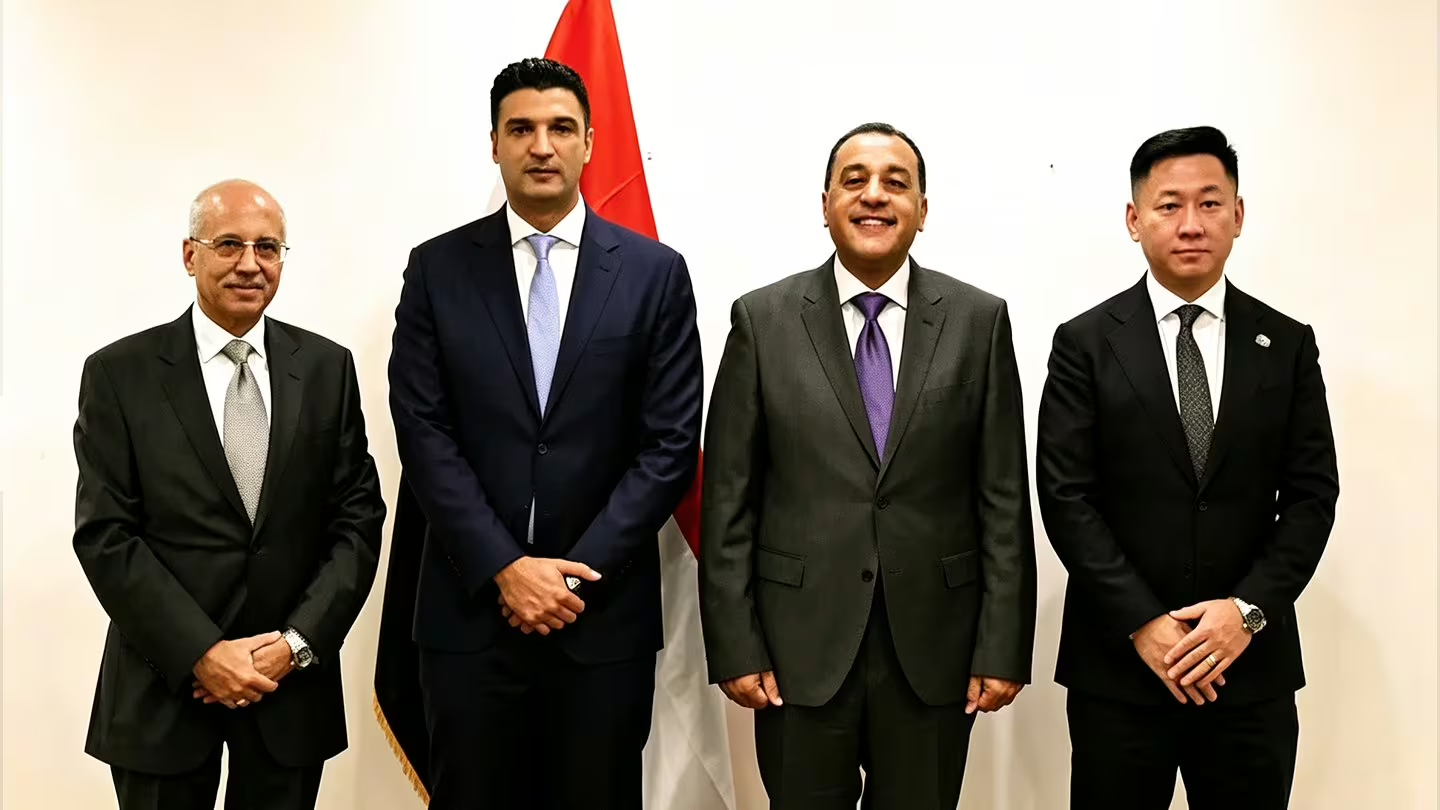
- CATL Egypt battery pack production advances with BME.
- BME plans 1 GWh annual battery capacity initially.
- Long-term capacity could reach 5 GWh.
CATL Expands Battery Pack Production in Egypt With BME
Contemporary Amperex Technology Co Ltd has signed a cooperation agreement with Egyptian battery manufacturer BME covering battery pack technology licensing, production equipment and training for local assembly and manufacturing in Egypt. The agreement builds on the companies' earlier intention to cooperate on battery cell procurement while advancing domestic battery pack production. BME will wholly fund and build the planned facility, which is expected to have annual capacity of 1 GWh and primarily supply batteries for heavy commercial vehicles. The development gives CATL a direct role in establishing local battery pack production without announcing plans for domestic cell manufacturing.
BME Plant Targets 1 GWh Initial Capacity
The planned BME facility will initially produce up to 1 GWh of battery packs annually, with heavy commercial vehicles identified as the primary application. Under longer-term plans, capacity could increase to 5 GWh, while the product portfolio could expand beyond commercial vehicle batteries to include passenger vehicle battery packs and energy storage systems for solar and wind power. CATL will provide the technology, equipment and training required for production, while BME will finance and construct the plant. The announcement did not disclose the investment value or specify when production is expected to begin, leaving the facility's final implementation schedule unconfirmed.
Local Automotive Resources Support Battery Manufacturing
BME was jointly founded by Egyptian commercial vehicle manufacturer MCV and automotive solutions provider Auto D, giving the project access to established local automotive industry resources. Through the cooperation, BME is expected to use CATL's battery technology and production equipment to supply local automakers directly. CATL said this approach addresses a gap in Egypt's domestic battery pack manufacturing capability by creating local assembly and production capacity. The arrangement therefore combines CATL's battery technology and manufacturing know-how with BME's local industrial resources, while the available announcement remains focused on battery pack production rather than establishing a domestic battery cell manufacturing operation.
CATL Extends Overseas Commercial Vehicle Battery Strategy
The Egypt agreement represents another step in CATL's expansion of its overseas commercial vehicle battery business, using technology licensing, equipment and training to support localized supply capacity. On September 14, CATL introduced its Tectrans II commercial vehicle battery solution at the IAA Transportation trade show in Hanover, Germany. The heavy truck version can provide a range of up to 1,000 kilometers in its highest-capacity configuration. During the same event, CATL signed a memorandum of understanding with DHL Group to develop green freight corridors in Europe and collaborate with automakers and other partners on purpose-built electric vehicles, extending its commercial vehicle strategy beyond battery supply alone.
CATL Maintains Strong Global Battery Position
CATL remains the global leader in electric vehicle batteries, with installed battery volume reaching 289.6 GWh during the first seven months of 2026, according to South Korean market researcher SNE Research. That volume represented a 26.6% increase from the same period a year earlier and gave CATL a 39.9% market share. Against that broader backdrop, the BME agreement adds a localized battery pack manufacturing initiative to CATL's international commercial vehicle activities. The Egyptian project is currently centered on pack assembly and production, while the announcement provides no indication that cell production will be localized as part of the cooperation.
Industry Impact & Outlook
The cooperation could strengthen local battery pack supply for Egypt's commercial vehicle sector by pairing CATL's technology and production resources with BME's domestic automotive connections. For local automakers, a domestic pack manufacturing operation could reduce reliance on imported finished battery packs, although the project's eventual contribution will depend on construction, production timing and the planned capacity ramp. The potential expansion from 1 GWh to 5 GWh would also broaden the facility's relevance if passenger vehicle batteries and renewable-energy storage products are added. For CATL, the arrangement illustrates a localization model in which overseas partners finance and operate production while CATL contributes technology, equipment and training.
Frequently Asked Questions
What is CATL's agreement with BME in Egypt?
CATL and BME agreed to cooperate on battery pack technology licensing, production equipment and training to support local battery pack assembly and manufacturing in Egypt. BME will fully fund and build the planned facility, which is designed for an initial annual capacity of 1 GWh and will primarily serve heavy commercial vehicles. Longer-term plans could raise capacity to 5 GWh and broaden production to passenger vehicle battery packs and energy storage systems. The announcement did not disclose the investment amount or a production timeline, and it did not include plans for local battery cell manufacturing.
Click above to visit the official source.
Discussion
Join the conversation.