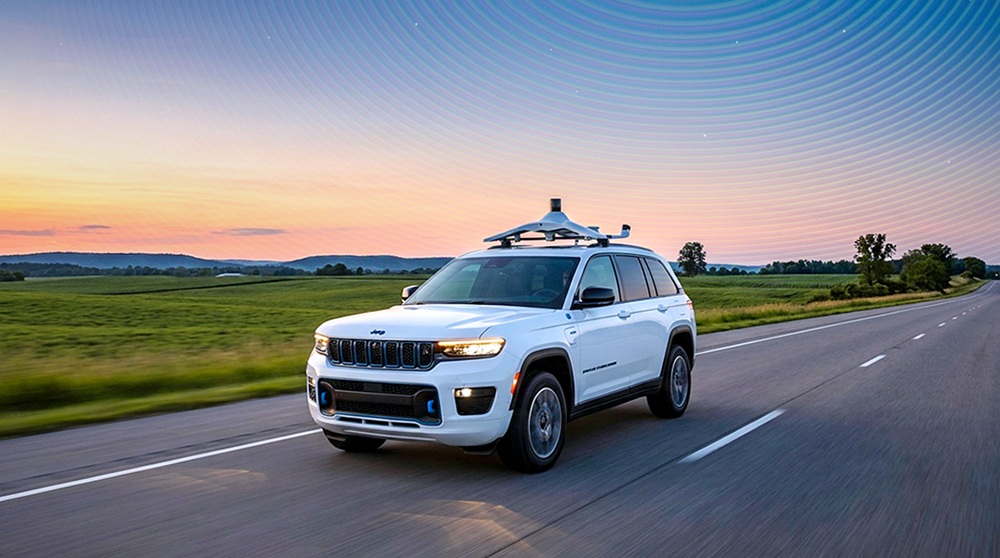
- aiMotive Rig and Rooftop Box launch professional recording systems.
- Rooftop Box combines cameras and LiDAR for 360-degree coverage.
- Both systems integrate GNSS+INS and aiData annotation.
aiMotive Introduces New Data-Recording Systems for ADAS and Autonomous Driving
On September 15, aiMotive launched aiMotive Rig and Rooftop Box as two professional data-recording systems designed to collect high-quality information for advanced driver assistance systems and autonomous driving development, testing, and validation. The systems combine vehicle-mounted sensing hardware with positioning, timing, recording, monitoring, synchronization, annotation, and simulation capabilities. Both platforms use NovAtel SPAN GNSS+INS technology from Hexagon to provide accurate positioning, timing, and vehicle movement data. They also incorporate aiMotive’s aiRec recording software, which enables live sensor monitoring and supports accurate synchronization across the recorded data streams.
aiMotive Rig Uses LiDAR for Flexible Vehicle Data Collection
The aiMotive Rig is a compact and lightweight LiDAR-based recording system built around the Hesai OT128 LiDAR and NovAtel PwrPak7D-E2. Its design allows it to be installed quickly on different vehicles, supporting flexible data collection across vehicle platforms and test environments. The system supports static environment capture, automatic AI-based annotation, HD map creation, and lane-function testing. The PwrPak7D-E2 provides the positioning and timing capabilities needed to establish reliable ground-truth data, supporting mapping, annotation, and analysis of vehicle movement during development and validation activities.
Rooftop Box Provides 360-Degree Sensor Coverage
The aiMotive Rooftop Box combines six Sony IMX728 cameras, two Hesai LiDAR sensors, and a NovAtel GNSS+INS system to provide 360-degree coverage around the vehicle. Its sensor configuration supports dynamic-object annotation, while World Extractor neural reconstruction can transform recorded data into simulation-ready environments. The system is designed to support complete ADAS and autonomous-driving validation by capturing synchronized information from multiple sensing modalities. As with the Rig, the PwrPak7D-E2 contributes accurate positioning and timing, helping generate ground-truth information for vehicle-motion analysis and other validation workflows.
Integrated Recording, Annotation, and Simulation Workflow
Both systems are connected to the aiData annotation platform, allowing recorded information to move from data collection toward annotated results without separating the recording and annotation workflow. This integration supports the use of captured sensor data for mapping, annotation, and validation activities. The Rooftop Box adds World Extractor capabilities, allowing recorded information to be converted into simulation-ready environments for development and testing. The systems therefore combine physical sensor recording with software-supported processing, while aiRec provides live sensor monitoring and synchronization during capture. Together, these capabilities support a workflow spanning data recording, ground-truth generation, annotation, reconstruction, and validation.
Positioning and Timing Support Ground-Truth Data
NovAtel SPAN GNSS+INS technology from Hexagon is used across both recording systems to provide positioning, timing, and vehicle movement information. The PwrPak7D-E2 is specifically identified as a component supporting accurate positioning and timing, which is important for establishing reliable ground-truth data from recorded vehicle and environmental information. The combination of synchronized sensor streams and positioning data enables the systems to support mapping, annotation, lane-function testing, dynamic-object analysis, and vehicle-motion assessment. This shared positioning and timing architecture gives the two systems a common foundation while their different sensor configurations address distinct recording and validation requirements.
Industry Impact & Outlook
The introduction of these systems expands the tooling available for structured data collection across ADAS and autonomous-driving development workflows by combining sensing, positioning, synchronization, annotation, and simulation capabilities. For development and validation teams, the ability to move recorded information into annotation and, with the Rooftop Box, simulation-ready environments can connect physical testing with downstream data-processing activities. The different configurations also provide options for applications ranging from compact LiDAR-based environment capture to broader 360-degree multimodal recording. Continued use of these systems will be most relevant to organizations that require reliable ground-truth data for mapping, sensor-data analysis, ADAS testing, and autonomous-driving validation.
Frequently Asked Questions
What are aiMotive Rig and Rooftop Box designed for?
aiMotive Rig and Rooftop Box are professional data-recording systems designed to collect high-quality sensor and vehicle data for ADAS and autonomous-driving development, testing, and validation. The Rig uses a compact LiDAR-based configuration, while the Rooftop Box combines cameras, LiDAR, and GNSS+INS technology for 360-degree coverage. Both systems use aiRec for live sensor monitoring and synchronization and PwrPak7D-E2 technology for positioning and timing. Their integration with the aiData annotation platform supports downstream annotation, mapping, and validation workflows.
What does the Rooftop Box add to the recording workflow?
The Rooftop Box adds a broader multimodal sensing configuration and supports capabilities intended for complete ADAS and autonomous-driving validation. It combines six Sony IMX728 cameras, two Hesai LiDAR sensors, and a NovAtel GNSS+INS system to provide 360-degree coverage. It also supports dynamic-object annotation and World Extractor neural reconstruction. Through World Extractor, recorded data can be converted into simulation-ready environments, extending the workflow beyond physical data capture toward simulation and validation activities using information collected from real-world vehicle testing.
Click above to visit the official source.
Discussion
Join the conversation.