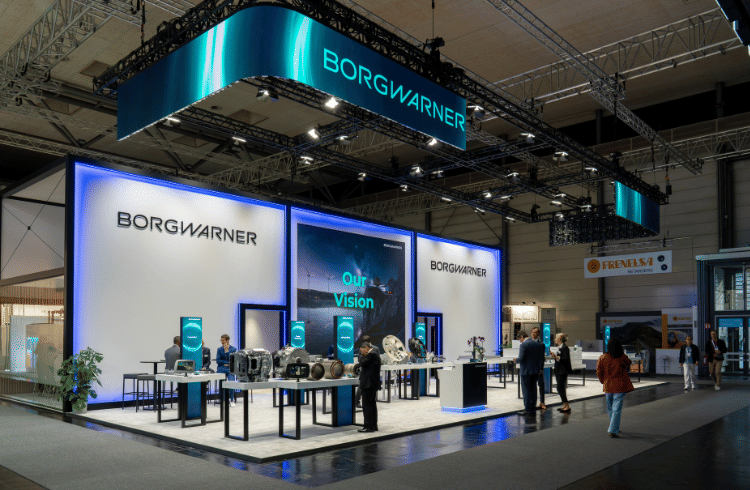
- BorgWarner Commercial Vehicle Propulsion expands with LFP pack.
- LFP architecture reduces weight and footprint.
- Integrated eDrive systems broaden BorgWarner's propulsion portfolio.
BorgWarner Debuts Next-Generation LFP Compact Pack
BorgWarner is broadening its commercial vehicle propulsion portfolio across battery-electric and combustion powertrains with the European trade show debut of its next-generation Lithium Iron Phosphate (LFP) Compact Pack at IAA Transportation 2026. The event is being held in Hanover, Germany, providing the supplier with a platform to showcase technologies aimed at the evolving requirements of commercial vehicle manufacturers and fleet operators. The new battery architecture is positioned as part of BorgWarner's wider effort to address emissions, efficiency, durability, payload, and cost considerations while supporting multiple propulsion pathways in the commercial vehicle market.
LFP Battery Architecture Targets Packaging and Cost Improvements
The newly engineered LFP battery architecture focuses on more optimized packaging, lower weight, and a smaller overall footprint. According to BorgWarner, these changes are designed to help reduce production costs while creating a battery solution suited to the demanding requirements of commercial vehicles. The development arrives as manufacturers and fleet operators work to meet increasingly stringent emissions mandates without compromising total cost of ownership or payload capacity. By emphasizing packaging efficiency alongside weight reduction, the Compact Pack is intended to address several competing vehicle-level requirements within a single battery architecture.
Broader Commercial Vehicle Propulsion Technologies
Beyond the LFP Compact Pack, BorgWarner presented a broader set of propulsion technologies at the event. Its displayed portfolio included integrated eDrive units, power electronics, and specialized thermal management solutions, complementing the company's battery-system offering. Together, these technologies demonstrate an approach that covers multiple elements of commercial vehicle propulsion rather than focusing exclusively on battery storage. The combination is relevant to manufacturers evaluating battery-electric systems while also continuing to manage the performance, efficiency, durability, and operating-cost requirements associated with commercial vehicles and their powertrain architectures.
Balancing Emissions, Efficiency, Performance and Cost
Dr. Paul Farrell, Executive Vice President and Chief Strategy Officer at BorgWarner, emphasized the range of requirements facing commercial vehicle manufacturers. He said, "Commercial vehicle manufacturers must balance increasingly complex requirements, from emissions reduction and energy efficiency to performance, durability and cost. IAA Transportation provides an excellent opportunity to demonstrate how BorgWarner's technology portfolio helps our customers address these challenges today while preparing for the mobility needs of tomorrow." His comments underline the supplier's focus on providing technologies that can support immediate commercial vehicle requirements while also addressing longer-term mobility needs.
Commercial Vehicle Electrification and Powertrain Flexibility
The LFP Compact Pack debut also highlights the importance of combining battery-electric technologies with a broader propulsion strategy. BorgWarner is presenting the battery system alongside eDrive units, power electronics, thermal management, and combustion powertrain capabilities, giving its commercial vehicle portfolio coverage across different propulsion approaches. For manufacturers and fleet operators, the relevance of these technologies centers on balancing regulatory pressure with operational requirements such as payload, efficiency, durability, and total cost of ownership. The European debut at IAA Transportation 2026 places that technology portfolio directly in front of an industry audience focused on evolving commercial vehicle propulsion needs.
Industry Impact & Outlook
BorgWarner's LFP Compact Pack and complementary propulsion technologies could strengthen its position as commercial vehicle manufacturers evaluate solutions that balance emissions requirements with operating economics and vehicle performance. The emphasis on packaging, weight, footprint, and production cost is particularly relevant where payload and total cost of ownership remain important considerations. The broader presentation of eDrive units, power electronics, and thermal management also indicates that propulsion suppliers are increasingly expected to provide integrated technology portfolios rather than isolated components. Further commercial relevance will depend on how manufacturers apply these technologies to their vehicle programs and operational requirements.
Frequently Asked Questions
What did BorgWarner debut at IAA Transportation 2026?
The company made the European trade show debut of its next-generation Lithium Iron Phosphate Compact Pack for commercial vehicles. The battery architecture is designed with more optimized packaging, reduced weight, and a smaller overall footprint, with the changes intended to lower production costs. BorgWarner also presented integrated eDrive units, power electronics, and specialized thermal management solutions. The portfolio addresses commercial vehicle requirements spanning emissions reduction, energy efficiency, performance, durability, cost, payload capacity, and total cost of ownership as manufacturers respond to increasingly stringent emissions mandates.
Click above to visit the official source.
Discussion
Join the conversation.