- Daimler Truck Design Studies explore future mobility concepts.
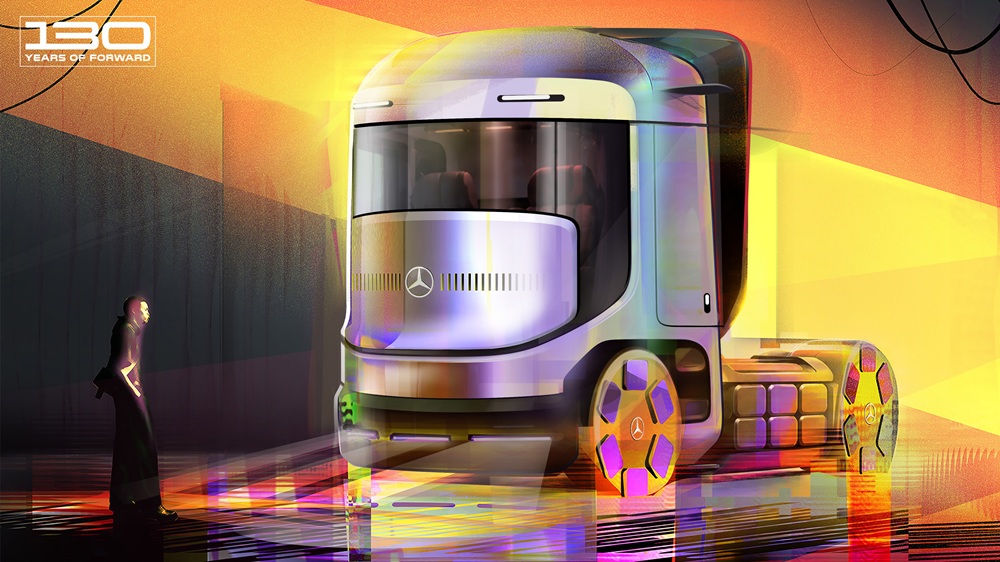
- Freightliner concept examines autonomous vehicle-robot cooperation.
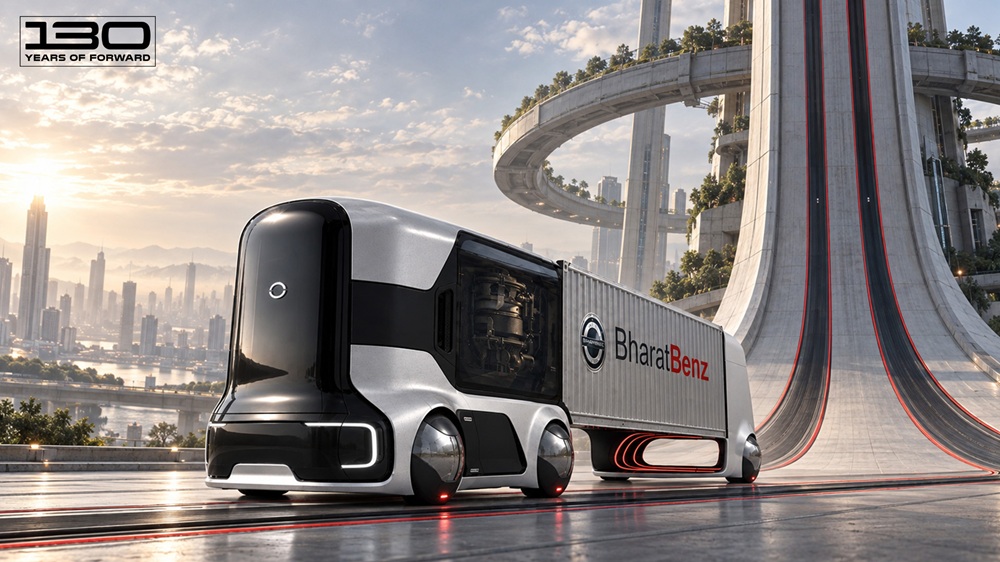
- BharatBenz VertiHaul imagines vertically organized logistics.
Future Mobility Concepts Debut at IAA Transportation 2026
On September 13, Daimler Truck presented futuristic design studies from its global design centers at IAA Transportation 2026 in Germany. The concepts offer different perspectives on how transportation and mobility could evolve as future challenges reshape vehicle design, logistics, and travel experiences. Rather than serving as previews of upcoming production models, the studies are creative exercises intended to explore potential opportunities and challenges across future mobility. The initiative brings together designers from different brands, regions, and generations, illustrating how ideas can develop from early sketches into increasingly detailed digital concepts while maintaining a focus on practical questions surrounding future transportation.
Designing With Fewer Components and Greater Flexibility
The design initiative is built around the principle of “Make more with less,” encouraging designers to rethink how vehicles and mobility systems could use materials and components more efficiently. The approach examines multifunctional parts, fewer individual components, and modular designs as potential ways to reduce material consumption while supporting sustainability. By bringing together ideas from different design centers, the project also demonstrates how varied creative perspectives can influence the development of future transportation concepts. The emphasis is not on presenting immediate commercial products, but on exploring design principles that could help address changing mobility requirements and resource constraints over the longer term.
Freightliner Concept Explores Autonomous Transport
The Freightliner concept focuses on autonomous transportation and closer cooperation between vehicles and robots. Its vision considers a future in which robots could perform maintenance and service-related tasks, potentially changing how commercial vehicles are supported during operation. The concept links vehicle autonomy with robotic assistance rather than treating autonomous driving as an isolated technology. In this envisioned operating model, automated systems could contribute to service activities and potentially help improve efficiency and vehicle availability. The study therefore uses design exploration to consider how autonomous transportation could extend beyond driving itself and become part of a broader automated mobility and service ecosystem.
Setra Miyanoura Reimagines the Travel Experience
The Setra “Miyanoura” concept takes a different approach by focusing on passenger comfort, relaxation, and the overall experience of traveling. Inspired by the form and character of a Zeppelin airship, the concept presents mobility as more than simply moving passengers between two locations. Its design perspective places greater emphasis on the environment and experience created during a journey, suggesting that future transportation could be shaped around how people spend their travel time as much as around the movement itself. The study expands the discussion of future mobility by examining the experiential side of transportation through an unconventional and highly imaginative design direction.
BharatBenz VertiHaul Imagines Logistics in 2070
The BharatBenz “VertiHaul” concept looks toward logistics in 2070 and imagines cities and industrial areas developing vertically. Instead of assuming that future freight movement will continue to rely primarily on conventional horizontal infrastructure, the study considers how goods could move through multi-level environments. This vision explores transportation within a future built around vertical infrastructure, where logistics networks could operate across different levels of cities and industrial zones. The concept is therefore focused on a long-range question: how might commercial transportation adapt if urban and industrial spaces increasingly use vertical structures to accommodate future mobility and logistics requirements?
Global Design Inspiration Connects Future Mobility Ideas
Through its “Global Design Inspiration” initiative, Daimler Truck is using conceptual design to encourage creativity around future transportation rather than presenting a fixed roadmap for production vehicles. The studies bring together different creative approaches and demonstrate how designers can examine transportation challenges through unconventional forms, autonomous systems, modular construction, and new logistics environments. Their value lies in opening questions about what future mobility could require and how vehicle design might respond to those requirements. By combining contributions from multiple brands, regions, and generations of designers, the initiative provides a broader view of the possibilities being considered across the company’s global design organization.
Industry Impact & Outlook
The concepts indicate that future commercial mobility could increasingly be influenced by resource efficiency, automation, robotics, modularity, and changing infrastructure rather than by vehicle styling alone. For Daimler Truck, the studies provide a framework for testing ideas across different transportation scenarios without committing them to production, while the Freightliner, Setra, and BharatBenz concepts address distinct questions around autonomous service, passenger experience, and future logistics. Their immediate impact is therefore primarily exploratory, but the design principles examined through the initiative could inform future thinking about how commercial vehicles and mobility systems respond to evolving operational and infrastructure demands.
Frequently Asked Questions
What did Daimler Truck present at IAA Transportation 2026?
The company presented futuristic design studies developed by its global design centers to explore possible challenges and opportunities in future transportation and mobility. The concepts covered autonomous transport, vehicle-robot cooperation, passenger comfort, and vertically organized logistics, while also examining modular design and reduced component use. They are creative visions rather than previews of future production vehicles. The studies include the Freightliner autonomous transport concept, Setra “Miyanoura” Zeppelin-inspired concept, and BharatBenz “VertiHaul” logistics concept, illustrating different approaches to imagining transportation and mobility in future operating environments.
Click above to visit the official source.
Discussion
Join the conversation.